Will there ever be a full english translation of the Codex Gigas compiled all in one book?
1 Answers 2014-12-13
How true is the assertion that most slaves in history were, in fact, white? Period: antiquity, location: middle east.
I'm not exactly sure what the claim really is - either that numerically most slaves were caucasian, either the enslavement was the most prolonged, or as a % of a population, it was the most significant.
Is there any truth to any variant on this claim?
2 Answers 2014-12-13
3 Answers 2014-12-13
1 Answers 2014-12-13
1 Answers 2014-12-13
What was it that there was widespread rationing during the world wars? Presumably the food supply was damaged, but how? Was it that farmers went to the front lines, that distribution networks were destroyed, that farms were burned, that supply convoys got attacked?
2 Answers 2014-12-13
I have read on various places online that it is considered one of the most inaccurate film depictions ever made, but most of the qualms come from Wallace's love life and the fact that he wore a kilt. That being said, is the rest of the overall story really that marred? I am mainly interested in learning about the battles depicted in the film and the overall representation of Wallace and what he stood for.
2 Answers 2014-12-13
I'm referring to this: http://en.wikipedia.org/wiki/Tecaxic-Calixtlahuaca_head
A large statue that pretty clearly derives its architectural inspirations from the Roman Empire... but it's thousands of years old, according to Wikipedia. And somehow was found in Mexico. Reading the article, a couple hypotheses have been put forward but they all seem kind of weak.
Is there a prevailing historical consensus on how the head got there? What's the most likely explanation?
3 Answers 2014-12-13
1 Answers 2014-12-13
1 Answers 2014-12-13
8 Answers 2014-12-13
1 Answers 2014-12-13
Hey everybody,
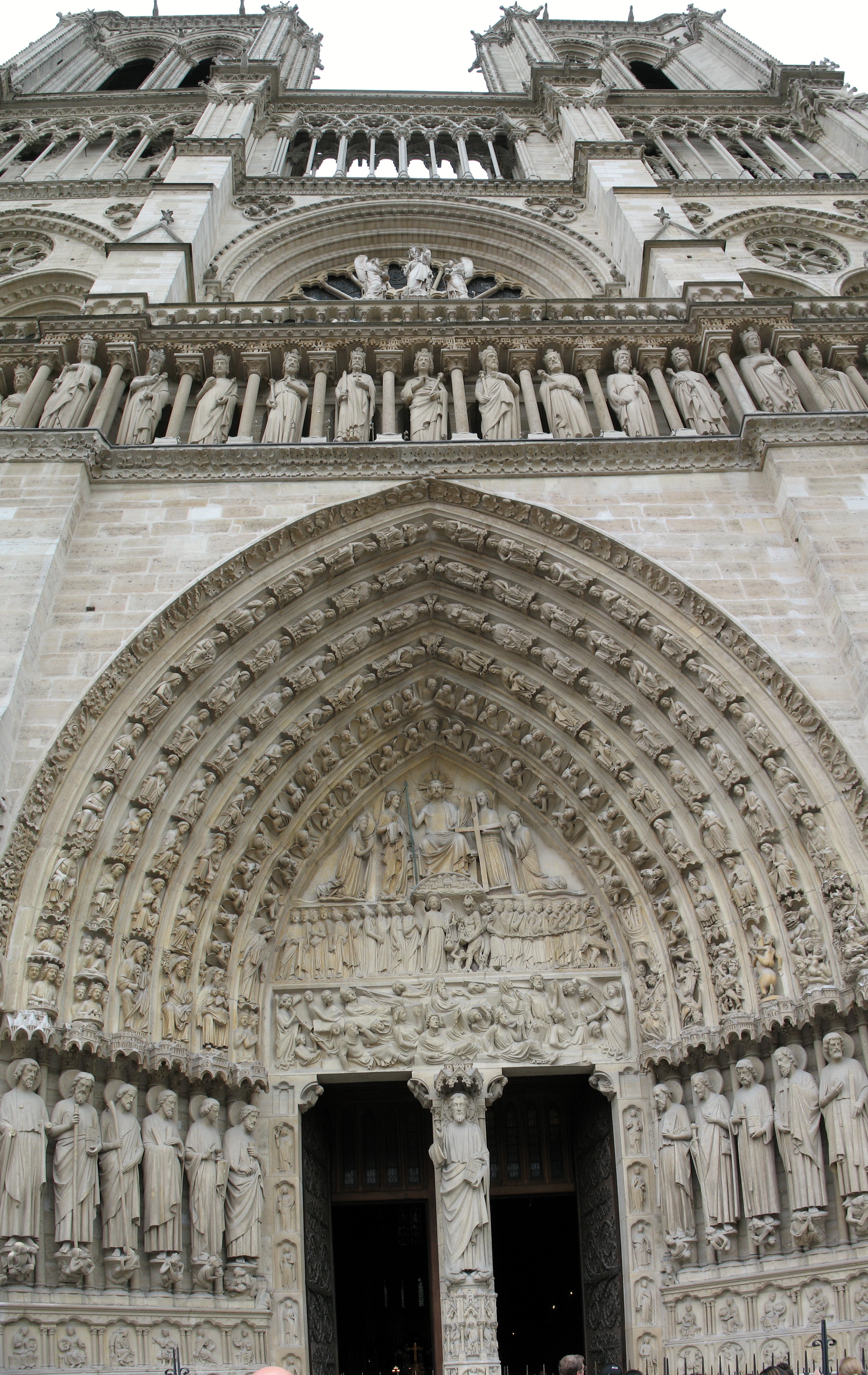
I am currently writing a short paper about medieval depictions of the devil and demons. While the above question can be neglected in my paper, I'm just wondering what it represents, since it seems to be a recurring motive.
I haven't done truly extensive research but all my books about demonology have seemingly turned up nothing. The books containing the images also fail to elaborate on the meaning of that particular demon.
Example one: Portal of the last judgement on the west facade of the Cathédrale Notre-Dame de Paris.
Example two: Altar table from the 13^th century from the Catalan Museum in Barcelona.
Is it just trying to change the odds in the devils favor? But why? How does the devil benefit from getting more souls to torture? Since at least on the Paris one, Jesus is actually judging the souls, how would he even be able to? Complete image of the Notre-Dame facade here.
Thank you for reading!
1 Answers 2014-12-13
For the purposes of this question I want to focus on serious daily sugar consumption. For that reason, I'm only interested in the consumption of semi refined sugars like honey and date syrup in those times, places and social classes where people consumed those things in large quantities regularly (as opposed to just at special celebrations). Has an increase in sugar consumption around the invention and spread of things like refined sugar or increased production of honey, dates etc been historically linked to changes in health measures like life expectancy, infant mortality etc? How do these changes compare to the introduction of other unhealthy products, like the introduction of tabacco to Europe or the popularization of opium for instance?
1 Answers 2014-12-13
2 Answers 2014-12-13
At the National War Museum of Canada, they have on display an armored Tlingit vest covered in Chinese coins. Unfortunately, the blurb there explains nothing of the history of the vest, nor what must have been an extensive trade in Chinese currency across the North West (nor much of anything actually).
After some googling, it seems that these vests, while not common, were most definitely not rare.
So my question (s) are: 1, Given that most of these coins were carried over by western traders, were they accepted by said traders as payment for furs etc, or as a good in kind (with the hope of reselling them to First Nations?)?
2, Were the Tlingit aware of the history behind these coins (how much did they know of the Pacific trade)?
3, Just how many vests existed; would each house have one, or clan, or "king"?
An example of said armor:
http://media-cache-ec0.pinimg.com/736x/b3/41/07/b341073a5399e00fb4e79fa461d2a18e.jpg
1 Answers 2014-12-13
Today:
Saturday Reading and Research will focus on exactly that: the history you have been reading this week and the research you've been working on. It's also the prime thread for requesting books on a particular subject. As with all our weekly features, this thread will be lightly moderated.
So, encountered a recent biography of Stalin that revealed all about his addiction to ragtime piano? Delved into a horrendous piece of presentist and sexist psycho-evolutionary mumbo-jumbo and want to tell us about how bad it was? Need help finding the right book to give the historian in your family? Then this is the thread for you!
5 Answers 2014-12-13
So recently thanks to this clip a discussion sparkled among some of my friends about how much body armors were used during the war and how effective they were. The video, as you can see, shows soldiers using full body armors (which is a mistake: those are American Brewster body armors, the Italian Farinas were much lighter) assault a trench and get slaughtered by machinegun fire.
Now my questions are (not just tied to the Italian front, of course): were those armors really so ineffective? Were they commonly issued to attacking soldiers? How frequently were they used?
2 Answers 2014-12-13
The trailer can viewed here, which also shows the ancient Egyptians hanging people using a gallows. Is this historically accurate?
1 Answers 2014-12-13
1 Answers 2014-12-13
When I was in elementary grades [US public schools] we were taught that Hitler's body had been discovered in Berlin after the German surrender in WWII, but it was unclear how he had died.
When we studied WWII in more depth in high school, we were taught that "nobody knows" what happened to Hitler, and the teacher cited "unconfirmed reports" that he had escaped to South America. I'm an old fart, so this was in the 1970s, about the time that The Boys from Brazil was a hit movie.
Wikipedia says Hitler committed suicide by shooting himself, but the footnoted sources are decades delayed (books published in 1980 and 1995), and I'm wondering how reliably anyone could "know" that he shot himself. As I understand this version of events, only he and his wife were present at the end.
So I ask, do we actually know how Adolf Hitler died?
2 Answers 2014-12-13
I'm interested in this subject, and I thought of asking here, since there might be other people who's interested aswell. I also like to study the most direct sources I can get to, because of many reasons. Any ideas?
The most direct I can think of is diaries from the pilots, or books written during the war with specs of the airplanes.
EDIT:
To make it a bit more clear, I'm searching to know things such as how they worked in war, and some basic technical specifications.
2 Answers 2014-12-13
http://static.panoramio.com/photos/large/2448198.jpg
The armour is, overall, contemporary with Germany at the time, however, it's the scale mail (yes it's scale, if anybody doubts me I'll see if I can dig up the high res pictures floating around the Internet) that throws me for a loop here.
Also, the fact that it seems to be a transitional era between the center hinge and side pivot as well as early pigfaces/international styles of bascinets showing up here and there doesn't make it easier to pin one type of visor mounting (and overall shape).
So I turn to you, oh reddit historians, what aventail and what manner of badcinet would complete the vision of St George in a recreation?
2 Answers 2014-12-13