EDIT: I have found someone who can help me! If you are interested in my article PM me and you can get a copy tomorrow when it's written!
Hey quick background, I'm a journalism student in Montreal, Canada. We're all writing a feature article for the end of the semester, and some people are writing stories about knitting and other unchallenging subjects. I chose "have Canadian's changed their opinions about going to war?" I have contacted something like 30 teachers, historians, and organizations, and so far I only have two of the three interviews I need.
Does anyone here know about this subject, and could you spend 10 minutes with me answering a few questions on skype or over the phone? They are already prepared. I'm super friendly! I had a great interview with a political scientist yesterday.
Thanks so much!
1 Answers 2014-11-27
I've heard that there accounts in history that show a complete opposite social norm, sex crazed women trying to win over men. How did our modern notion of sex-deprived men come into being?
2 Answers 2014-11-27
It seems easier, at first blush, to make an armoured car than it does to put a plane in the air, yet there were significant aerial engagements in WWI.
2 Answers 2014-11-27
1 Answers 2014-11-27
So, I recently inherited a knife that has "from the Irvin Cartledge expedition into the northwest frontier of India" inscribed on the scabbard. The design matches the region it claims to be from. But I want to know more about this expedition if possible. My vague guess is that it was a military or exploratory expedition into modern day Pakistan during British 'rule'. I have yet to find any references to this particular expedition however, and even different spelling variations of 'Irvin Cartledge" have brought up no result. If you know about these expeditions, or can point me in a possible direction, I would greatly appreciate it.
2 Answers 2014-11-27
In this age if information noise how can we make work easier for future historians.
1 Answers 2014-11-27
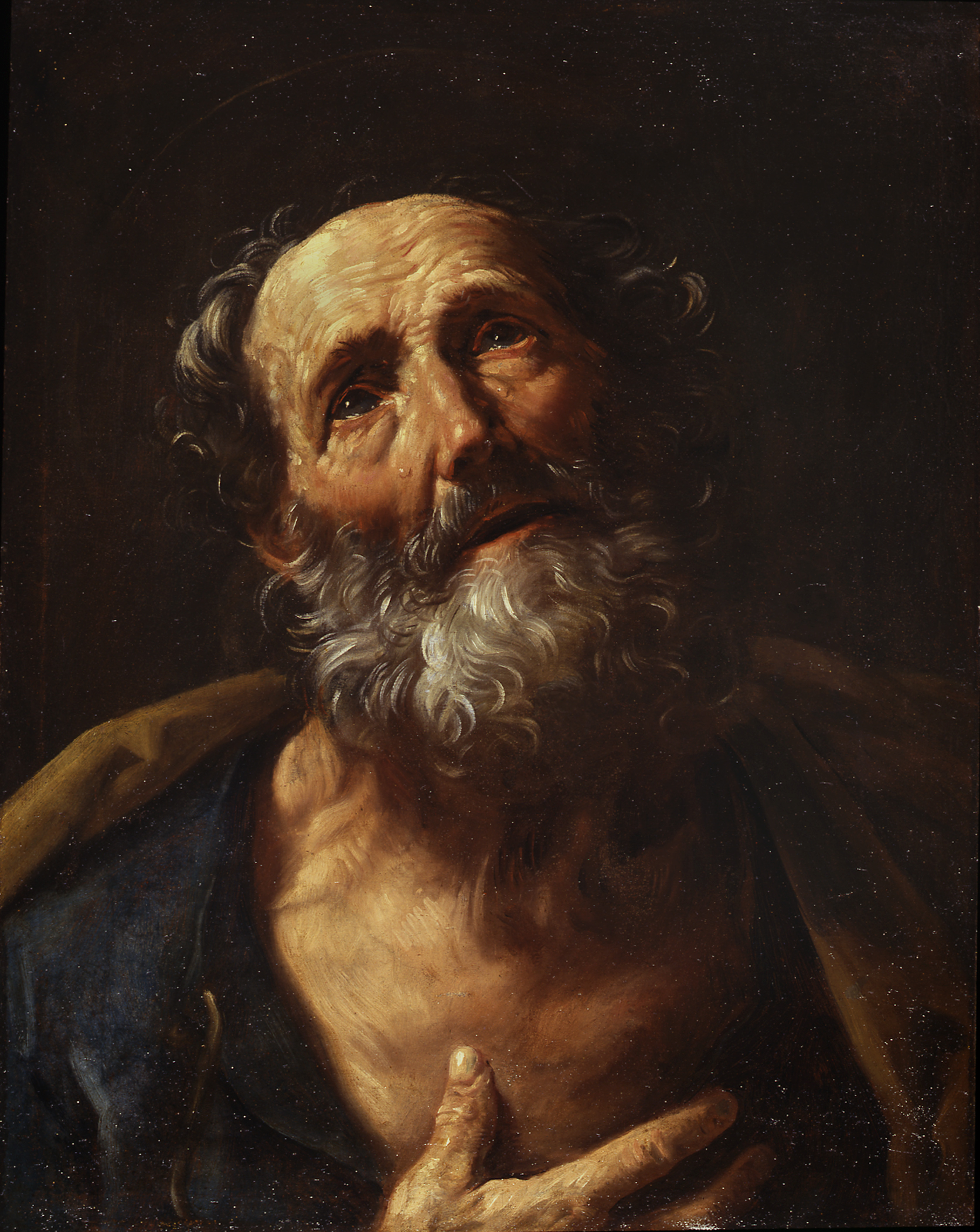
I have worded that question in the most basic and plain way I could manage. What I really mean is, why did we go from representations of people like this with unnatural positions and weird shaped bodies and faces to this with its lifelike expression and emotive face?
If it is purely down to materials available to the artist, then how is it possible that today a person can produce a highly lifelike portrait using only charcoal and rough paper?
Were the awkward and 2d figures of medieval european art a stylistic choice, or were the people of the time just not very good at drawing?
Not to be too brutal to my forefathers, but a lot of early to mid medieval representations of people are not too far beyond what you may expect from a child of 12-14 years old in the modern day. Even the paintings of battles towards the end of the period, in the wars of the roses, feature rather odd looking bodies and flat landscapes.
What were the people back then missing? What was stopping a gifted artist from working out how to draw depth of field, or how to capture the essence of a human face?
10 Answers 2014-11-27
Hello Historians,
I'm going to interview my Dutch grandma to collect some family history. She stayed with her husband (a civil engineer) in the Dutch colony of Papua Guinea in the late 50's until she left again for the Netherlands before the transition.
As I'm not an expert in colonial history (I'm a biologist), I though it might be a good idea to ask for some help: Do you know any additional interesting questions I could ask her about this period?
Thanks!
4 Answers 2014-11-27
I know this is weirdly worded...
I know one of the reasons France got involve in the American Revolution was to weaken the British. I was just wondering if any European powers continued to aid/support the US after the war to make them compete against the British and be almost a "thorn in their side" and act as a counterbalance to British power.
1 Answers 2014-11-27
Cheers! I'm interested to know the earliest occasions when warships have been used for bombarding enemy forts or armies on shore.
I Know that in the US Civil war and in the Crimean war ships attacked fortresses.
1 Answers 2014-11-27
1 Answers 2014-11-27
What context made Monty Python choose to make this joke? I wasn't around in the 70s but I also had never heard of anthrax outside of the anthrax attacks.
3 Answers 2014-11-27
This week, ending in November 27 2014:
Today's thread is for open discussion of:
History in the academy
Historiographical disputes, debates and rivalries
Implications of historical theory both abstractly and in application
Philosophy of history
And so on
Regular participants in the Thursday threads should just keep doing what they've been doing; newcomers should take notice that this thread is meant for open discussion only of matters like those above, not just anything you like -- we'll have a thread on Friday for that, as usual.
2 Answers 2014-11-27
Please talk about both positives and negatives. Thank you!
Edit: Okay how about from 1949 to 1957?
2 Answers 2014-11-27
I was just reading a book about orientalism, and I thought about this question: How did the orientalism (Said's) affect how the West views the Middle East today?
I would be happy if you gave me your sources, so I could read them :)
1 Answers 2014-11-27
1 Answers 2014-11-27
I was just wondering when did the byzantine abandon the formation of its legion and it used mecenaries?
2 Answers 2014-11-27
Through a Westerner's eyes I think it's rather unclear as to how exactly China was more wealthy and prosperous than Europe. The image of Europe as this place of vast stone castles and fortresses gives me this impression that Europe was the place of material wealth, not China, yet books such as Jack Weatherford's books on Asia make it fairly clear that in the eyes of the Mongols Europe was essentially inconsequential. This is hard to reconcile with my impressions of Europe: buildings that tower into the sky, enormous mansions, ancient aqueducts, kings sitting on thrones, buildings made entirely of stone, soldiers geared all in sheets of armor impervious to common peasants, and kings with crowns of gold and silver.
In comparison, from what I've seen of Chinese society, everything seems to be fairly low key. The artworks are generally focused on a highly stylized form of geographical painting style, typically portraying craggy mountains. While admirable, they don't seem to measure up to the Western style of artistry which typically portrays the human body as a piece of artwork.
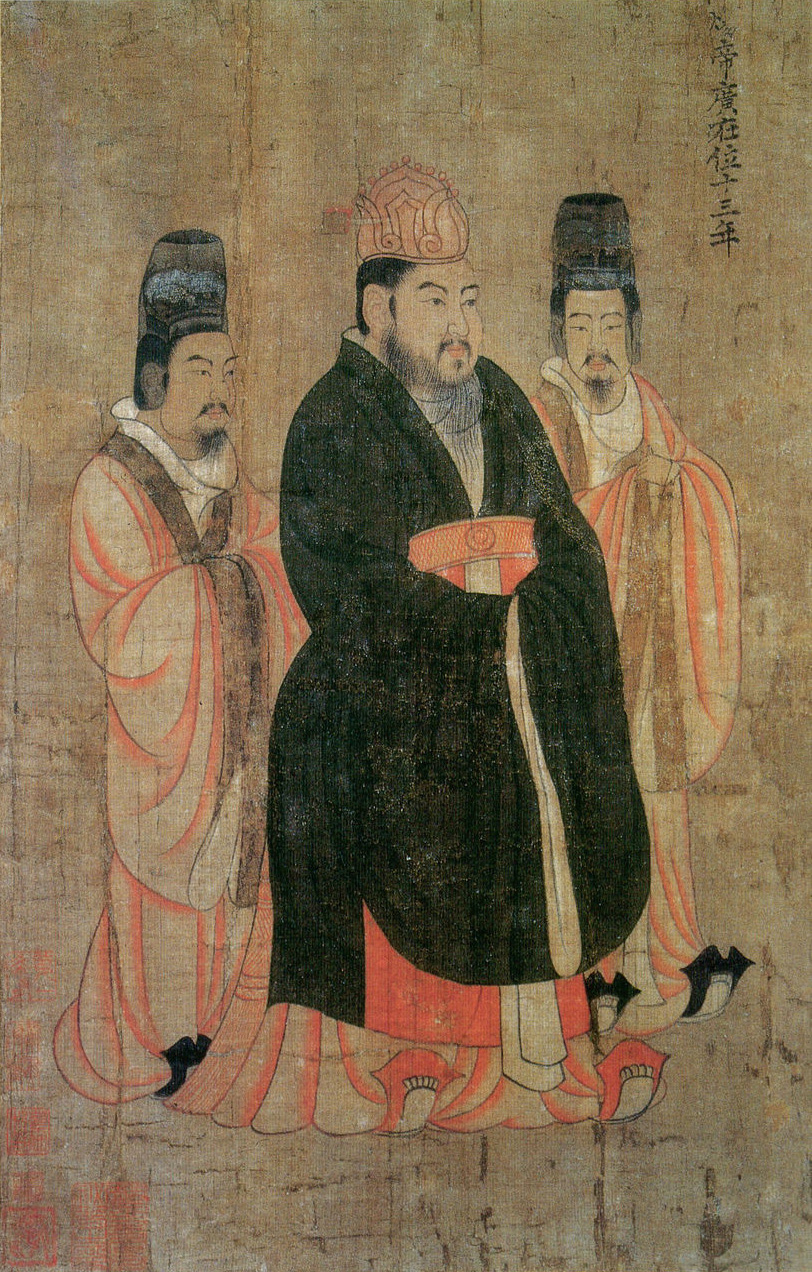
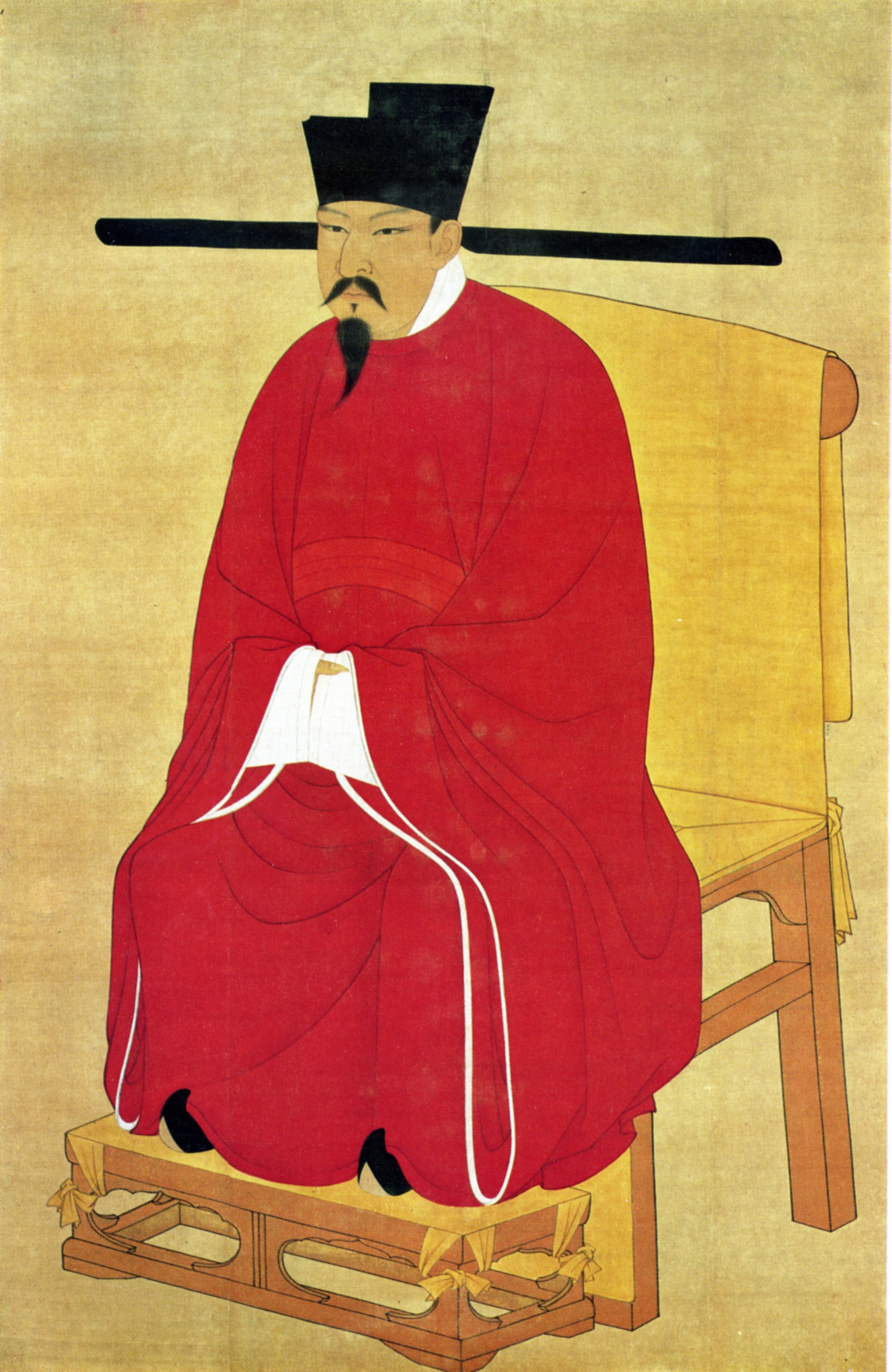
The emperors do not dress up in a way in which they would be distinguished. While the Qin to Sui dynasties seem to have had a tradition of headdresses which could denote their authority, the later emperors seem to be lacking in this feature.
To give you an idea of what I mean here's some pictures:
Emperor Yang of Sui who appears to wear a crown of some sort, possibly made of gold or bronze.
http://upload.wikimedia.org/wikipedia/commons/0/0b/Sui_Yangdi_Tang.jpg
Now here is a picture of Shenzong of Song, who wears... a hat with some flappy things on their sides, while sitting on a chair seemingly made with common wood covered with a sheet on the top.
http://upload.wikimedia.org/wikipedia/commons/3/31/Shenzong_of_Song.jpg
Pretty underwhelming tbh.
Apart from the dress style, I also find the common architecture to be rather lackluster. While the dwellings of royalty and the wealthy are quite wide and spacious, they also never seem to rise higher than a second story. In comparison the churches and mansions of Europe seem to be buildings from the future with their archs and spires. The common man of China seems to have lived in single story houses altogether with identical design and features.
The lack of gold is also pretty noticeable. I'm not sure if it's a cultural issue since Chinese seem to value jade above other jewelry, but nobody seems to wear any gold.
The soldiers as well dress in either cloth or lamellar armor while elsewhere everyone seems to have either picked up chainmail or plate armor. The closest I've seen to European style armor is the mountain scale armor, but that is also scale. The Chinese military seems to be entirely devoid of heavy armors.
So in what way was China more wealthy than Europe?
4 Answers 2014-11-27
A friend of mine asked me what kind of alcohol the Byzantines (Romans) drank. I could think of wine, which was a pretty common drink, but nothing else. I consulted the Oxford handbook for Byzantine studies but it gave the same answer i thought of. So my question to you fellow historians: are there any other known Byzantine alcoholic drinks?
1 Answers 2014-11-27
How would they know that a year can be divided into 12 months?
1 Answers 2014-11-27
Was it to take over trade routes or get more people or just plain hatred? Or have we just embellished the legend?
1 Answers 2014-11-27
I'm a little into Buddhism and it's history, so I have a vague concept that in the late 19th century the Japanese government reformed Buddhism and Shintoism to allow for things like monks to get married, made it so that the head monk of a monastery was a hereditary position, etc.
Why is this? What were the aims of the government in trying to change Japanese religious institutions like this?
1 Answers 2014-11-27
http://www.algonet.se/~hogman/slsoldat_eng.htm
I found this great website, but it did not say what on the uniforms distinguished rank for the Swedish military back in their imperial days. I'm currently writing a short story, and I love being descriptive, but I don't know what on a Carloean uniform distinguishes rank.
Please, somebody let me know!
1 Answers 2014-11-27