Today:
You know the drill: this is the thread for all your history-related outpourings that are not necessarily questions. Minor questions that you feel don't need or merit their own threads are welcome too. Discovered a great new book, documentary, article or blog? Has your Ph.D. application been successful? Have you made an archaeological discovery in your back yard? Did you find an anecdote about the Doge of Venice telling a joke to Michel Foucault? Tell us all about it.
As usual, moderation in this thread will be relatively non-existent -- jokes, anecdotes and light-hearted banter are welcome.
9 Answers 2014-10-10
In modern Africa, there's quite a large undercurrent of thought that states that "homosexuality is unAfrican," despite the fact that many traditional African cultures do include homosexuality and do acknowledge and celebrate homosexuality as a thing that people can be. However, I'm having trouble finding information as to whether or not there were homophobic sentiments in traditional African societies pre-colonisation. Was homophobia imported from Europe? What form did it take in Africa, if any?
2 Answers 2014-10-10
1 Answers 2014-10-10
I was recently at a panel discussing non-violence in the service of people's struggle, and it was clear to me that the panelists were generally against it, believing instead that armed insurrection is the only way to achieve an adequate revolution. One topic in this panel that was returned to often was that Gandhi's role in Indian independence is highly overstated and that Bhagat Singh's role is highly understated to the point of, one of the panelists believed, a complete erasure from history. To hear them talk, independence was achieve despite, not because, of Gandhi and that Singh is the true yet unsung hero of the independence movement. I felt fairly skeptical, but didn't know enough about Singh to effectively dispute it. Later, I read the Wiki article about him, but found it unable to adequately answer my questions. So, I turn to you, AskHistorians: is the role of Bhagat Singh understated and, conversely, is the role of Gandhi overstated?
1 Answers 2014-10-10
From Wikipedia:
During the Cold War, lack of reliable information about the country forced Western analysts to "read between the lines" and to use the tiniest tidbits, such as the removal of portraits, the rearranging of chairs, positions at the reviewing stand for parades in Red Square, the choice of capital or small initial letters in phrases such as "First Secretary", the arrangement of articles on the pages of the party newspaper "Pravda" and other indirect signs to try to understand what was happening in internal Soviet politics.
I know that Soviet scholars & journalists at the time tried to read these signals. What I want to know was, were they ever right? Or was it all some kind of political science mysticism?
2 Answers 2014-10-10
In a book called The Sleepwalkers by Arthur Koestler, he writes, "Numbers were regarded by the Pythagoreans as patterns of dots which form characteristic figures, as the sides of a dice; and though we use arabic symbols, which have no resemblance to these dot-patterns, we still call numbers 'figures', i.e. shapes." This makes it sound like they used their own unique form of writing numbers. Unfortunately, he doesn't continue to explain how the figures were actually written. How true is this statement? If true, how far outside of this group did this practice extend?
Also, on a related note, Koestler mentions that they, as a "religion," were able to survive through the discovery of irrational numbers by killing those who leaked the discovery. I'm curious about the veracity of this as well.
I know it's a fairly specific question, but any information you could provide would be helpful. Thanks!
2 Answers 2014-10-10
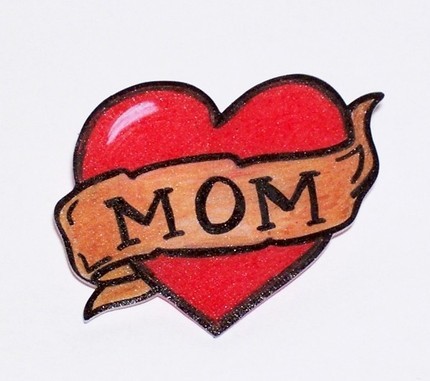
When a tough character turns up in a children's cartoon or comic, it's very often the case that they have a tattoo that looks very much like this. How did it come to be the go-to tattoo example for this purpose?
1 Answers 2014-10-10
I don't understand how buffer states worked all too well, and I'll use Mongolia as an example. In the cold war era, it was supposed to be a buffer state between USSR and Red China. But those two powers already had a shared border to the east, so wouldn't a buffer state be negligible, if they bordered each other?
2 Answers 2014-10-10
Correct me if I'm wrong but both regions have a mix of French and German cultures, besides being traded back and fourth in war have they ever tried to peacefully switch countries themselves? Come to think of it, I know about political entities becoming independent peacefully but have any switched countries of their own accord democratically?
2 Answers 2014-10-10
2 Answers 2014-10-10
Specifically, how did they fend off other powerful empires, such as the French, British, Italian, Spanish, etc.? I understand naval empires require less manpower than traditional land-based empires, but wouldn't the competing large powers also have expansive navies?
Would it not be reasonable to assume that once the Dutch navy had been demolished, that British/French/Spanish troops could just steamroll over their colonies?
3 Answers 2014-10-10
Hello everybody. I have a few questions about the Hui minority in China.
1 Answers 2014-10-10
A friend showed me a book that he found on the side of the road which is on tropical gardening. it had a stamp in it that referenced the: partieao de fomento agricola industrial commercial de Timor.
Or something similar (smudged stamp!) Its obviously a company from Timor dealing with agriculture industry and commerce but I cant find any reference in English. Does anyone know anything about it? Or if not, anyone shine light on how the Portugese ran Timor... Was it a company type thing like the voc or was it more a crown centred thing like Spain? Thanks. Will post a pic soon.
1 Answers 2014-10-10
What is the truth to the rumor I heard about 1/500 people in China being directly related to Genghis Khan? Is this merely a myth?
1 Answers 2014-10-10
4 Answers 2014-10-10
I'm an ex-history student (if one ever truly stops being a student of history), but my current bent has me stumped for resources! As an English Brit, and intrigued by the questions of identity which plague myself and my English ilk as well as a lover of food I'm keen to dig into the culinary past of my lot.
Are any among you able to point me to any decent resources around which might shed some light on the kinds of foods that the majority of people would have eaten in any given period (as opposed the menus of royalty and high society etc which are much easier to come by)? From bibliographical pointers to primary sources such as they exist, I'm open to any and all suggestions!
2 Answers 2014-10-10
I am Reading the novel "Shogun" and the main protagonist is amazed by how clean the cities are compared to London. Is that an accurate depiction of Japanese cities in the mid-1500's?
The specific city they compare is Osaka With London
3 Answers 2014-10-10
I have an IB History internal assessment and I'm answering the question:
How influential was Elizabeth I in her role as British monarch during the English Protestant Reformation?
I was wondering if anyone would be able to give me some advice for sources I could use. Any sources with information regarding the Protestant Reformation would be helpful. And generally, just any advice you could give about the topic, or suggestions for a better essay question.
Thank you very much.
1 Answers 2014-10-10
There isn't much I can find on the internet I can find about Lord Louis Mountbatten's role in saving 4 million lives as he claimed in the interview with Kuldip Nayar. Help appreciated.
1 Answers 2014-10-10
2 Answers 2014-10-10
My uncle used to have a pair of these short swords, whose handle was a grip and trigger with the barrel running parallel to the blade. They looked old and he didn't care if they were authentic or not due to the aesthetic, however I'm wondering, have these ever been a thing? They looked to me as if they were late 18th early 19th century weapons, sort of something a pirate would carry.
4 Answers 2014-10-10
First, is it true that nowadays, anyone with the last names Cohen or Levi are descended from one of the twelve groups of High Priests of Ancient Egypt? Learned so in my Humanities class but just want to confirm before I say it and sound stupid.
Also please feel free to throw down any fun facts that I could put into the speech.
1 Answers 2014-10-10
I see it a lot in historical fiction, and since it's easily transmitted and only turns serious for 1 in 10, was it that most people in history had some form of it?
1 Answers 2014-10-10