Further how did they develop so differently than the other German states while still speaking German?
1 Answers 2014-07-10
1 Answers 2014-07-10
During what time period did Russia wrestle control of lands that belonged to the Khanates and other tribes that occupied its borders? What were the battles and wars like? Is that time period looked at by modern Russians in a similar romantic way that America views the Indian Wars?
Also, are there any books to recommend on the subject?
3 Answers 2014-07-10
1 Answers 2014-07-10
1 Answers 2014-07-10
On a related note, I've been watching an anime where a hymn is recited. After searching it I cam across only one mention on Google: http://the-free-lands.wikia.com/wiki/The_Corpse_Song_(Hymn)
The page states that it is "a partly translated hymn discovered in several ancient Tof temples engraved into the walls of what are believed to be either sacrificial or altar chambers." Would anyone be able to validate this statement? It may very well be entirely made up, so no need to search too hard. ;)
1 Answers 2014-07-10
I've been reading an English translation of The Gallic War, and I have some questions about a few things.
Trenches and forts. Caesar's legions dig trenches and erect forts everywhere they go, and it doesn't seem to be a big deal at all.
For example at the Battle of the Aisne, Caesar orders one of his lieutenant-generals to "entrench a camp, with a rampart twelve feet high and a ditch eighteen feet broad". Later he constructs forts to protect his flanks, with the enemy Belgae only a kilometer or so away.
Where would the legions get the materials to build forts and ramparts so frequently, and how long would construction usually take? Would structures be dismantled after the battle (re-using materials)? And why would the enemy just watch while Caesar's men build forts so close to them?
Second: hostages. Caesar's takes a lot of hostages, what would their lives be like? Would they be put to work or treated more like guests? Would they even be kept with the army? Caesar takes 600 hostages from the Aedui, isn't this a bit excessive? I would have thought that having so many additional mouths to feed would cut in to the corn supply.
2 Answers 2014-07-10
It says union made
1 Answers 2014-07-10
I'm under the impression that the incredibly developed western-style cities such as modern Jerusalem, Tel Aviv, Haifa, and Ashdod would have been far smaller, non-western, less developed, and less important than in modern days.
Nowadays, Israel has a large population of mostly Hebrew-speaking Jewish people, a large economy, and is a strong regional power. Prior to the creation of an Israeli state, what did the area look like? Was the area poor? How was the economy? What were the demographics? Is there a modern comparison? Would it look like the many small Arab villages in Palestine?
2 Answers 2014-07-10
In class I a learning about how marxism explains a lot of history as the result of class warfare. I found his explanation very powerful as it explained why history is path dependent since the behavior of people during these class conflicts are unpredictable.
Anyway, are there other modern alternatives to these explanations? I was bummed out the only alternative my class offered described how ancient people believed historical change were decisions made by gods.
1 Answers 2014-07-10
1 Answers 2014-07-10
Hello, I'm developing a chapter of my current work that needs to account for the increased supply of wheat on the world market from c. 1840 to 1914. It's obvious that the supply of wheat available for export to Britain did increase dramatically in this time frame, and it's pretty clear that this increase was intimately tied to the expansion of cultivated area in the United States, Canada, Australia, and Argentina, where non- or semi-agricultural peoples (Native American, Australian Aborigines, etc.) we expropriated and/or exterminated, making way for European settlement. According to some economic history literature, wheat was the preferred crop of frontier settlement because it offered the highest value relative to bulk; indeed, some economic historians have essentially explained the movement of the frontier in the American West as this equation: if (wheat prices - transportation costs) > cost of bringing land under cultivation, then settlement.
That's all very well, and is a useful way to look at the issue. However, people are not little working robots and there's clearly a LOT more going on than a simple calculus of grain prices and labor costs. So, I'm looking for book or article recommendations that can show me the state of scholarship on agricultural settlement in the US, Canada, Australia, and Argentina (or other places you think might be useful). I'm interested in works that address things like the patterns of settlement, the transformation of landscapes, the construction of infrastructure, conflicts between European settlers and non-European inhabitants, state policy in facilitating the growth of "settled" lands, and the ideologies and cultures that underlay this broad transformation of so much land.
Thanks!
3 Answers 2014-07-10
Did they just leave or was there fighting on the islands? Also why were the islands not considered more strategically important to the allied forces (looking at their proximity to France)?
1 Answers 2014-07-10
Sorry if this is vague or seemingly obvious, but hear me out. I've been reading Les Miserable and Hugo spends a lot of time commenting on the political and religious landscape of his day. It seems that there were differing beliefs on the overall outcome of the revolution.
So my question is what was the impetus for the revolution? What made it have such an impact on France and the world? And why were there such mixed feelings about it.
Note that I am not only french history dumb, but history dumb in general. Thanks for any help in understanding this momentous historical event.
1 Answers 2014-07-10
Simply, why did the Germans go along with it all? Why join the Nazi army? Would they have killed them for not joining?
Are there any books that discuss this topic. I know not all Germans were Nazi's and many fled or did not support Hitler but enough did to fill his ranks and give him power. I'm fascinated by how such a small political force could convince and mobilize so many millions.
1 Answers 2014-07-10
I know that the Greeks had reached as far North as Ischia pretty early on; there's a cup bearing a Greek inscription found on the island dating from the 8th c. BC. Ischia is off the coast of Naples, a comparatively short distance away from Rome. Why did the Greeks (to the best of my knowledge) never reach what is present day Lazio?
1 Answers 2014-07-10
I've heard stories of the Byzantine Emperor giving some land in the eastern Black Sea to English refugees who were fleeing William the Conqueror in the 11th century. What became of it? Did it even exist?
1 Answers 2014-07-10
I understand why salt is a staple, it's purely biological. Yay for us for finding ways harvest/mine it. But black pepper? I was just taking for granted that that is what we use, but couldn't it just as easily be something else like ground coriander, a dried herb of some kind, etc? I was wondering if there is an historical reason for why S&P is our go to seasoning. Any ideas reddit?
1 Answers 2014-07-10
Can someone explain this conflict to me? Don't need too much detail, but want to have a good understanding.
Thanks in advance!
1 Answers 2014-07-10
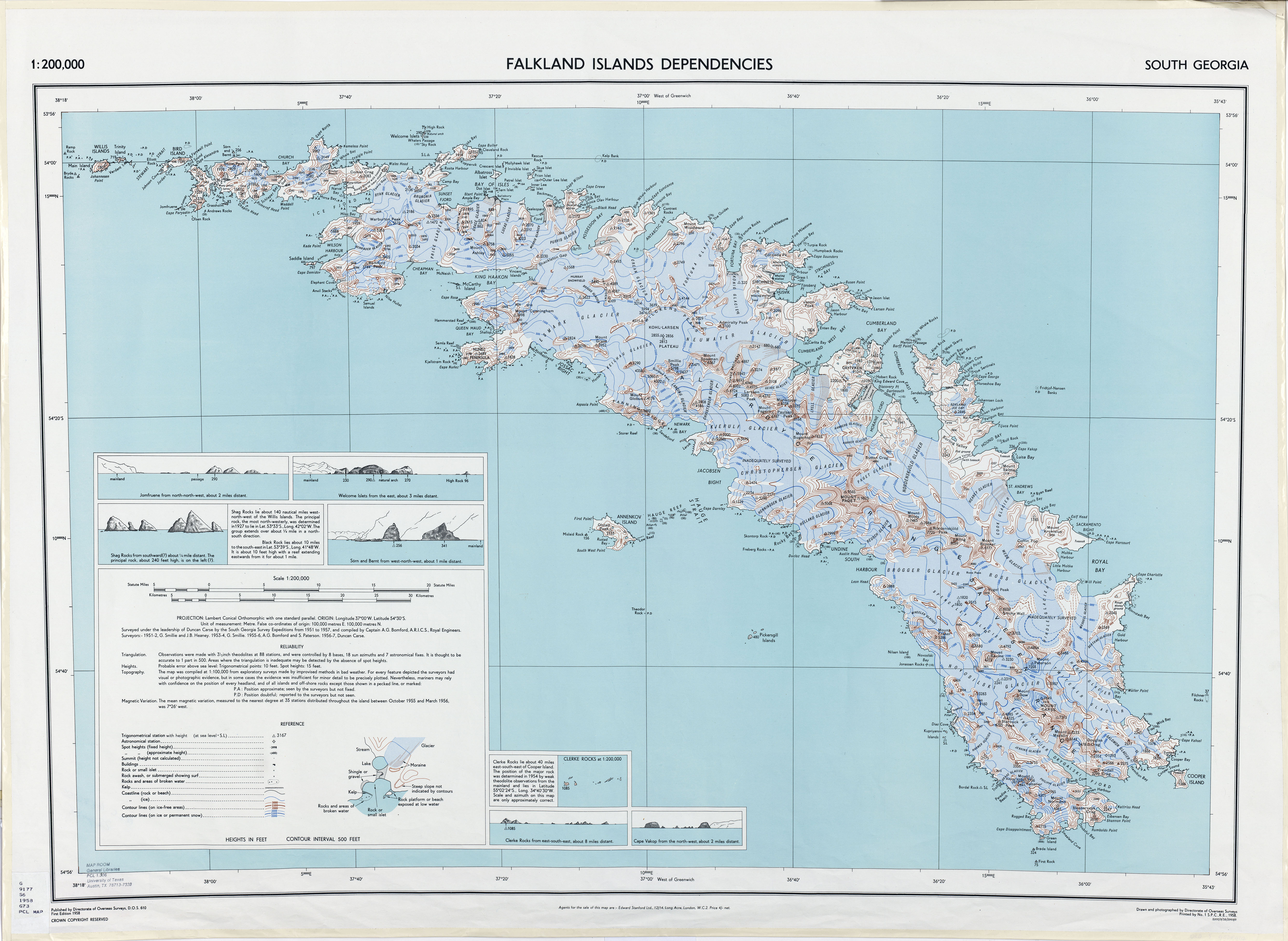
I've been reading the account written by Shackleton (South) about his famous Antarctic expedition. I was especially amazed about how he and his men survived their hike across the remote British territory of South Georgia after their 800 mile open boat journey. His book says that they landed on the southern side of the island and hiked from King Haakon Bay to Stromness Harbour, at the time the site of a whaling station. Something doesn't make sense though, according to this map there is another much closer settlement called Prince Olav harbour which although marked as derelict on the 1950's era map would have been open in 1916 (it was abandoned in the 1930s according to Wikipedia).
This map shows this even more clearly, he could have avoided a larger mountain range, a couple of glaciers and a lot of miles by heading north to Prince Olav harbour instead of heading east to Stromness. Was he unaware of the station's existence or did he have a particular reason for heading to the more distant Stromness station?
1 Answers 2014-07-10
How did they draw native attention? How did they teach? How were their locations chosen? Did their target audience change over time as new groups of people arrived?
1 Answers 2014-07-10
1 Answers 2014-07-10
In the Middle Ages, they seem to have some colorful terms for modern diseases. Things like 'joint evil' (arthritis) and bloody flux (dysentery) are obvious, but the one that I can't find any substantive sources about is called 'Arnaldia'. Apparently both King Philip II of France and Richard I of England came down with it, and both lost their nails and hair... Phillip's hair didn't come back, but Richard's did.
What is this mystery ailment? I've heard some people claim it may have been scurvy, but I'm not convinced... Also malaria is supposedly sometimes mentioned but Richard is known to have recurring bouts of that already and it was called something different.
Are there any sources at all that shed any light on what Arnaldia might have been in terms of modern medical parlance?
3 Answers 2014-07-10