I've been doing some research about the employment outlook for history PhD's in America and the numbers are troubling. Most of the article and data I have found suggest that approximately 45-55% of persons with a PhD in history do not find a job in their field. Currently I am finishing up my Master of Arts teaching degree and considering applying for a PhD program (although I would likely be required to do an accelerated master PhD combination program), but obviously the numbers have me second guessing that decision. My graduating GPA is going to be about a 3.85-3.9 so I know my grades wont be an issue with admission, although i'd still have to take the subject specific GRE and normal writing portions of the application. I'm curious about Askhistorians has for opinions, insights, etc on this situations. Any advise or information would be greatly appreciated.
1 Answers 2014-05-21
On wikipedia's Battle of Cannae there is no mention of elephants, I've heard stories that the Romans fled in fear of Hannibal's elephants but I have no idea who made these claims, were the elephant bones or tusks ever on display anywhere in Rome? Was anything made of their ivory? Has anyone found an elephant corpse or fossilized elephant excrement anywhere on the Alps or Spain and France? If the Alpine ices can preserve Otzi from 3,300 BCE they must have preserved some part of the elephants if they were actually brought to Europe for his invasion
edit: Thank you all so much for these elegant and informed replies, confirming my view that this is by far the best and most professional subreddit. Learned a lot about the variety of elephants brought to and in use in the Mediterranean. Unfortunately it would seem there is no physical evidence of Hannibal's elephants that archaeologists have found, but we can hope for the best as responders have brought up writers like Polybius who discussed the elephants in question.
3 Answers 2014-05-21
1 Answers 2014-05-21
I read that early Mesoamerican societies viewed the skull as representing life as well as death. Perhaps it's just difficult for me to wrap my head around, but celebrating skulls as a symbol of life seems like a difficult leap to make. Is there any more to it than that?
2 Answers 2014-05-21
Some other follow-up questions if you find the time! This is a period and place in history that I know almost nothing about, so even basic information is more than helpful.
•Was Japan's invasion of China in the 30s doomed to fail?
•Roughly from 1920-40, did Japan modernize in a way that was similar or incomparable to the West?
•Compared to China, did Japan modernize more effectively?
1 Answers 2014-05-21
By traitors and spies, I'm referring to people sympathetic to the Axis cause at the time. I know that America put Japanese-American citizens in internment camps during the war, but I could imagine the conflict in Europe was much harder to discern.
Were there people within the Allied militaries(USA and UK mainly) that sympathised with the Nazi cause? Since the war was partly one of ideology, what steps were taken to ensure that no sympathisers or outright spies found their way into the ranks? Were people with known nazi/fascist sympathies rounded up in the same way as Japanese-Americans? What steps were taken for those they didn't know about?
As a related question, were there any Americans of descent from countries like Italy and Germany that left to join the war on the side of the Axis, feeling it was their duty to aid the struggle of their ancestral homelands? The American-German POW in Band of Brothers come to mind, who claims his family left to aid the struggle of national socialism.
2 Answers 2014-05-21
I know that costs would be different based on region and style as well so for the sake of the question I'll specify castles in France but if someone knows the relative cost of castles in other regions that would be cool to know too. Which castles would be the most expensive, the cheapest?
5 Answers 2014-05-21
1 Answers 2014-05-21
4 Answers 2014-05-21
So a muslim friend of mine has the opinion that Islam was spread in a peaceful in northern Africa, but upon reading a little bit about this topic (mainly internet) I thought it would be quite difficult to actually convert all those territories to Islam peacefully, as a conquest (in my definition) is a military act. Did the rulers of that time impose Islam on the people or did they convert voluntarily?
I am specifically asking about the time period between 622 - 800 AD.
1 Answers 2014-05-21
I guess this question is pretty self explanatory.
5 Answers 2014-05-21
This weekly feature is a place to discuss new developments in fields of history and archaeology. This can be newly discovered documents and archaeological sites, recent publications, documents that have just become publicly available through digitization or the opening of archives, and new theories and interpretations.
1 Answers 2014-05-21
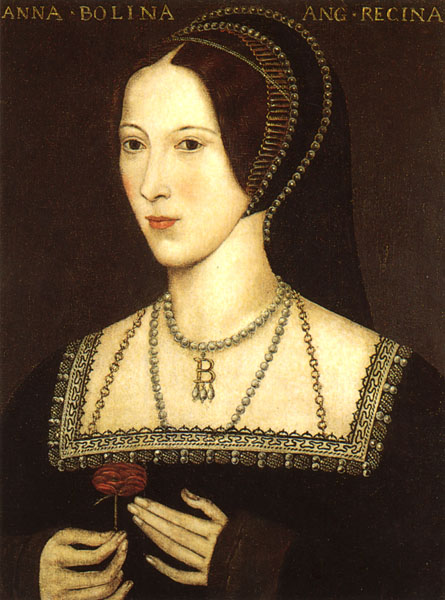
I was just wondering after I came across pictures of Anne Boleyn and Elizabeth I. As you can see, in both of them, they are holding what resembles a red flower. I wanted to know whether or not these were Lancastrian roses and if they were, why in the Tudor dynasty??
2 Answers 2014-05-21
Just a big area of interest for me.
1 Answers 2014-05-21
What I am referring to of course is the typecasted, "Are humans inherently bad/good" question. Has studying history affirmed or reversed your opinion on this issue?
I'm fully cognizant that this question is not canonical for /r/AskHistorians, and if the mods wanted to delete this post, I could be understanding (though disappointed). I deliberately chose not to take this question anywhere else like /r/Philosophy. I don't want a philosopher's opinion on this. I want a historian's.
17 Answers 2014-05-21
I've found many of the attitudes towards WWII history to be tainted by my high school teachers who just liked to relish in how the dough boys saved everyone's behind. The Maginot Line was always brought up as "this silly thing France thought would work". Was it a waste of resources, or at least worth it to create a road block for the inevitable war machine?
4 Answers 2014-05-21
8 Answers 2014-05-21
Many older buildings in Italy have iron bars fixed on the sides of them, sometimes flat and sometimes at an angle. What are they? You can see several of them in this photo from Florence, on the lighter colored building. My best guess is that they somehow are holding the bricks together in a weak spot.
I only know them as Ezio's handholds from Assassin's Creed 2!
1 Answers 2014-05-21
The ancient Nagas were a powerful tribe who are often mentioned in accounts of various rulers. They are even mentioned in the Rig Veda, the oldest of the Hindu religious scriptures. Is it possible that they were pushed towards the North-East from the main 'Aryavarta' region?
1 Answers 2014-05-21
I recently started watching HBO's "Rome" and now am interested in reading some books about ancient cultures. I discovered my knowledge of those times isn't that good so I would like to change that.
2 Answers 2014-05-21
This is probably one of the more stupid questions on here. What I am curious of is that if there were any documented cases where the spikes on the end of the helmet were actually usefull or not, because overall, it just seems impractical to me. Kind of like the horns on the vking helmets (which I know is a misconception).
1 Answers 2014-05-21
I've just come back from a section of the wall called Mutianyu, so maybe other sections are different. But the wall seemed a little unimpressive compared to the pretty impregnable mountains it was built on. But I feel I might be missing something.
So my question is, was it actually worth spending all those resources to build large parts of the wall?
1 Answers 2014-05-21