I feel that if you take the advancement of communism and the contentious situations that occurred with the US around the world regarding the advancement of communism, the Soviet Union was very successful at throwing their influence around and helped create a number of other communist/socialist regimes.
The Soviet Union helped create communist regimes in (directly or proxy): China, Mongolia, North Korea, Vietnam, Cambodia, Laos, Afghanistan, Romania, Bulgaria, Yugoslavia, Albania, Hungary, Czechoslovakia, Poland, East Germany, South Yemen, Ethiopia, Somalia, Mozambique, Madagascar, Angola, The Republic of Congo, Benin, Cuba.
There were instances where the US intervened (sometimes successfully and other times, not so much) but in the end, to Soviet Union collapsed, thus making the US the victors in the Cold War.
1 Answers 2014-03-24
From what I know of East Asian history, the Empire of Japan attempted to spread Shinto and kami worship in its colonies. In Korea, they erected Chosen Jingu along other shrines and made participation in State Shinto ceremonies mandatory. Afterwards, though, as far as I know all traces of Shinto was removed from Korea after it regained independence.
However, I am wondering if there is any kami cult that "naturalized" and became a part of the religions landscape of the Empire of Japan's former colonies. My current assumption is that there probably isn't any due to the politicization of imperial era Shinto, but my understanding of WWII-era East Asia isn't complete.
1 Answers 2014-03-24
By a lot of historical reckoning their civilization began to develop a few centuries after Summeria was really getting going, they began forming cultures in the Yangtze and Yellow river valleys growing Millet and Rice. Now, why is it that China has always had such high populations? I haven't in my reading found anything noting large birth-rates on average or anything of that nature, and it's always confused me. As another point of reference, during the Tang Dynasty, Chang'an was, supposedly, the largest city on earth by far, at 2 million people, compared to Cordoba's 450000 and Constantinople's 300000. Really any information on these subjects,is appreciated. Thanks.
1 Answers 2014-03-24
Did they leave people behind to govern that land? And if the Mongols raped and pillaged so ruthlessly, how much was left in their wake that needed governing?
2 Answers 2014-03-24
1 Answers 2014-03-24
I'm not particularly sure if this is the right subreddit, but I was always wondering how any famous knights were skilled enough to fight dozens of battles and still survive in (mostly) full health.
I've heard the line: "In a knife fight, the loser dies in the alley and the winner dies in the hospital". What made the battles between medieval knights (any jousts to the death or wars) any different? I don't think the armor would have made a significant difference if the enemy recklessly attacked, without regard for their own safety. Also, the same question seems to apply for kings who lead their armies into combat - how was it safe enough for the kings/leaders to charge into battle like that? Sure, many knights would survive a war (especially on the winning side), but it seems that the kings would be recognizable figures and immediately targeted. Any insight would be appreciated! :)
1 Answers 2014-03-24
I have been reading up on the First Crusades and there seems to be a lot of different causes and catalysts. I originally believed the Byzantine Empire called for a crusades against the invading Muslims but after reading more it seems the Pope was calling for a reformation in the East. I'm confused.
Is there anyone who can give me a clear concise explanation on the causes of the First Crusades.
What role did the Papacy have in the First Crusades? Was it militarily? Monetarily?
Why do so many people blame the Church for the Crusades?
3 Answers 2014-03-24
Basically how did pre/post colonialist Palestine differ? Were all effects negative (poor economy, ongoing conflict etc) or is there positive aspects to it? What point in history can you start is pre colonialism Palestine, pre Ottoman or even pre Crusades?
2 Answers 2014-03-24
-Focusing mainly on the effects of the American press on the American people
-Looking for anything controversial relating to the 13 day incident
Honestly anything would help, I'm a mechanical engineer, so this really isn't my thing as you might of guessed. Thanks Reddit!
TLDR; Cuban Missile Crisis. The Media's effect on American People. Sources? Help!
1 Answers 2014-03-24
To my understanding it was still self identified as the Deutsches Reich within Germany. Wouldn't it be appropriate to call it the German Empire, or the German Republic? Is there some purposeful attempt to separate the Weimar Republic from the Empire so as to distance it from Nazi run Germany?
5 Answers 2014-03-24
I remember learning in school that Franco was a fascist dictator, but I've noticed that Spain isn't usually considered when people talk about fascism- they only mention Germany and Italy. I was wondering if this is because of me learning bad history or because he's just not as much in the public eye, because of Spain not directly fighting in the second world war. Thank you for your time!
2 Answers 2014-03-24
1 Answers 2014-03-24
United States of America to be precise
1 Answers 2014-03-24
1 Answers 2014-03-24
If you haven't watched The Americans it's pretty great. I know the show is a fantasy, but It got me to wondering if there were any documented cases of "sleeper cells" during the Cold War. Personally it doesn't seem like the most efficient use of a lot of resources that would have to go into training agents of this type, but I can also see the payoff. I guess this question could about most of US history as well.
2 Answers 2014-03-24
I've read a bit about the tactical transition from pike based armies with arquebus support to mostly gunpowder armies. What nation(s) developed that and did it make an immediate impact on their success? What time frame are we looking at? Thank you!
2 Answers 2014-03-24
If not a school, some kind of sexual training programme or series of lessons? It's a common trope in fiction, appearing in Firefly, Game of Thrones and Metal Gear Solid. Is it entirely fictive and fanciful, or is there some truth to this trope? TvTropes only lists a few unsupported claims of such institutions.
1 Answers 2014-03-24
Has Congress ever asserted that it is superior to the President? Not de jure, as that would violate the Constitution (if I remember correctly), but what about in practice?
Did the Speaker of the House ever had powers that, today, would be powers held by the President?
Can anyone recommend reading material on this topic?
1 Answers 2014-03-23
2 Answers 2014-03-23
What were the earliest recorded social titles? And what were they used for?
3 Answers 2014-03-23
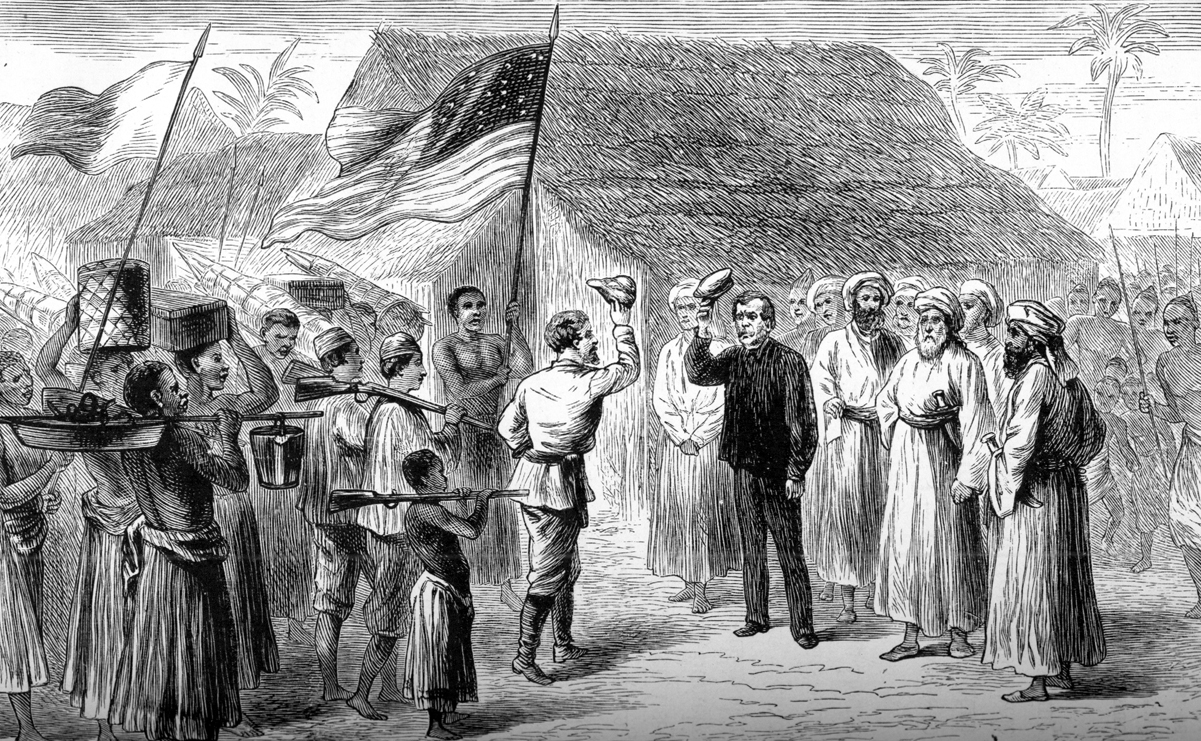
Like in this picture of his meeting with Livingstone:
http://libweb5.princeton.edu/visual_materials/maps/websites/africa/stanley/stanley1-4.jpg
1 Answers 2014-03-23
This might be better suited for /r/linguistics , so forgive me if this isn't the right place. I was reading the Adventures of Sherlock Holmes yesterday when I realized how strange it is that Bohemian referred both to a lifestyle and an ethnic group. Does anybody know how or when this association first occured? The earliest usage I can think of would be Puccini's La Boheme.
1 Answers 2014-03-23
As per title really. He died in WW1 and is remembered on the large memorial in Ypres. I have been studying my families history and due to the families department involvement in WW1 its something that has piqued my interest. I also had a great grandfather who was captured and sent to Wahn, and a great uncle who died along with his son, by family legend, on the same day. It is also said by my oldest family members he died in his father's arms.
1 Answers 2014-03-23