Obviously there are numerous examples of warfare taking place, such as between the Navajo and Apache, but in the wider timeline, these periods seem few and far between. There has also been trends of native American languages seemingly deriving from the same family. To what extent were these groups interacting with each other? Was inter-tribal marriage typically common and/or accepted?
Thank you for your help :)
1 Answers 2020-12-05
1 Answers 2020-12-05
I'm currently doing an Extended Project Qualification (EPQ) for my A-Levels (UK). My chosen topic is The Spanish Civil War, focusing specifically on what factors lead to the Nationalist victory. I am already using The Battle For Spain - The Spanish Civil War 1936-1939 by Antony Beevor and The Spanish Civil War by Hugh Thomas. If anyone knows any further books, articles or textbooks that apply to my specific topic I would appreciate it.
2 Answers 2020-12-05
Were people so badly educated that some of the basic cognitive functions we take for granted simply non-existent in ancient times?
1 Answers 2020-12-05
I found a peice from 1546 Spain that has a peice named pavan de Alexandre.I wanted to know what historical figure it might refer to at that time.Maybe a priest or writer.
1 Answers 2020-12-05
1 Answers 2020-12-05
What, if any, was Mexico's role in WW2 in respect to foreign policy and it's neighbor to the north? Were any attempts made by the Axis similar to the zimmerman note decades back?
1 Answers 2020-12-05
I recently got the chance to watch on YouTube a video by the user OllieBye which chronicled the history of civilization, every year. I noticed you had primitive tribes of Europe at first like the Bell beaker people, Gothic and Latin tribes which in turn became the Roman republic and then the Roman empire, which fell and turned into the ostrogothic people. We ended up having kingdoms like France, England, Norse and the holy Roman empire, meanwhile During this time, the map of North America was basically blank, you had the Pueblo people and the Mississippi people but that wasn't until later. Europe and Asia were creating empires that rose and fell and religions like Judaism, Islam, Christianity, Buddhism. You had notable figures like Genesis Khan, Julius Caesar, William the conquerer, Jesus, muhammad and the buddha. Meanwhile I don't see really much of anything from the Native Americans.
In South America, it seems they were maybe a little more advanced but not by much. We had the Maya, Aztec and the Inca empire but by the 15th century when the europeans arrived, the native Americans had spears and arrows while the europeans had gunpowder, horses and Armor and the inca, Aztec and Mayan empires were crushed.
Why was this the case? Why were the native Americans behind europe and asia? The Natives were stuck in the Bronze age but the Europeans were much more superior by the time they landed in the Americas.
1 Answers 2020-12-05
I'm researching the Civil Rights Movement for my religion class and I've had no problem writing a few pages about the SCLC and the Nation of Islam among the other religiously motivated civil rights activists. I now have the problem of not being able to find much on the religiously based opposition to the movement. I've written so far about the KKK and a few other examples but I'm struggling to source information on this. I'm not so much asking you gusy to tell me the answers as to give advice on how to go about researching this as rn I'm fairly stuck for sources.
Any help on sourcing info would be appreciated.
Thanks.
1 Answers 2020-12-05
1 Answers 2020-12-05
1 Answers 2020-12-05
1 Answers 2020-12-05
First, I seem to recall that he arrived in the US around 1922 in 1920. While it's possible for an immigrant to the US at that time to have lived and worked fully within their respective immigrant community, the fact that he found success as an actor outside the Hungarian community during those nine 11 years suggests to me that he did learn English with reasonable proficiency.
Second, he had already played Dracula in the stage play on which the 1931 film was based, while the story I'm questioning makes it sound as though the film was his first attempt at the role.
Third, there was a 1932 series of interviews with Hollywood stars that included him, and he speaks English without apparent trouble in it. At the same time, I recall it seeming somewhat scripted, since it seemed overly calculated to reinforce his sinister image. Are there any more clearly unscripted interviews with him from that period?
EDIT: Found the 1932 interview. It doesn't seem quite as scripted as I thought, at least not in its entirety. He uses "sculpture" as a verb, and while it is not incorrect to do so, I think most native English speakers would instead say "sculpt" in that context; this suggests to me that the things he says in the interview are largely his own words.
1 Answers 2020-12-05
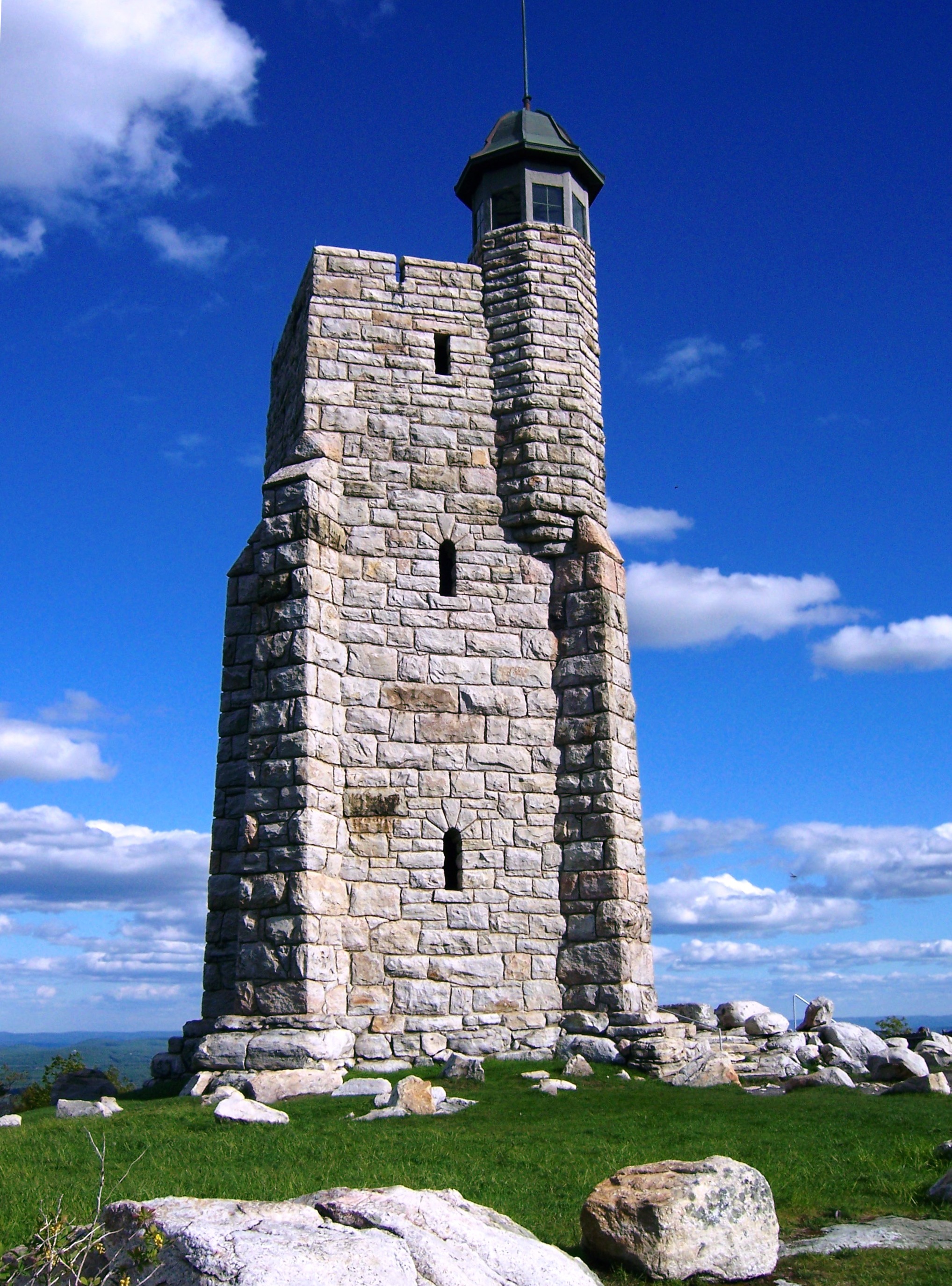
Examples:
Castle Craig, Meriden, CT, in a Hubbard Park.
Skytop Tower, New Paltz, NY, in the Mohonk Preserve.
Sleeping Giant Castle, Hamden, CT, in Sleeping Giant State Park.
Why did people want to tick "castles," or towers on mountains? Did this idea spread around the rest of the country? Why don't you see recreational "castles" in Texas?
1 Answers 2020-12-05
1 Answers 2020-12-05
1 Answers 2020-12-05
1 Answers 2020-12-05
Can anyone explain to me who Yahweh is in the Canaanite Pantheon? I’ve heard that he is related in some way to El and Baal.. Kinda wanted to see what you guys think or if there’s anything I can read that you guys can direct me to.
1 Answers 2020-12-05
3 Answers 2020-12-05
1 Answers 2020-12-05
We learned in school that the German invasion of the Soviet Union in 1941 (Operation Barbarossa) was a surprise attack on Russia, which ultimately broke the Nazi Soviet Non-Aggression Pact. We were told things such as western leaders like Churchill warning him that an invasion was coming, yet he remained complacent. We were even told that during the initial invasion, many Russians simply thought the Germans, who they thought to be their allies, were just there to lend aid to them, and because of Stalin’s complete credulity towards the dangers of Nazi Germany and utter lack of preparation, the beginning stages of the campaign were devastating for the Russians. (I know this part is true - the beginning of the invasion was extremely successful for the Germans).
However, is the notion surrounding Stalin as a gullible man towards Hitler true? I just don’t understand how it could be. Surely Stalin wasn’t that naive? We also studied the Soviet Union under Stalin and learned that while he donned an intelligent and somewhat Machiavellian sort of persona, by the late 1930s, he had become completely paranoid as demonstrated by his infamous purges. So surely he would have suspected that Hitler, an obviously manipulative and evil person, would eventually betray him.
Also, regarding the Allies, once Operation Barbarossa began, and the German/Russian neutrality was destroyed, how long did it take for Russia to side with the allies? Was it ever an official alliance it was it just sort of agreed that Russia was now on the Allies side? And did the Allies ever do anything particularly significant to aid the Russians? I don’t remember learning anything about any Allied aid in resources or men on the Eastern Front, which I guess could be due to the fragility of Britain following the Blitz and the Battle of Britain, but surely the Americans were well resourced enough to aid in some shape or form. Considering such an enormous percentage of the Wehrmacht was occupied on the Eastern Front, wouldn’t a few armies of men have been a logical idea from the Allies in an attempt to destroy the majority of the German fighting force?
Thanks for anyone who can quell my curiosity!
2 Answers 2020-12-05
Today:
AskHistorians is filled with questions seeking an answer. Saturday Spotlight is for answers seeking a question! It’s a place to post your original and in-depth investigation of a focused historical topic.
Posts here will be held to the same high standard as regular answers, and should mention sources or recommended reading. If you’d like to share shorter findings or discuss work in progress, Thursday Reading & Research or Friday Free-for-All are great places to do that.
So if you’re tired of waiting for someone to ask about how imperialism led to “Surfin’ Safari;” if you’ve given up hope of getting to share your complete history of the Bichon Frise in art and drama; this is your chance to shine!
1 Answers 2020-12-05
This has always puzzled me. Who actually took responsibility for collecting letters and parcels in say, the UK, and delivering same to POW facilities in German-occupied Europe? What means of transportation was used? How did those responsible for the deliveries avoid (or at least hope to avoid) being mistaken for combatants and attacked? I know that a couple of Swedish vessels undertook prisoner swaps, but can find no accounts or explanations as to how actual material managed to make its way from one warring territory into another.
1 Answers 2020-12-05
In today’s society, there are so many resources to guide self teaching that I can see it feasible to teach yourself how to read. But how would somebody in the past teach themselves to read. Frederick Douglas was a slave and was purposefully being hindered in learning, so how would he have gone about learning and teaching himself to read?
1 Answers 2020-12-05
I did, of course, mention his extreme military achievements and what he did for Macedonia/Greece. However my friend just keeps mentioning Philip and how he built up what Alexander used in his conquests. What do I say to him?
1 Answers 2020-12-05