1 Answers 2020-04-27
The stereotypical Roman legionary tends to wear the lorica segmentata, a cuirass made of metal bands attached to leather straps, providing protection for the torso and shoulders but also being lightweight and, by the looks of it, collapsible. Wiki indicates its last use was in ~C4 AD, but seemingly more for political reasons due to the loss of a legionary's status. I'm also aware the Romans had scale and mail armour, which both seem to be earlier inventions.
Was this armour not great? Were the scale and mail better and the segmented a bit rubbish but looking amazing? Or was it good and the ways to manufacture it were lost? What replaced it when it did go out of use?
In the same vein, the stereotypical Roman helmet, the Galea, with or without it's horsehair plume. Not enough protection for the face?
1 Answers 2020-04-27
1 Answers 2020-04-27
I have been researching this suppossed bubble in economic history from hearing the claims of how devastating it was to the Dutch economy. From People losing their homes to a Dutch sailor accidentally consuming a bulb mistaking it for a vegetable and being imprisoned.
From what I have found, there was a surge in the prices for tulips, especially the "broken bulbs". However, I am seeing that it's impact was mostly blown out of proportion by the church to have to the moral lesson that pursuing wealth is a sin.
The best source I could find was Tulipmania by Peter Garber, but it is a dense read. I was hoping if anyone has studied this themselves and could clear up exactly what all happened during this period, specifically from 1637-1638.
I understand that the value of gold leading up to this had been fluctuating as well. Is there any reference to a direct cost of the average tulip during this period in comparison to our current currency? Was it only a few tulips that actually garnered the high price tag?
1 Answers 2020-04-27
3 Answers 2020-04-27
1 Answers 2020-04-27
They are almost entirely gone, did they die from disease or already had low population or something else?
2 Answers 2020-04-27
Looks to me as if it was a sort of Ho Chi Minh Trail but for IRA members. Were Irish border guards not committed to trying to catch IRA members or smugglers? What made the border so porous?
1 Answers 2020-04-27
Hello, r/AskHistorians community, this is my first time posting on this sub.
I've been researching the Library of Alexandria recently, and I have come to notice certain misconceptions that circulate around the whole controversy of when and why the Library was burnt down. The popular conception which has been floating around in recent years is that the Library was burnt by a Christian mob sometime in the 4th century, a view which has been popularized by the movie Agora. Yet the Library seems to have an extensive history of being burnt and rebuilt, with the first instance, during the reign of Julius Caesar, being documented by Cassius Dio, and some speculation that a functional library still existed in the seventh century before the Rashidun invasions. It would seem that by then, and even well before the Christianization of the Empire, the vast majority of the collection had been evacuated. So what do you think is the likeliest date and cause of the 'burning' of the Library?
1 Answers 2020-04-27
1 Answers 2020-04-27
It seems like they were skilled enough navigators to get there, and Easter Island is more than half the way to South America. Why would they have gotten all the way there and just stopped exploring further?
If it’s possible they did get there, why were they unable establish lasting settlement?
1 Answers 2020-04-27
Hey, history community. Let me start by admitting, I'm a novice. Being locked indoors all day due to the pandemic has recently awoken a hidden passion in me to become a history buff! I've been having so much fun reading history books and taking notes to put the whole story together. Right now I'm utilizing a free online US History book from USHistory.org.
I was hoping I could reach out to this community and ask for more recommendations on free / informative / accurate/ reliable history for me to dive into!
Thank you! I'm happy to be here and join this awesome community!
1 Answers 2020-04-27
2 Answers 2020-04-27
So I want to know the cultural change that happened to the native French people before the Italiens came and how that changed after they came. Then how much did the culture change when the actual Frankish tribes came. What was France before all this did it have a different language that Frankish was there culture completely ani halted like in Egypt and Iraq? Thank you
1 Answers 2020-04-27
I wanna resource this genocide.Can u advice me OBJECTIVE sources.
1 Answers 2020-04-27
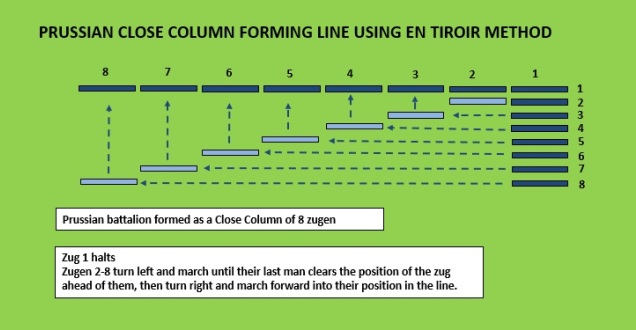
In the mechanical sense, not the actual battle formation and the placement of the different contingents. How did Greek armies get from their camps or marching columns into line of battle? Reading about early modern armies, you can easily find diagrams of how they deployed, with many different systems arising over the 18th century, such as the Traversierschritt and the en tirior method. These systems of deployments required well trained officers in a detailed chain of command, which the militia armies of Classical Greece did not have. Xenophon describes the Spartan method for deploying for battle, but how did other Greek armies form up? Was it more of a free-for-all, 'everyone from Tribe A form up to the right of that tree, Tribe B to their right' and so on, or did they have some rudimentary system for deployment?
1 Answers 2020-04-27
Hello everyone, I'm John Turner, professor of religious studies at George Mason University.
I'm here to talk about They Knew They Were Pilgrims: Plymouth Colony and the Contest for American Liberty (Yale University Press). If you think you learned more than you needed to know about the Pilgrims and Plymouth Colony in elementary school, think again. This is a book that features the Mayflower passengers but also introduces a wide variety of Native communities and many different groups of English settlers.
Here's the overview:
In 1620, separatists from the Church of England set sail across the Atlantic aboard the Mayflower. Understanding themselves as spiritual pilgrims, they left to preserve their liberty to worship God in accordance with their understanding of the Bible.
There exists, however, an alternative, more dispiriting version of their story. In it, the Pilgrims are religious zealots who persecuted dissenters and decimated Native peoples through warfare and by stealing their land. The Pilgrims’ definition of liberty was, in practice, very narrow.
Drawing on original research using underutilized sources, John G. Turner moves beyond these familiar narratives in his sweeping and authoritative new history of Plymouth Colony. Instead of depicting the Pilgrims as otherworldly saints or extraordinary sinners, he tells how a variety of English settlers and Native peoples engaged in a contest for the meaning of American liberty.
I'll be here for the next few hours (from about 10:00 until about 1:00 Eastern) to talk all things Plymouth Colony, so please flood this thread with questions!
33 Answers 2020-04-27
I'm not obviously saying there were no atrocities in Shanghai or Beijing or any other city (there were obviously plenty), but Nanking does stand out in terms of scale and in people's memory. Was it just because Nanjing was the capital of Nationalist China? Or was there more to it?
1 Answers 2020-04-27
(Repost of a previous unanswered question)
It seems to me that metals such as bronze or Iron were always relatively expensive and require significant industry and/or trade to use them in large quantities. At the same time the majority of common people may not have the resources to buy large amounts of metal tools.
If I walked into an ancient Egyptian farmhouse, would the family there be using stone or metal tools? In a Hittite army, would any of the soldiers be carrying stone spears or arrows?
Despite the examples, this question is pretty broad and I would be interested in answers from any region/time period. When do stone tools finally begin to die out as commonplace items? Could anybody after Antiquity still be using them?
1 Answers 2020-04-27
Would it be possible for a bastard son of a courtier or a peasant to inherite the throne?
1 Answers 2020-04-27
What helped to instigate the start of the crusades (as well as all the other crusades) and could you possibly recommend some scholarly articles, books and essays on the topic?
Thank you, Classic Apricot
2 Answers 2020-04-27
Why did Benito Mussolini break with the Italian socialist party to found the Italian fascist party? I was researching about the Italian fascist government and its origins, so this doubt arose, what was the reason for separating from the socialists and founding the Italian fascist party?
I looked in some places but I couldn't find an answer, if you can help, thank you
1 Answers 2020-04-27
You always learn and hear about how tons of Irish and Italians immigrated to america during the ellis island days but you seldomly ever hear about English immigrants even throughs millions of English migrated to america with into the the early 1900s.
1 Answers 2020-04-27
I read that Maya hold conquistadors something like 150 years - much more then Aztecs.
What allow Maya hold so successfully? Did they don't face diseases? Did conquistadors don't have enough interest to conquer Maya? Or they can organize better resistance?
Bonus question - did Maya have diplomatic relationship with conquistadors (or local Spain governors - don't sure about politic situation in that time)?
Thanks.
1 Answers 2020-04-27