1 Answers 2020-01-22
I dont know if this is the right sub for this but nonetheless, I have a picture of some people during the spanish civil war and dictatorship and my father thinks one of them might be Manuel Azaña (a spanish political figure) although he kind of looks like him we are not sure, is there any way to confirm whether its him or not?
Heres the picture if anybody wants to take a look
1 Answers 2020-01-22
Also a couple bonus questions:
How did Saxon (British) villages and towns prepare, defend or respond to these tactics?
How accurate are the depictions of Vikings in The Last Kingdom using shield walls and spears? Were spears their weapons of preference or did they prefer swords and axes?
1 Answers 2020-01-22
Ended up on the Wikipedia page, and it seemed like a fascinating moment in history I didn't know much about.
1 Answers 2020-01-22
I was just watching Call the Midwife, and seeing so many pregnant women on screen- not just the Couples of the Week but even random background characters- pregnant has made me realize how rarely I see pregnant women depicted in media and art- certainly in modern media (it's almost unheard of to see someone onscreen who is pregnant and is not a main character with a plot relevant pregnancy) but even in older works of art. I can think of a bunch of random reasons that this could be- pregnancies being more hidden with garments and shapewear at various points, pregnant women's "confinements," and of course in the modern era fewer people getting pregnant in general- but I was wondering whether there were points when pregnant women were more commonly represented in various forms of visual media? Or, I guess with the exception of fertility idols and such, have pregnant women always been underrepresented in media images?
1 Answers 2020-01-22
As I understand it, network TV sitcoms were mostly unopinionated and did not approach divisive social issues up until the debut of Norman Lear shows like All in the Family. Is this true?
Was no one else producing TV sitcoms like Lear was? Or is it possible that he followed the lead of other precursors or contemporaries?
1 Answers 2020-01-22
Question in title. I recently watched Valhalla Rising and last year watched The Last Kingdom. I'm really interested in learning more and would love to find a documentary that goes into detail.
1 Answers 2020-01-22
I've been trying to find more notes about the m1871 Trombon Musketoon, and specifically its use between 1800-1815 (The Napoleonic Era).
I want to know if anyone can help me figure out the specifics of the Musketoon, such as its caliber size, different types of shot it could fire (Buck and Ball, Pistol gathering, Single ball,) and so forth.
Any and all help would be greatly appreciated!
1 Answers 2020-01-22
This question may sound silly, but I genuinely don't know enough about the party's ideals at the time to know why LBJ would join the democratic party. I understand after Lincoln the republicans were for minority rights but during the early 1900s they essentially became the party of big business and believed they had done enough for minorities and stopped advocating for them. So my question is: what happened to the democratic party, which was once anti minority rights and anti big government, to have people like LBJ, who advocated for bigger gov't and minorities, align himself with them? Thanks! Hopefully my question isn't as confusing as I think it is.
Another way of phrasing this question is: When did the democratic party switch from conservative ideals to more liberal ones (Like advocating for minority rights and bigger gov't)?
1 Answers 2020-01-22
1 Answers 2020-01-22
Sorry for the structuring of the question but it popped in my mind so I stated writing the post.
But first a bit off an overview : The grand duchy of Lithuania was a large state in Eastern Europe which was ruled from Lithuania ( if the name didn’t give off, now you know better). Lithuania was also one of the last area to convert to Christianity in Europe, and held it pagan religion (Romuva) until 1387. And lastly the Lithuanian aristocracy was well connected with their counterparts in the kingdom of Poland, being allies against the Teutonic order, the Swedes, the Russians and many others, which eventually lead the both of them to form the commonwealth.
As the title said, why they didn’t took a greater title like a king of an emperor even! Now I know that titles are sometimes arbitrary and like that but I want to know more about history of the title.
1 Answers 2020-01-22
I know the FBI spied on them and the Army denied them promotions or any other kind of benefits. However, how was this put into practice? "you can't be promote to captain because you already fought Fascism somewhere else?". Did it make sense at the pre-WW2 time?
Also, how were they treated at their home towns? Were they straightforwardly out casted or did they have some recognition? How much of it reached the media and what do we know of the popular opinion back then?
Sorry for English, not my first language.
1 Answers 2020-01-22
1 Answers 2020-01-22
I read a lot about distructive fires and such, like Nero being accused of burning down Rome so he could build his new palace. What exactly was flammable enough that could carry the fire building to building and cause mass destruction? Why did the structures have to be rebuilt if it was all built of stone? Or were many wooden buildings mixed in?
1 Answers 2020-01-22
Everytime I search for Asian philosophy I find only Laozi, Confucius, Sun-Tzu, Buda and other Indians, and also Muslim philosophers.
I can't find influential non-Muslim, non-Buddhist, non-Confucianist philosophers. Any help?
1 Answers 2020-01-22
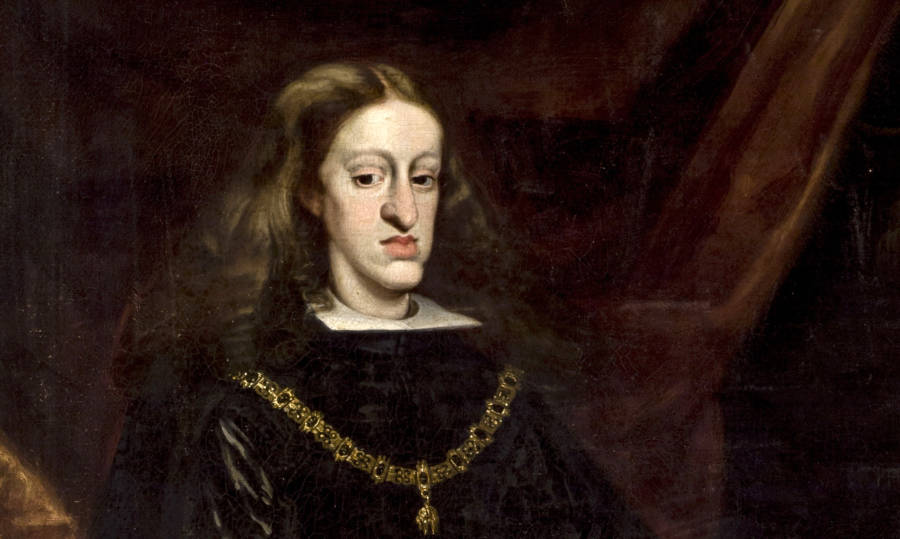
Hi! New to this subreddit and I was just curious if anyone’s stumbled on detailed accounts of the life of Charles II, you know, the super inbred king who died childless and ended the Spanish dynasty. He’s such a fascinating character to me, particularly because I feel a lot of sympathy for the man. What a rough life.
1 Answers 2020-01-22
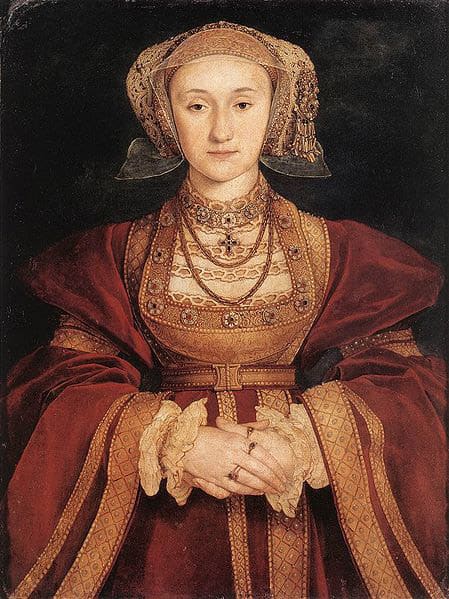
Looking at oil portraits from the Renaissance period, average people look like a lot uglier then than the average person now. I can’t tell if it’s because the paintings were a certain style, like disproportionating faces for artistic affect or something, or if that’s just how people looked. For example, this painting of Anne of cleves looks really realistic, and she looks pretty normal/averagely pretty. It looks realistic. But then this and thispainting of Charles II show him as two different painting but the same level of ugliness. And there’s lots of paintings of different people, in the same style as Anne of Cleves and Charles II’s paintings, that show people looking just as ugly. So does that mean people have gotten generally more attractive/proportionate over time or was the art style just not supposed to be very realistic?
More examples of weirdly proportioned Renaissance paintings: 1 Maria Anna of Bavaria
2 Emporor Rudolf II
3 Willian V duke of Bavaria and his son
4 Anne Boleyn and then 4a Anne Boleyn in a different style
5 James II of Scotland and also 5a his daughter
And 6 , Isabella d’este, she looks more average idk
But yeah I’m just confused man, I know that some portraits made people more attractive to not insult the person, but if that’s a mire attractive version what’s the original yk?
1 Answers 2020-01-22
How is the Philippine-American War not a Banana War? I realize the theater was geographically remote from Central America and the Caribbean, but the time period—and the rationales used—were largely the same. Is this just a matter of nomenclature?
1 Answers 2020-01-22
Latin is often used in pop culture as a language spoken by demons or witches, and is linked to occultism and magic. For how long has that been the case? Why did Latin become such an integral part of Occultism?
1 Answers 2020-01-22
1 Answers 2020-01-22
For those that don't know, "Maus" is an outstanding graphic novel written by Art Spiegelman that tells the story of his parents survival as Polish Jews during the Holocaust. The story is relayed to the author by his father directly and is told as a part of a frame narrative that also tells us about the author's strained relationship with his father.
Vladek, Art's father, starts the story by telling us about his upbringing and courtship of Art's mother (something he asks his son not to put in the book.) His story goes on to cover the length of WWII, the Holocaust and its aftermath. We see Vladek being drafted into the Polish Army right before the invasion and being interned as a POW before eventually being released. We are told of the tragic story regarding their firstborn son that perished during the Holocaust, their time in the ghetto, remaining hidden when the Germans cleared the ghetto, emerging from hiding and attempting to conceal their identities and finally their deportation to Auschwitz following their capture by the Gestapo during a sting operation where they were posing as human traffickers that would get them out of Poland.
During their time in hiding after surviving the ghetto, Vladek (who spoke German) mentions that when using public transportation he would ride in the sections reserved for the Germans rather than those reserved for the Poles. He does this out of a believe that the Poles would identify him as a Jew right away. This always struck me as odd. Especially since at that time he was hiding in plain sight ostensibly under the guise of being a ethnic Pole. Was he just being paranoid or were the two communities so different from one and other that he would've stuck out had he been in the close proximity with Poles that comes with public transportation?
To clarify, I'm not looking for alleged physical differences that the prejudiced claim exist. I think the Nazi authorities unknowingly using the likeness of a soldier with Jewish ancestry on recruiting posters pretty easily debunks that idea.
Rather, were the ethnically Polish and Jewish communities so separated from one and other at the time that blending in would be particularly difficult? Were there linguistic differences that would be obvious to those alive at the time? Obviously the Jewish community primarily spoke Yiddish, but Vladek was fluent in Polish, German, Yiddish and English at the time of the Holocaust. Something that is a major plot point in the novel and a huge factor in his survival.
In case it's relevant, Spiegelman is originally from the city of Częstochowa but moves to Sosnowiec after his marriage to the author's mother. Could he have a particular accent that would stick out? Could the Jews of these areas be more insular as opposed to those from the major cities of Warsaw or Krakow?
I don't know why, but the idea that he felt safer riding with the Germans as opposed to the Poles always stuck out to me. We read the novel in school and for whatever reason I was thinking about it this morning and was hoping to finally understand the reason he felt this way.
1 Answers 2020-01-22
My history professor today in western civ showed a language chart, and asterisks represented a language as being extinct. My impression was that coptic was still somewhat used by the minority copts in egypt, is this not the case? Aramaic was considered endangered and not extinct.
1 Answers 2020-01-22