1 Answers 2017-10-12
Hello!
As part of a school project, I am expected to choose an area of my interest in History and to probe it. I have been really fascinated by military aviation history, so I reckon that doing a study of two planes or conflicts would be something I will enjoy and thus do well.
I wanted to ask whether anyone had any books, memoirs or other resources related to aviation strategy in WW2 and analysis of certain planes (Spitfire vs BF-109?) or the role of aircrafts at the Battle of Britain.
The general topic is: Advancements in aircraft development technology and their impact on the nature of battle strategy and deployment
Thanks in advance!
1 Answers 2017-10-12
So you see it often enough in fiction that it's a trope. Has something like this ever happened? Has a passenger with no piloting background ever successfully landed a commercial aircraft during an emergency, with or without help from ground-based controllers?
2 Answers 2017-10-12
Every time I've seen a thread on this sub, it seems to say that the Sherman was at least equal to any German tank out there, if not better. If this is true, where did the popular conception of the poorly armored, under gunned, POS, come from?
2 Answers 2017-10-12
According to Wikipedia, a spolas cuirass could be made of leather or woven linen. On the other hand, linothorax is said to be solely made of linen. Is there a clear distinction between the two?
1 Answers 2017-10-12
I've often heard the reasoning the British hunted down the Tirpitz and Bismarck to such great lengths, including even hunting and destroying the ports they could possibly use for them in France (as in the St. Nazaire Raid) was because they feared the Tirpitz and Bismarck being used for Commerce Raiding.
My questions are, were the Germans actually intending to use them like this?
And would BBs have actually been effective under this usage?
Thanks in advance!
2 Answers 2017-10-12
For those who do not know, Crusader Kings 2 is a video game about being noble dyansty in the middle ages, with all the intriege and (often literal) backstabbing that entails. One of it's features that was added in a DLC is the Chroniclers, which write down the epic deeds of your ruler and house, such as when you go to war, join a Crusade, or aquire a higher noble rank. However, in the quiet years of the Kingdom, between the Viking raids and the Dues Vults against the infidels, your Chronicler will add... interesting events. These include good harvests and Earthquakes to the sitings of giants, sea serpants, multiple suns, and dragons.
Crusader Kings 2 isn't a 100% realistic game. There was a massively ahistorical DLC pack that added an Aztec invasion that could happen over five hundred years before the Aztecs were even a thing. However, the developers at least have given historical accuracy the old college try when it doesn't conflict with the gameplay.
So, did the Medieval chroniclers clearly add events to spice things up in the dull years or outright supernatural events to their long tales?
1 Answers 2017-10-12
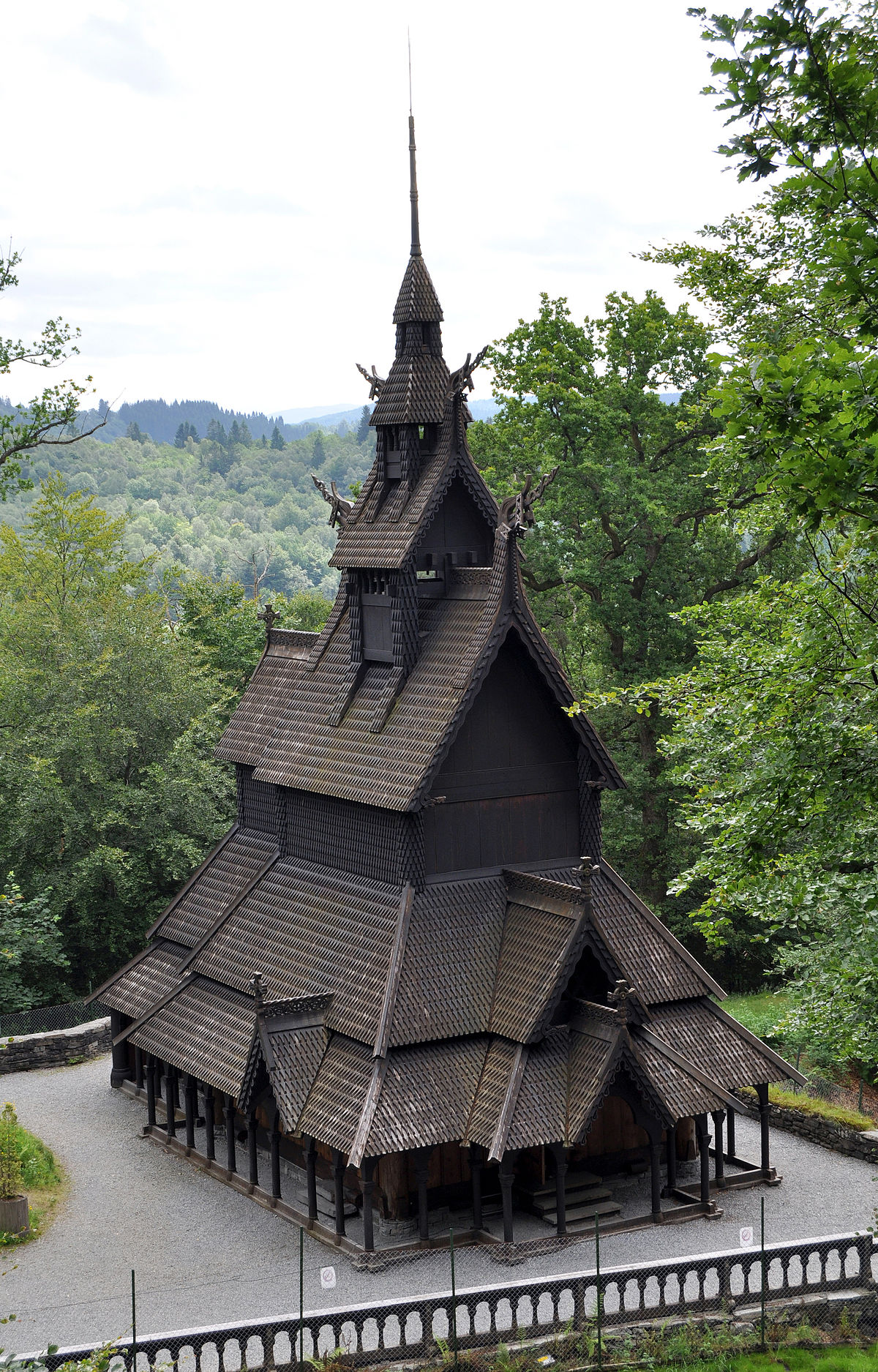
Here is a great example of a stave church.
What I'm wondering about is this — "Viking Era" and even earlier Vendel period architecture is admittedly a bit scant, or at least not as developed and then preserved as many other contemporary for the time wooden structures.
Yet with the adoption of Christianity and the construction of these churches throught the medeival period, it appears to be a massive burgeoning of architectural sophistication.
Did this come out a vacuum, or was there precedence for such ornamentation for earlier temples, public buildings, meadhalls, and so on?
1 Answers 2017-10-12
Was it solely on the fact that there wew more Shermans or was there something else that gave the allies an edge over their enemies?
1 Answers 2017-10-12
1 Answers 2017-10-12
1 Answers 2017-10-12
Was having a debate with some friends about the instinctual nature of sex. Is there any record in history to win humans understood that sexual intercourse led to the production and development of a infant? Or does this notion pre-date any sort of recorded history.
2 Answers 2017-10-12
1 Answers 2017-10-11
Hope someone knows military history could answer this question. Today in Russian military they are still using 122mm and 152mm caliber gun. I know these numbers came from Imperial Russian period and may related with smooth bore gun. How the Russian artilery weapons transit from smoothbore period to modern period?
1 Answers 2017-10-11
2 Answers 2017-10-11
to be clear, im not asking if muslims are bad or not. im talking about the hate towards muslim amongst some parts of humanity, justified or not. im wondering if it can be tracked in history? when , where, or why did this start?
1 Answers 2017-10-11
1 Answers 2017-10-11
“let all who fall into your hands be at your mercy, Gain a reputation like the Huns under Attila”.
I was researching old british newspaper for a history project for school (basically about biases in historical records) and I came across this quote, It sounds incredibly fake and I don't get anything when I google it and I'm wondering if anybody can confirm if this is fake or not?
1 Answers 2017-10-11
Edit. Spelling.
*warrior
2 Answers 2017-10-11
According to what I read, 50 or 60 percent of doctors in Berlin were Jewish, nearly all infant specialists in Germany were Jewish, 62 percent of all lawyers in Vienna were Jewish, 47 percent of physicians, and nearly 29 percent of all University professors were also Jewish.
According to the book Hitler, Germans, and the "Jewish Question", Jews represented 25% of people employed in retail businesses, owned roughly 50% of metal businesses, 25% of people attending grammar school in Berlin were Jewish, 50% of theater directors in Germany were Jewish, 75% of plays were written by Jews, and a large number of well-known actors were Jewish.
It seems like pretty much the entire society of Germany and Austria would have to bend over backwards for just 1% of the population, yet I wonder why that single percent would be in such considerable power when so many people were anti-Semitic. If so many people hated Jews, wouldn't you have lots of people refusing to employ people because they were Jewish? I don't understand.
Here are my sources, as well as additional information.
http://www.holocaustresearchproject.org/nazioccupation/anschluss.html
https://books.google.com/books?id=je27CwAAQBAJ&pg=PA23&lpg=PA23
https://www.pedsendo.org/about/history/presidential_address/assets/s65.pdf
1 Answers 2017-10-11
According to this site, "The National Archives and Records Administration is releasing documents previously withheld in accordance with the JFK Assassination Records Collection Act. The vast majority of the Collection (88%) has been open in full and released to the public since the late 1990s. The records at issue are documents previously identified as assassination records, but withheld in full or withheld in part." A first batch of 3,810 records from the FBI and CIA were released in July of this year. While I read about the release in the news at the time, I have not heard anything about the contents since. Was anything interesting or significant found? The issue is in the news again today with the impending deadline at the end of this month for the final release of all the records.
Follow-up question: were there any big bombshells in the original release of the first batch of records in the 1990s which changed common thinking about the assassination?
6 Answers 2017-10-11
1 Answers 2017-10-11
As the title says, I'm to do a research project on decolonization in Algeria. What I'm considering at the moment is examining how that decolonization has been portrayed in popular culture. I'm having trouble with finding material, though. I know I'm going to examine The Battle of Algiers movie from 1966, but I'm having a difficult time finding something comparable to use in a comparison/contrast that is specifically an example of pop culture rather than an academic treatment, and hoped someone might be able to suggest something or point me in the right direction.
2 Answers 2017-10-11
1 Answers 2017-10-11
Growing up in the South, I was fed this idea of "states' rights" as the justification of the Civil War. I no longer believe it was the reason the South seceded - I now believe the Confederacy was created to preserve the institution of slavery - but it occurred to me that I'm not sure what "states' rights" would even mean in this context. I had assumed it meant that the Southern states that seceded just didn't want the North in their business, but that seems kind of vague. It occurred to me that it could mean the state's individual right to secede. I believe the best way to proceed in a debate is to understand the other side, and in this case, I'm not sure what the crux of the other side's argument is.
3 Answers 2017-10-11