Which faction had tactical edge over another and how did this 'edge' change dynamically over time? For example, I heard that during the early wars, IJN had air superiority with their Zeros but the edge disappeared as as the war progressed and Americans developed better planes.
2 Answers 2017-08-23
[deleted]
1 Answers 2017-08-23
Just re-watched '12 Years A Slave' and it really made me think about how someone can feel indifference or acceptance of treating black slaves so poorly, do we know anything about how the average person viewed slavery at the time? Did most people think it was okay or did people just see it as a necessary evil that had to exist or was there even a large portion of the population who were completely against it? It's hard to imagine someone seeing someone being whipped or seeing huge scars on a slave's back and not feel like it's abhorrent behavior, especially considering how the slaves showed the same emotions and pain as white people did.
Could it be compared to today's meat industry? That people are simply not aware of what's going on and/or not exposed to it on a regular basis so they don't care that much? Whether you're for or against meat consumption, you gotta admit that most people today would have a hard time killing an animal, even in a survival situation.
1 Answers 2017-08-23
I've seen it on Shogun II And other places, but can't find what they are. It's some thing that looks like a ping-pong racket and is used to give commands or something.
1 Answers 2017-08-23
1 Answers 2017-08-23
1 Answers 2017-08-23
Thank you all in advance.
1 Answers 2017-08-23
I know this is a bit of an oddball request, but I'm not well versed in Russian history but this new trailer on post-Stalin drama piqued my interests.
What books, or resources, would you recommend so I can fully understand the satire, as well as just the general consequences and events post-Stalin?
1 Answers 2017-08-23
[deleted]
1 Answers 2017-08-23
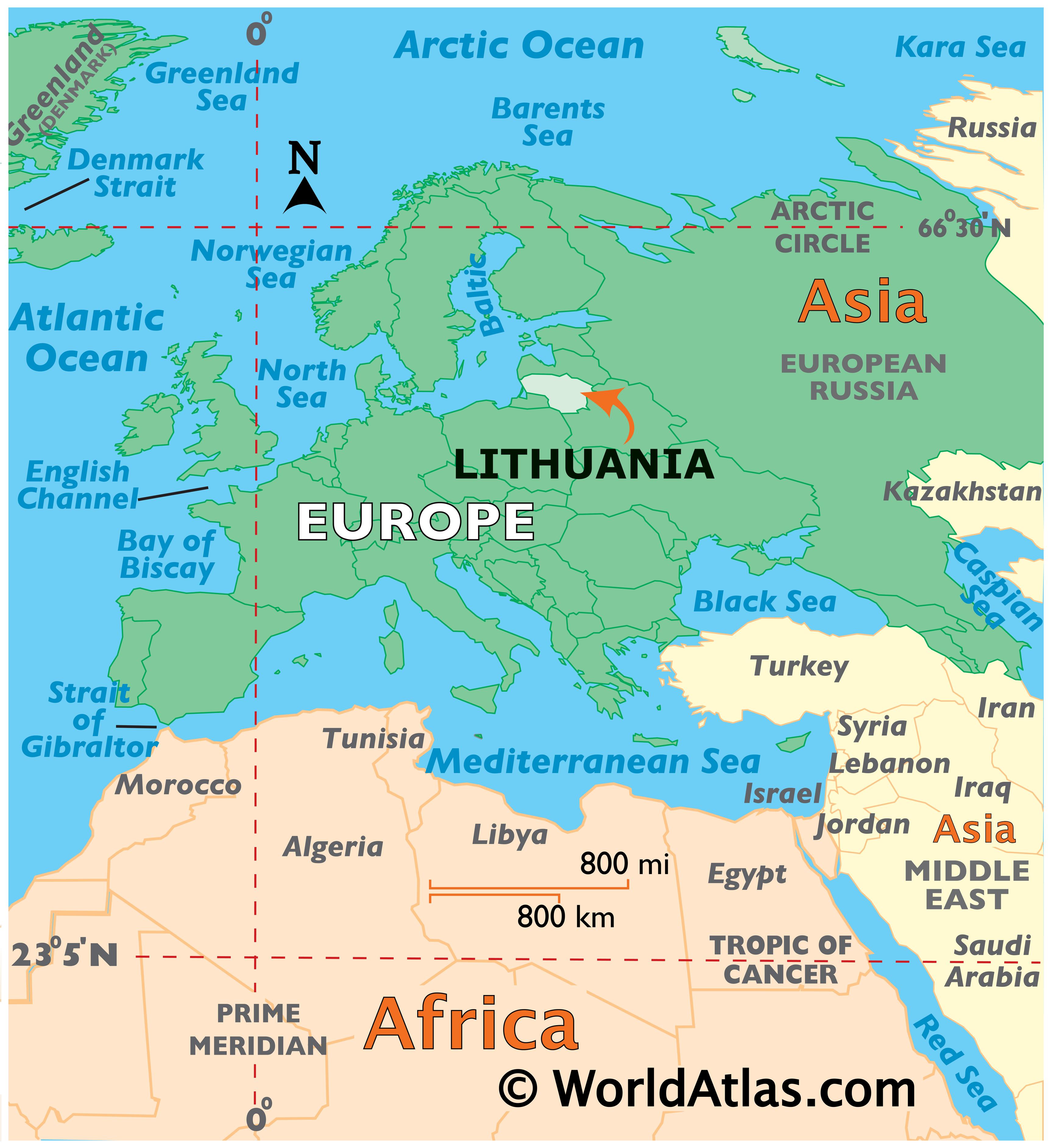
Lithuania is a country in Europe, bordered by Latvia, Poland, Belarus, and a Russian exclave. However their symbols are very different to what their location would suggest. At least to me.
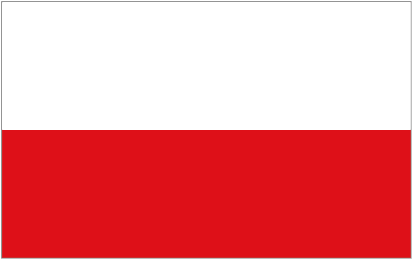
This is their flag. Compared to some of their neighbors (Poland, Latvia), and some in the more further region (Ukraine, Estonia, Slovakia), it's not really similar to any of those, and I think the comparison extends to the whole of Europe. However, it's remarkably similar to the flags of some African countries, like Ethiopia, Ghana, or Guinea. I know that flags are usually similar amongst neighbors countries, so it's particularly weird that a country in Europe would have a flag unlike their neighbors and like countries in other continent.
Also, I don't know if it's just me, but the name Lithuania sounds a bit like an African country. It's certainly not on the same vain as Poland, Latvia, Ukraine, etc. It's more reminiscent of Ethiopia, Guinea, Kenya, etc. Again this could be just me trying to link Lithuania to Africa that much more.
So this connection to Africa is weird, and much more so when you realize the majority of the population of Lithuania is white. I read on an unrelated thread once that some Lithuanians don't ever even see a black person until they're toddlers or they appear on TV. So, is there any historical link between this country and some place in Africa that I'm unaware of? Is there more to this, other than just being random coincidences? I'd love to know.
Also, hopefully no one is offended by this post. I'm genuinely curious about this subject and the intention of the question is a good one. Feel free to correct me if something is wrong.
3 Answers 2017-08-23
James clavell's shogun, and another user's post mention this, but I have never heard of any other mention before. Could someone help me out? Maybe regarding the prevalence, particular use and battles, as well as the reason for samurai particularly.
2 Answers 2017-08-23
I'm thinking of writing a novel about the genocide, from the perspective of someone that lived through the forced marches through the desert in Turkey/Syria.
Can anyone recommend some primary/secondary sources with detailed information about the marches, the experiences that people went through, etc?
Thanks.
1 Answers 2017-08-23
This might seem like an oddly specific question and, well it is.
If this is true, and not random internet gibberish, when/where did this practice originate? When/why was this practice discontinued? Did other professions wear specialized footwear to leave imprints?
1 Answers 2017-08-23
This weekly feature is a place to discuss new developments in fields of history and archaeology. This can be newly discovered documents and archaeological sites, recent publications, documents that have just become publicly available through digitization or the opening of archives, and new theories and interpretations.
2 Answers 2017-08-23
I mean specifically when two armies clashed on the battlefield, marching towards one another to inevitable bloodshed. Would the infantry lines allow one side to fire the first volley, then proceed to be allowed to fire their volley afterward? Or would they fire their volleys at the same time then charge?
The reason I ask this question is that in movies (The Patriot, The Sovereign's Servant; Battle of Poltava) it seems like both sides opt to fight a 'clean' honorable battle in which both sides are allowed to fire a volley while the other side simply stands and wait to receive it after firing their own volley. It seems counter-intuitive, as one would think to charge right after you fired your own volley to prevent the enemy from firing theirs.
Sorry for the long question.
1 Answers 2017-08-23
edit: for all you people downvoting me this is what i meant: https://www.theguardian.com/world/2017/aug/23/charlottesville-un-committee-warns-us-over-rise-of-racism
There is a rise in racism, the more we are discussing racial divide the worse it is getting.
1 Answers 2017-08-23
What is the origin of the word "cracker" as used to refer to white people? I was told that it originally referred to the slave charged with "cracking the whip" in the field, and/or meting out punishment, typically via a whip; but handing a slave a weapon seems unlikely to me.
EDIT
When did that usage start appearing in written/recorded language? Did use by a marginalized group to demean the majority group affect this entry?
2 Answers 2017-08-23
1 Answers 2017-08-23
I quoted this in class from memory yesterday and it was met with some understandable disbelief. I tracked the information to two nearly identical quotes at University of Houston and History.com, but neither provides sources.
1 Answers 2017-08-23
1 Answers 2017-08-23
Hello,
Out of curiosity more than anything else, I started wondering how much things cost in Medieval Europe. I found this list http://medieval.ucdavis.edu/120D/Money.html which has a lot of good information on. However what I haven't been able to find is how much everday items would cost, like a pint of ale, a loaf of bread, vegetables, etc. For example on that list, it says that a gallon of cheap ale in the 14th century cost roughly 0.75d. A gallon is, according to Google, 8 pints, but the lowest deomination I have found is the farthing (0.25d).
So this threw up a question for me of how much these items cost, and how these were paid for. For example I found one online source which said a pint of ale was 0.18d, I'm not sure how reliable that is and it also throws up the question of how they paid for such a small value if the lowest denomination was 0.25d.
So, any ideas?
1 Answers 2017-08-23
Did I sit in a lecture hall with my fellow students? What did my Professor do for classes? What did course work consist of? Was there even any course work? How was my work "graded"? Did I major in subjects similar to how students major in subjects today? What could I do with a degree back then?
Bonus question: I'm a hot-blooded young male student looking for entertainment in between studying. Would I be able to booze and strike out with girls the same way I do today?
An answer to any and/or all of the questions above would be greatly appreciated! I've always been curious about the history of education.
EDIT: Upon reflection, "typical class" is a pretty broad term. If the format of a class varied based on the subject, that'd be interesting to learn too!
2 Answers 2017-08-23