The Tercio was a Spanish formation using pikemen and musketeers, how would the musketeers being positioned? At the flank of the pikemen? In front of the pikemen?
1 Answers 2017-06-22
During that legendary battle against Hannibal there were two Roman consuls in charge, Lucius Aemilius Paullus and Gaius Terentius Varro. As well known, Varro supposedly wanted to charge and did so on his day of command or perhaps as some would argue was just made a scapegoat in the aftermath. But that discussion aside, what I want to ask regards the final words of the wounded Paullus being offered a horse to escape.
"... Suffer me to breathe my last among my slaughtered soldiers, let me not have to defend myself again when I am no longer consul, or appear as the accuser of my colleague and protect my own innocence by throwing the guilt on another." (http://www.perseus.tufts.edu/hopper/text?doc=Perseus%3Atext%3A1999.02.0144%3Abook%3D22%3Achapter%3D49)
What exactly did he mean by that bit of not wanting to defend himself without the capacity of consul? A sort of executive privilege? HAH. Was it that he knew after such a devastating defeat a dictator would be elected and he would, if he came back alive, be made a scapegoat and stripped of his office lest he throws the guilt on someone else? Essentially was there a deeper meaning or just the realization that returning alive would bring even more shame whereas death was the only way to wash it off? And if it was indeed all Varro's fault in reality according to him, why not indeed act on that truth?
I guess what I'm trying to ask is, what did he mean with having to defend himself without the office and why did that prospect frighten him so much? Since he chose to employ these particular words.
Another sub-question also, what happened to Varro who had no such qualms about taking a horse and did escape Cannae alive?
1 Answers 2017-06-22
Did they not have any available, or did not think that Bismark needed them?
1 Answers 2017-06-22
Musical hints like this have been common in transition scenes in plays, cinema, and television, used to indicate the location, or sometimes used in stereotyping characters and underscoring jokes.
Did the traditional theatres of East Asian nations, or their later cinema and television for that matter, ever pick up on a similar universally recognized "stereotypical European", "stereotypical American" riff to indicate a location or character's background?
2 Answers 2017-06-22
I know that long after 496 AD many areas of Western Europe considered themselves to be (at least nominally) part of the Roman Empire, and that even Charlemagne officially said that we was occupying the existing roman throne (because the Byzantine empress was not a legitimate ruler). At what point did people stop paying lip service to being part of the continuous Roman Empire?
2 Answers 2017-06-22
The argument as I understand it is that "Juche" was never intended to be a meaningful guiding ideology, rather it was written to be a deliberately dense set of texts which could be referenced in propaganda to prop Kim Il-Sung up alongside Stalin and Mao as a great leftist thinker.
Myers specifically calls out Bruce Cumings for failing to accurately understand this, and I understand that Cumings is fairly widely respected. Is there a consensus among historians regarding the extent to which Juche is a 'sham doctrine'?
1 Answers 2017-06-22
In India its pretty common to meet someone named after a god since the hindu gods have so many names. Did other polytheistic peoples do the same? Or was it seen as disrespectful?
1 Answers 2017-06-22
I've been watching the BBC's The World at War and have been blown away by all the first hand footage of the various events (at least I'm pretty sure it's first hand?). Was it common practice to send along film crews at the time? What were the difficulties in using 40s film equipment in those scenarios? What purpose did filming the war serve and who organized it?
2 Answers 2017-06-22
1 Answers 2017-06-22
I was listening to a podcast on monastic orders and it came to me. Were there any such communities of solitary monks in ancient pagan religions or is that only a thing that came about only with Christianity and Buddhism and so on.
2 Answers 2017-06-22
2 Answers 2017-06-22
[deleted]
1 Answers 2017-06-22
Today the default Spanish language is, or is descended from, Castilian. This is evident because Spanish speakers in the Americas often referring to the Spaniard's accent as "Castilian". But if Castile and Aragon were united peacefully and supposedly equally into the Crown of Spain, then why did Castilian become the dominant default language instead of Catalonian (or Aragonese)? Why did Castilian win out over the Leonese dialect earlier when Castile and Leon were united even earlier? Why did none of the colonies in the new world develop populations of colonists speaking the regional Iberian languages (Catalan/Leonese/Basque) that must have traveled with the colonists, but ended up restricted to their own corners of Spain in modern times while Castilian became known as the Spanish language?
And on a related note, why DIDN'T Spanish leave more of an impact on areas such as Southern Italy and the Netherlands that the crown of Spain had controlled for so long?
4 Answers 2017-06-22
EDIT: WWI
It's appeared to me recently how the Great War really was a GLOBAL war, both with all of the militant action taken (e.x ANZAC/turkey conflict) but also diplomatic resolutions/civil wars/economic breakthroughs. Are there any comprehensive resources that can explain some of the key events by region or even country during The war in this regard?
If this is a repeated question, please link this post to the original.
1 Answers 2017-06-22
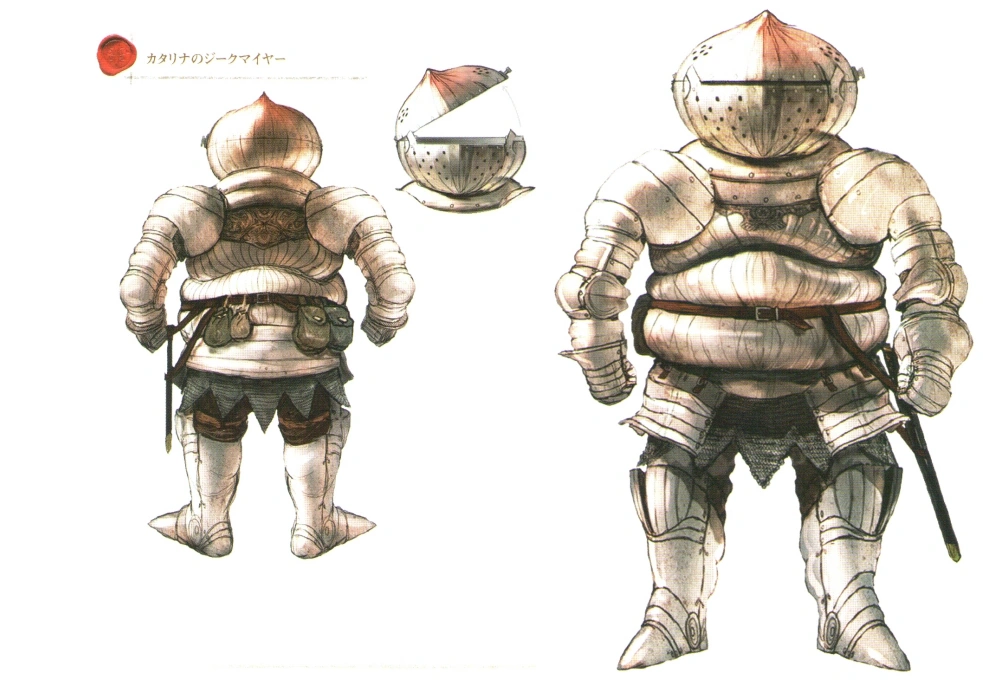
The armor is worn by the knights of Catarina. Most people assume when they see it that the wearer is simply obese, but according to the lore it is made with as few angles as possible to render it impenetrable to sword strikes. Would armor such as this have any practical use? Why or why not?
3 Answers 2017-06-22
1 Answers 2017-06-22
2 Answers 2017-06-22
1 Answers 2017-06-22
Question is self explanatory. Correct me if I'm wrong but it is my understanding that the rivalry came from the 1930s/40s whereby the US wanted capitalism and Russia, communism. The rivalry grew from an arms length relationship whereby one another were happy to keep to themselves until when it became obvious that WW2 was going to be an Allied Victory and the division of German land became a question.
Again, correct me if I'm wrong but this is my understanding of it, from my own feelings of how that would make sense I guess.
1 Answers 2017-06-22
1 Answers 2017-06-21
For the sake of specificity let us take the 12th to 14th century. British Isles or France.
It is often repeated in pop history that people drank fermented beverages regularly. In fact it's repeated so often that you might think that people didn't drink water at all. However I have the sneaking suspicion that this is pretty inaccurate especially for the lower classes. Do we have any idea how common it was to drink water? Would it be a daily thing? Would fermented beverages be drank every single day? Do we have any idea what percent of income might have been spent on buying non water drinks?
Was it common knowledge that stagnant water was unhealthy? What were considered trusted water sources?
1 Answers 2017-06-21
1 Answers 2017-06-21
Did kingdoms with great wealth simply use the money to further bloat the wallets of their aristocracy or did normal citizens benefit from the wealth in some way.
We are told that Constantinople was among the richest cities in the world during the medieval times but there seems to be little evidence of this other than several massive palaces around the city.
1 Answers 2017-06-21
im by no means a 5 star general but dressing my army in all red with a big huge hat as a perfect target? was it a pride thing? or more of a military tradition
1 Answers 2017-06-21
There's a generally held belief that total war between two nuclear countries would begin with a massive nuclear exchange. Total war between great powers has thus become "unthinkable" due to mutually assured destruction. Almost all major powers' readiness for conventional war has atrophied enormously. What's the point of having an army if any major nuclear exchange will end the world?
Yet this seems to forget the capability for a massive biochemical exchange that existed during WWII. Yet anthrax cakes weren't spread across German fields, and London wasn't exterminated with nerve gas.
Why have nuclear weapons been treated so differently?
How likely did interwar planners think total biochemical warfare was?
What was the potential for a massive conventional war in the era since nuclear MAD became a reality?
2 Answers 2017-06-21