I know that most countries still use overhead lines, and it is clearly an aesthetic nightmare as well as a potential risk in comparison to burying them. It seems as if there was a time in US history in which there were many overhead lines (like is seen elsewhere in the world) and suddenly they disappeared except for very urban or crowded areas that aren't worth/capable of being buried. It reminds me of how America clearly jumped from "rural state-built roads everywhere" to "interstate highway transportation" over the span of a couple of decades.
Did America collectively decide that overhead lines weren't worth looking at or having, so everyone just stopped placing them wherever it was possible? Or was there some authority (whether a president or an organization) that created a new standard that states had to stick to?
1 Answers 2017-04-29
Peopel in /r/History realy dislike Jared Diamond teori that geographic luck did give European the advantages to dominate the world. I have try to ask what the main flaw of the teori is, but get som difficult to interpreted answer that say he cherry pick, he is rasist etc but no real concrete example (that I can interpreted the boot write a wall of text but I fail to see concrete example) is ther a person on AskHistorian who can give a concrete example where Jared Diamond teori fail.
1 Answers 2017-04-29
1 Answers 2017-04-29
Around the time of the release of the Village People song, what were social attitudes like towards the YMCA, and what impact did the song have?
Always wondered Thank you!
2 Answers 2017-04-29
1 Answers 2017-04-29
1 Answers 2017-04-29
Hi, so I don't want to come across as dumb, but I never really understood the concrete differences between Stalinism and Leninism. It's a little abstract to me. I'm currently studying the Russian language and am trying to get to know more about Russian history. I was never taught in dept about these political movements at school, so I thought I'd ask here. I'm hoping a kind soul can help me out.
1 Answers 2017-04-29
Today:
Saturday Reading and Research will focus on exactly that: the history you have been reading this week and the research you've been working on. It's also the prime thread for requesting books on a particular subject. As with all our weekly features, this thread will be lightly moderated.
So, encountered a recent biography of Stalin that revealed all about his addiction to ragtime piano? Delved into a horrendous piece of presentist and sexist psycho-evolutionary mumbo-jumbo and want to tell us about how bad it was? Need help finding the right book to give the historian in your family? Then this is the thread for you!
9 Answers 2017-04-29
1 Answers 2017-04-29
These numbers are all from Wikipedia, so I've taken them with a grain of salt:
Irish Immigrants from 1820-2004: 4.7 Million
Italian Immigrants from 1820-2004: 5.5 Million
German Immigrants from 1820-1870: 7.5 Million (That number seems insanely high for such a relatively short time span)
Spanish Immigrants from 1820-2000: 302,305
There's also a relatively low amount of French immigrants (~500,000 IIRC), but I'd imagine if I looked at the numbers, a lot of them would have gone to French Canada over the US.
Given the decline of The Spanish Empire, and the Spanish Civil War, as well as a colonial history stretching back almost 500 years, I would have assumed a much larger amount of immigrants would have made there way here from Spain. Why didn't they?
2 Answers 2017-04-29
A big piece of news in the city where I like is that one of the major cultural venues is changing its name (BBC article). The Colston Hall is named for 17th century merchant and slave trader Edward Colston. If there are any Massive Attack fans, the band have consistently refused to play the venue because of its name.
Unsurprisingly this has divided opinions, with those against often saying that we are whitewashing (sic) the past, judging it by our standards, or making it easier to forget.
Of course, this is a topic with broader relevance than Bristol. It makes me think of some recent discussion about confederate memorials in the US.
Obviously the issues here are not limited to history, and I don't want to break out of the sub's remit. However I am interested in academic perspectives on the subject. Are there any notable cases by academics for or against?
I think the most limited I can make this question is to make it one about education or public awareness/understanding. What effect does, say, having a hall named after a slave trader have on people's views of a city's history? Would someone promoter of public engagement with history facepalm to see it changed, or be happy for the chance to change focus?
2 Answers 2017-04-29
1 Answers 2017-04-29
Everything I've learned about the cold war and McCarthyism is about the dangers of a witch Hunt (and it's frequently combined with The Crucible to make the point). The problem with this is witches don't exist, communism is at least a reality in the world. Was communism an actual threat in America, and how much? Thanks!!
1 Answers 2017-04-29
Were marriages between someone from the Middle East or Africa and someone from Europe common? Was there stigma against these couples? Were Julius Caesar and Cleopatra considered an "interracial" couple?
1 Answers 2017-04-29
If they didn't, when did someone link trauma to PTSD, for lack of a better word?
1 Answers 2017-04-29
A visiting lecturer at my college was described as having this degree. I had never heard of a doctorate describe in this manner, only of regular Ph.D.'s. Can someone fill me in here?
1 Answers 2017-04-29
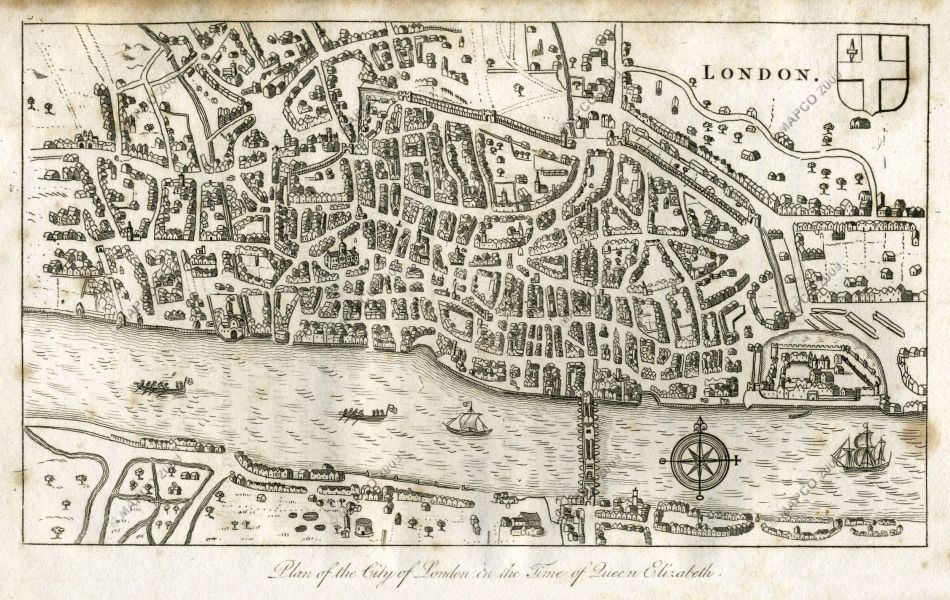
Looking at this map of London from 1593 there was something I found odd. Many of the groups of houses are essentially rings or boxes around empty space. Was this intentional or just a misrepresentation of spacing? What would go in those areas if they were actually there?
1 Answers 2017-04-29
Is it still an active movement? How was it dealt with?
Cheers.
1 Answers 2017-04-29
Indonesia is extremely disconnected from the center of Islam, so how did it become primarily Islamic even before the Age of Exploration?
1 Answers 2017-04-29
2 Answers 2017-04-29
Until 1989, pro-democracy protests in the Warsaw Bloc tended not to end well. East Germany 1953, Hungary 1956, Czechoslovakia 1968, Poland 1981, etc. But the 1989 revolutions were, for the most part, remarkably free of bloodshed. Why was that the case?
Why didn't Jaruzelski declare martial law again in August 1988 in response to the Polish strikes, as he had only eight years prior in an attempt to crush the Solidarity movement?
Why didn't Erick Honecker send the Stasi and NVA to massacre protestors at Leipzig?
Why didn't Red Army tanks roll into Czechoslovakia to stop the Velvet Divorce, or into Hungary to crush the movement started by the Pan-European Picnic?
1 Answers 2017-04-29
I know there is some scripture indicating that Mohammed's wives began wearing some kind of veil during his lifetime, but I wonder if that is apocryphal. Seems possible women were already wearing some form of veil in that time and place.
1 Answers 2017-04-29