Hey, I have a question about Mansa Musa of Mali. Did he introduce a lot of gold to Europe, since I've seen European maps with Mansa Musa and lots of gold on it? Or did he just show Europe more gold?
1 Answers 2016-11-15
1 Answers 2016-11-15
I was looking for books or documentaries about German unification but I couldn't find much. At best I could find overviews of the 19th century that devoted a chapter to the topic.
The only book I could find was The Wars of German Unification by Dennis Showalter. I was wondering if anyone had read it and what they thought of it?
2 Answers 2016-11-15
Also, why was there so little cooperation between Germany and Japan regarding nuclear technology during WWII?
1 Answers 2016-11-15
[deleted]
1 Answers 2016-11-15
I often see Ancient Persian soldiers depicted in images as carrying shields with notches cut into either side, like in this picture, as opposed to the circular Greek hoplon shield. What is the historical evidence behind this Persian shield shape, and did it hold advantages? Perhaps an opening for a spear or sword thrust?
Thanks for the help! I love the well-researched, thoughtful responses that always appear on this sub.
1 Answers 2016-11-15
There are many accounts of people who harbored Jews during WWII, hiding them in basements and attics and other places where they would be a little bit safer from the Nazis. How did the people providing these spaces connect with the people who needed them, given the secrecy that both needed to actually pull this off?
1 Answers 2016-11-15
I am really interested in the most ancient religions, what's a good book, or place to start learning?
2 Answers 2016-11-15
1 Answers 2016-11-15
[deleted]
1 Answers 2016-11-15
The Wikipedia article about the organization only addresses this question with the lines "This is more than the SPD leaders wanted, but SPD workers grew increasingly revolutionary. In 1933, the organization was banned.".
Could one of our illustrious experts on Weimar Germany shed some light on this subject?
1 Answers 2016-11-15
2 Answers 2016-11-15
A study of American development during these crucial decades that emphasizes the complex relation between nation and empire, between slavery and its aftermath, and focuses on connecting the experiences of the wets and the south
19 Answers 2016-11-15
Dr. Logan was a private citizen at the time and I have to wonder what kind of authority he possessed in the community and within U.S. as a whole - if he had none, why would the French even talk with him of these matters or try to relay their stance through him? If this had prompted a new legislation, was Logan punished if there was nothing to be punished for at the time?
2 Answers 2016-11-15
I've heard this idea that an ancient state would become unstable/unsustainable if its provinces were more than 14 days travel from the capital.
Does this concept have any historical validity?
1 Answers 2016-11-15
1 Answers 2016-11-15
Due to the recent election, I've been doing a bit of reading on the electoral college. There are a lot of people advocating for it's removal, but I've read a lot of good arguments to the contrary. What were the founding fathers' intentions when they included the electoral college? Have a majority of states always been winner take all? Did the reapportionment act of 1911 change the electoral college in a significant way? I know of the three (now four) cases where a candidate didn't win the popular vote and still won the election, but how many elections have there been where somebody didn't win the electoral vote? Are those elections as controversial? What are your opinions on the (non-)effectiveness of the electoral college, historically speaking? Sorry if this last question is in violation of the rules. It can be ignored if need be.
2 Answers 2016-11-15
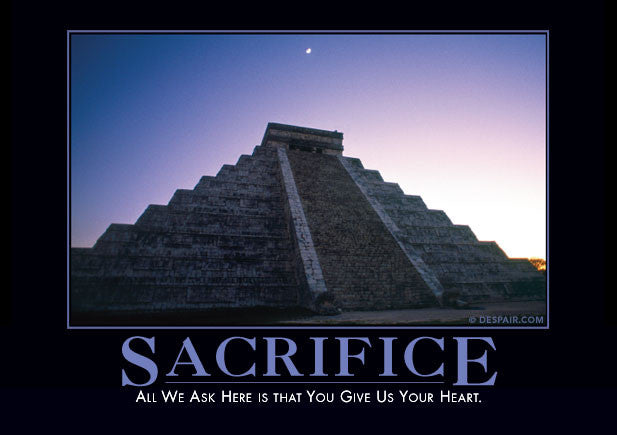
What will people give up for a cause? Tell us about an individual's sacrifice or a cultural practice of ritual sacrifice!
Next week: Thanks But No Thanks--Rejections in History
Next week is Eagleville Thanksgiving week good grief
6 Answers 2016-11-15
The case of Rosalind Franklin makes me wonder how many scientific studies were made by women who were denied credit by men. Is there any evidence of this in the 19th century, and could it have happened earlier? How would we find this out?
1 Answers 2016-11-15
In WWII captured vehicles, air planes, tanks and munitions were very commonly used by opposing forces, more so in some campaigns than others. When captured they were always painted in each factions colour scheme and symbol for obvious implications. But, is there any cases where enemy vehicles were captured but not retro fitted and used as is for ambushing or flanking maneuvers unnoticed? By unnoticed I mean the enemy not knowing enemies were inside their tanks or air planes. Or was there just too much risk of being taken out by your own forces?
3 Answers 2016-11-15
Hi,
I am doing research for a project and was wondering if someone could tell me what conflicts remained in Europe after the Peace of Westphalia. Spain and France was at war and the Fronde uprising in France was also active. The English Civil War was nearing the end. Any other conflicts or rebellions in Europe at this time?
At what year after 1648 (if any!) was there no conflicts?
Is there any place online or books where you can find out which alliances where active and what sort of claims different nations had on different provinces or lands at this time?
1 Answers 2016-11-15
Title says it all. When they were down to the last command post on January 31 1943, Hitler appointed Paulus field marshal, I know he expected him to commit suicide but why the promotion, other than Hitler being a maniac. They knew the Russians were going to be there at any hour then. Would this have something to do with it? I read this on wikipedia. "Hitler expected Paulus to commit suicide,[2] repeating to his staff that there was no precedent of a German field marshal ever being captured alive." I find Eastern Front WWII fascinating so answers are appreciated.
Edit: Why did Hitler promote*
1 Answers 2016-11-15
I’m referring to the land that is currently the UK, Ireland, and the crown dependencies.
I realize that the number probably fluctuated over time, but I don’t have a very good sense of the order of magnitude. Were there closer to 5 kings, 50 kings, or 500 kings? Were there any queens?
1 Answers 2016-11-15