I recently picked up the book and within the first few pages he mentions that the Greeks thought the earth was flat. As far as I know that isnt true. How accurate of a resource is this book ?
1 Answers 2016-08-14
Based on this topic, and the question raised by /u/oldmandubya; what was the deal with Christian women covering their hair during (part of) medieval times? (e.g. this painting); was it practicality, assuming that men go wild when seeing a lock of hair, something else?
1 Answers 2016-08-14
1 Answers 2016-08-14
IIRC the potatoe came from south america (peru?), where it was shipped back to europe around the late 1500s.
Why did it take so long for britain to domesticate it, if it was such a good source of nutrition/yield and so adaptable to various soils and environments?
All wiki says is that farmers were 'distrustful', but there's no real context given. Did the agricultural revolution have something to do with it (possibly some kind of prerequisite)?
Expanding on the question (because I'm impatient) how did it survive in ports? Did people just have potatoe gardens to sell to sailors (and sailors got used to the unique food)? Is there other historical background associating potatoe cuisine with ports?
1 Answers 2016-08-14
Perhaps this is too broad of a question but it seems somewhat odd that the sword, a sidearm, would become the dominant symbol of fighting in the western world. Can anybody explain when and why swords have so much lore and prestige surrounding them?
2 Answers 2016-08-14
Occasionally I see people writing that only a small part (5% or so) of the white population in the southern United States owned slaves before the civil war. It is usually used as a way of claiming that slavery wasn't really very widespread, or even not a big issue.
I understand that owning slaves would be something that only rich people could do, but the figure of 5% seems like it's hiding something.
For every slave owner, there ought to be a wife, kids, employees that worked in overseeing the slaves, skilled workers whose jobs depended on the kind of big farms that were only possible when using slave labour, etc. Even if each slave owner only had four or five other people in their families and as employees who oversaw slavery, we are talking about 25 to 30% of the white or non-slave population.
My question is, how large part of the white (or non-slave, I don't know what is more correct) population in the slave states before the civil war got their livelihood from slavery, either as owners, dependents of owners or from jobs that depended on slavery?
1 Answers 2016-08-14
I guess it's just something I've noticed recently, and I'm not sure if this is a new phenomenon or it's been around for a while but why are the majority of posts I see related to war/military?
I'm genuinely curious as to why people are so interested in military history as opposed to any other branch of history? Is there a historical answer to this question or is it just a matter of what people think is 'interesting content'?
What I have come to realize is: the majority of people who say they are interested in history are really just interested in wars and battles. Why is this? There are so many more fruitful areas of study and interest. I don't mean to inject bias but it helps set up my question.
In short I'm asking if history or any historian can teach us anything about why such a huge portion of history is devoted to studying the actions, makeup, and aesthetics of militaries. People like Dan Carlin come to mind. I think there are many implicit reasons why military history receives so much attention, I just have a hard time naming them.
I should add that while I am a student of history in a way, politics and philosophy are my primary areas of study.
19 Answers 2016-08-14
[deleted]
1 Answers 2016-08-14
In history, there are many empires which controlled roughly similar regions, but after the fall of the Western Roman Empire, no other power had sole control of the Medieterranean Sea. I wonder, why is that? Was there any other empire which positively tried to do that or is this question too arbitrary?
Gratitude.
1 Answers 2016-08-14
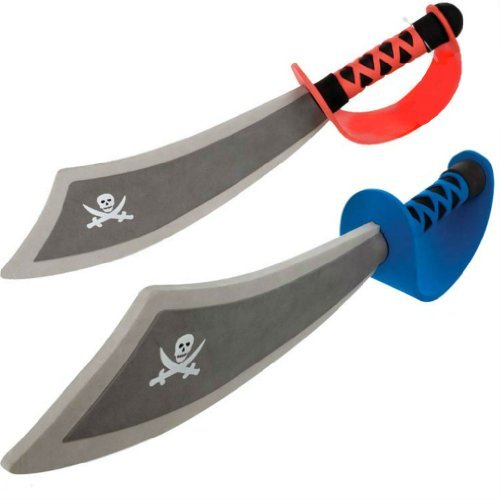
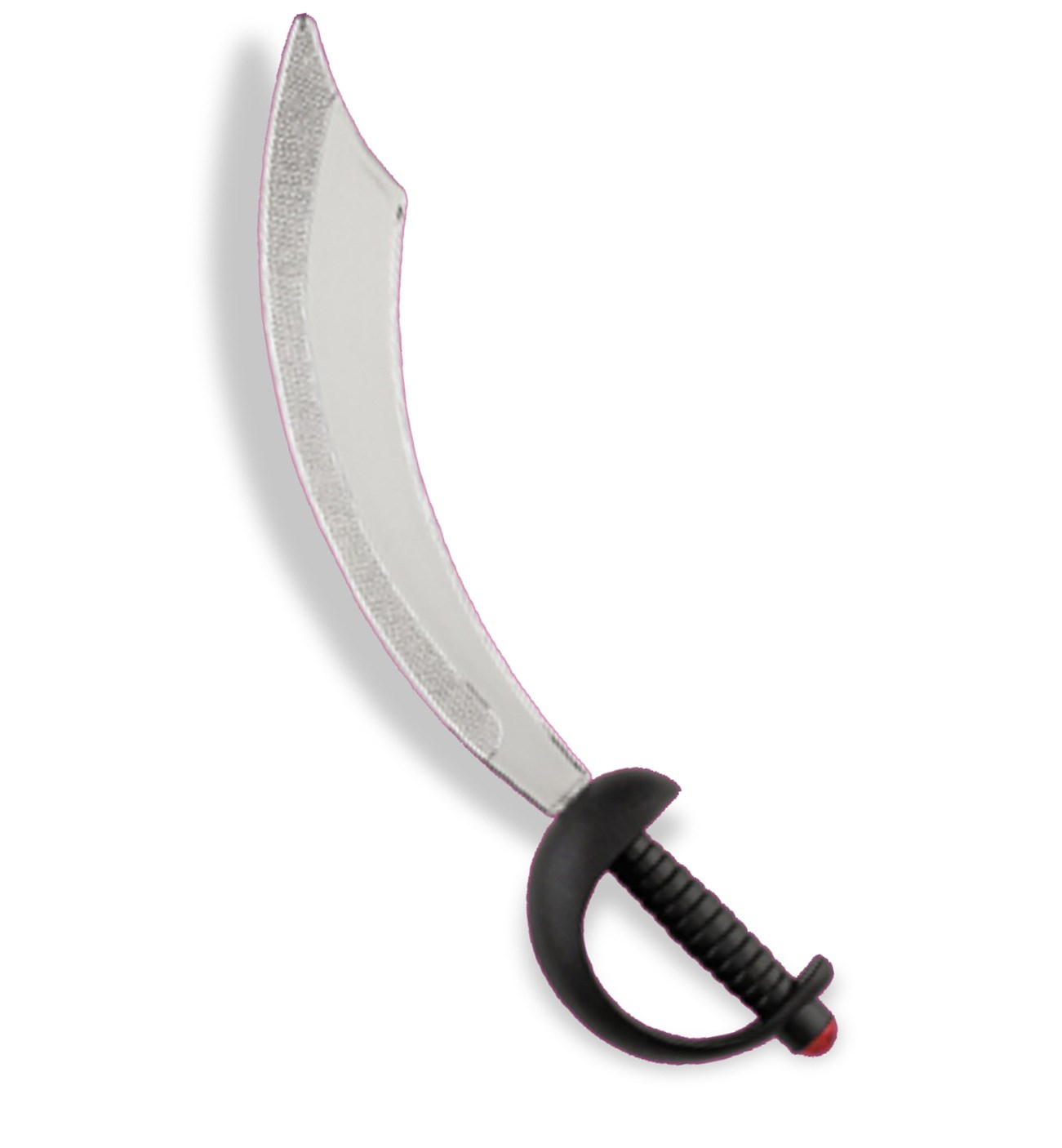
I know for a fact that the cutlass was the most widely chosen sword for use in piracy and in the rest of the age of sail. Anyways, I'm sure we've all seen plastic or foam, short pirate scimitar sword toys with over exaggeratively curved blades. Take these for example. I'd like to know if swords similar to the shape and design were actually used by pirates in the golden age. More portrayals of the "stereotypical pirate scimitar" can be seen here and here.
I call these "stereotypical pirate swords" scimitars because of the very curved blades on them, like the ones seen in earlier history and late antiquity (during the times of the Roman and Persian empires or whatever IIRC)
1 Answers 2016-08-14
I'm trying to understand how the military and governments of WWI/WWII would have responded to a situation similar to the current one where 100 ISIS combatants are trapped in a cave system.
As a bit of an expansion on this, what about giving aid, such as, provisions to soldier in a situation like this.
1 Answers 2016-08-14
It's been suggested that the seige of Malta was a step the Ottomans needed to take to advance further into Europe. How true is this? Could the ottomans have avoided decline if they succeeded at Malta?
1 Answers 2016-08-14
2 Answers 2016-08-14
Could they practice their religion? Were they exempt from military service? Did Catholic rulers try to appease them or convert them? They made up nearly all the population, so I'm curious how they were treated.
1 Answers 2016-08-14
3 Answers 2016-08-14
1 Answers 2016-08-14
My sister is planning to put a time capsule under the new floorboards of her (400 year old) house; as a historian, what would be some good things to add for the future historians? (With a side question, what do you wish someone had preserved from 100 years ago?!)
3 Answers 2016-08-14
Say it is 1590 or 1600 (or whatever), and I am talking to someone who is overly flirty, or taking excessive care with their word choice or rhythm, would it make sense for me, in that moment, to say something like "Okay, cool it Shakespeare."?
I guess this also begs the question on whether people predominantly spoke like Shakespeare at that time. I vaguely recall learning that his writing style was more or less the vernacular of the time. With that knowledge, if someone was holding a regular conversation and sounded very similar to Shakespeare, would it be out of the ordinary or tease-worthy?
1 Answers 2016-08-14
I was reading that Hitler stormed out of an event over a black man in the Olympics. Meanwhile last night, Kenya almost won gold in long distance running. Was the addition of African competitors a recent thing? We're they not allowed or able to afford to enter?
3 Answers 2016-08-14
Today:
Welcome to this week's instalment of /r/AskHistorians' Sunday Digest (formerly the Day of Reflection). Nobody can read all the questions and answers that are posted here, so in this thread we invite you to share anything you'd like to highlight from the last week - an interesting discussion, an informative answer, an insightful question that was overlooked, or anything else.
5 Answers 2016-08-14
3 Answers 2016-08-14