I find it really surprising that the name of a mythological hero features humor.
Do we know anything about the origins of the name, like where the myth of Heracles began?
Who is his naming attributed to within the myth? Did Alcmene name him that, or did Zeus, or someone else?
Were there any other similar cases of humor being used in mythology?
Sorry for this being a little vague. Any insight to this would be really cool. Also, sorry if this is too similar to other questions that have been asked before about humor in ancient Greece.
4 Answers 2016-06-15
Were they not fighting for the Allied Powers? Why would they lose territory if they were on the winning side?
1 Answers 2016-06-15
I realize that 'large' is subjective, so let's say with an average population of over 3000 people.
2 Answers 2016-06-15
e.g. the NSB in the Netherlands, the Silver Legion of America in the USA (And if these parties were disbanded, the people from these parties).
2 Answers 2016-06-15
Hi, r/AskHistorians,
My question is one possibly more suited to the philosophy of history. If this question is inappropriate for this subreddit, please let me know.
My question is 'do you find it acceptable, or is it intellectually reasonable, to assign moral values to historical events?' For example, I think the the victory of the Greek city states over the Persian Empire to be a good thing because it allowed the art and philosophy produced in Athens to flourish. The fact that the Greeks, which produced works that influenced all of Western thought, won in such a conflict makes me think that it is somehow objectively good that they were victorious.
Perhaps in a less controversial matter, I think the burning of the Library of Alexandria is a morally repulsive decision. It is an objectively bad thing which happened, and we are worse off for its occurrence.
I think the Enlightenment, and its success in laying the intellectual foundation for individual liberty, is a moral good.
I have a very hard time reading and caring about history unless I'm able to "take sides" on who I think has the more righteous cause. Of course, opposing sides have their complicated reasons for acting as they do. But I do think ideologies, ideas, and political structures carry moral weights.
Of course, my concept of morality is Western, and I understand that we're not supposed to project twenty-first century morality onto historical figures whose entire worldviews are alien to our own. In fact, I hypocritically despise it when historical figures who enacted great change (for the better in my opinion) are degraded and renounced for not conforming enough to twenty-first century morality. Yet, doing this same thing to events, political structures, and sometimes to people seems to be how I engage in history the most.
Is there any intellectual credence to this, or is it fallacious and intellectually dishonest?
1 Answers 2016-06-15
There doesn't seem to be a consensus on which of those doorstops are his best. I don't know much at all about the general history of late medieval / early modern Europe and the Mediterranean, which seems to be most of his subject, so I'm going to be scurrying to wikipedia for context a lot regardless. Do any of you have a favorite or a bias towards one or the other?
Also wonder if any of the are a little easier or more accessible for the non-specialist. I think Hobsbawm described the audience he was shooting for as 'the educated layman', and I enjoy his histories without trouble-- but Braudel looks to be a level up. The past year or two I've been recreationally reading major modern historical narratives of big topics, like Spence's Search for Modern China, Judt's Postwar, the Hobsbawm Age of books. Think Braudel will be a way to read one of the Greats, and also kick start me on an earlier period of history that I'm not yet familiar with.
A friend who has read him told me "prepare yourself to devote a ton of willpower to reading about ways the development of the fork slowly impacted agricultural prices and loads of boring shit like that". Was meant to dissuade me, but piqued my interest more!
1 Answers 2016-06-15
I've been reading Charles Wickham's book The Inheritence of Rome, and in the chapter on post Roman Britain he says that only the elite were fully romanized, and the only real Roman thing to last was the church. Is he right about romanization in Britain being so limited, or was romanization more extensive than he says?
2 Answers 2016-06-15
While modern Hinduism has moved farther away from its Vedic/Brahmin roots, in Roman times (meaning Principate onward when trade with India increased) and Greek times (post-Alexander and especially Seleucid or greco-indian kingdoms) Hinduism would have resembled the Indo-European pantheon represented across all Indo-European language areas. Did the Greeks or Romans make direct connections between their gods and the Brahmanic gods the way they did with themselves or the celts?
For example I know Indra was heavily worshipped and associated with lightning, and who's father is Dyaus Pita meaning sky father, just like Zeus and Jupiter (Iou Pater)
1 Answers 2016-06-15
I'm interested in seeing movies set in USSR time (not documentaries, just regular movies). Youtubes to various shows etc work also.
Bonus if on netflix.
The only example I have is Lives of Others which is east berlin, not ussr.
1 Answers 2016-06-15
[deleted]
1 Answers 2016-06-15
Not particularly sure how to phrase this, but I've seen occasional reference in my readings of history that some cultures, at least in the Afroeurasian world, had the belief that knowing the true name of something, gave one power over it. I seem to recall an unverified reference that part of the reason Druids didn't write down their knowledge was that doing so would give one the power over certain things; or that by knowing the true name of something one is given power of it. I've also seen reference to this in regards to Christianity, wherein knowing the name of a demon, for instance, can then give one power over it. My questions then are, is this simply limited to a few select cultures, or is/was this a more widespread phenomenon? And what exactly is the nature of these beliefs in the power of names/words? Thanks for the help!
1 Answers 2016-06-15
Obviously tanks like the Tiger were extremely powerful, but had many problems. Why didn't the Germans take a highly sucessful tank like the Panther and mass produce it to the extent of T34s, instead of using increasingly scarce resources on complicated designs?
1 Answers 2016-06-15
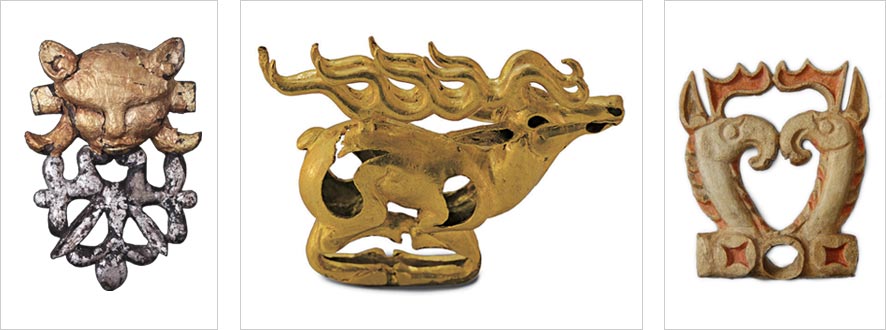
From what I understand, Central Asia (i.e. Kazakhstan, Uzbek', Tajiki', Turkmen', and Krygyst') was very different demographically, linguistically, etc. in 300 BC than it is now. Back then, they had amazing art that had a European flavor to it, and now it has largely disappeared.
Proto-Indo-Iranian culture originated in lands north of where Kazakhstan and Mongolia meet in lands somewhat close to modern-day Novosibirsk.
Many Iranian nomadic tribes lived in this steppe zone, and even in Uzbekistan, Tajikistan, but I"m not sure if ancient Kazakhstan, Krygystan, or Turkmenistan had Iranians speakers in those days. By the way, in modern-day Uzbekistan and Tajikistan, Iranian languages are still spoken there.
Anyways, I'm curious about information regarding the demographics of the people in those lands back then, and when/why/how did these people, who had European features (and even art, as you can see) get displaced.
1 Answers 2016-06-15
I am german and would like to educate myself on the subject since i often have discussions with people about how much Germany was responsible for WW1.
Thanks in advance!
1 Answers 2016-06-15
It's been a bit over 20 years and I was just wondering what the general opinion was.
1 Answers 2016-06-15
I'm curious because of the horror and misery imposed but also the value to slave owners?
1 Answers 2016-06-15
I'm doing a research project on World War One, and a sub-question I'm exploring is the changing opinions of blame for the war. I'm wondering if I could find history textbooks from both Germany and the United States from around 1925, 1955, 1985, and current textbooks to compare them and their verbiage.
Local libraries aren't any help, as they don't buy textbooks. My only current lead is Archive.org, and their assortment of digitized textbooks. I have found a United States History textbook from 1921, with much text on the Great War. Any help would be appreciated!
2 Answers 2016-06-14
[deleted]
2 Answers 2016-06-14
I'm writing a historical fiction piece about a tail gunner's first mission. I'm having the fictional crew fly out of Norfolk and over the North Sea to Bremen, Germany. At what point would the bomber formation meet up with their escort fighter planes?
1 Answers 2016-06-14
1 Answers 2016-06-14
Thank you.
2 Answers 2016-06-14
I've heard this story a couple of times before, about a Viking who was mocked by his fellow Vikings because he refused to impale children on spears.
Edit to add: I first heard this story from a Dutch source. Don't know if that helps or not.
The only mention I could find was on this Icelandic website. Notably, it makes no reference to his nickname that I could discern. And it speaks of him favorably.
This is as best as Google Translate would do:
Olvir nice man named Norway; He was a great viking. He did not throw the children of the spearhead, who was Vikings frequently; because he was a man called children.
1 Answers 2016-06-14