Even the ancient Greeks knew the world was round, and it's pretty clear that medieval European peoples were aware of this fact as well. And yet, it is a common trope in a lot of media, when referring to the backwardness of the middle ages, to point to the apparent lack of this knowledge. When did this start, and where did this notion come from?
3 Answers 2016-04-18
Stuff such as the drama of a king feeding a man's son to him as punishment would simply be rendered as 'His son I divided and fed to him, then sent him on his way.' or whatever.
Does anyone have any idea why this is?
1 Answers 2016-04-18
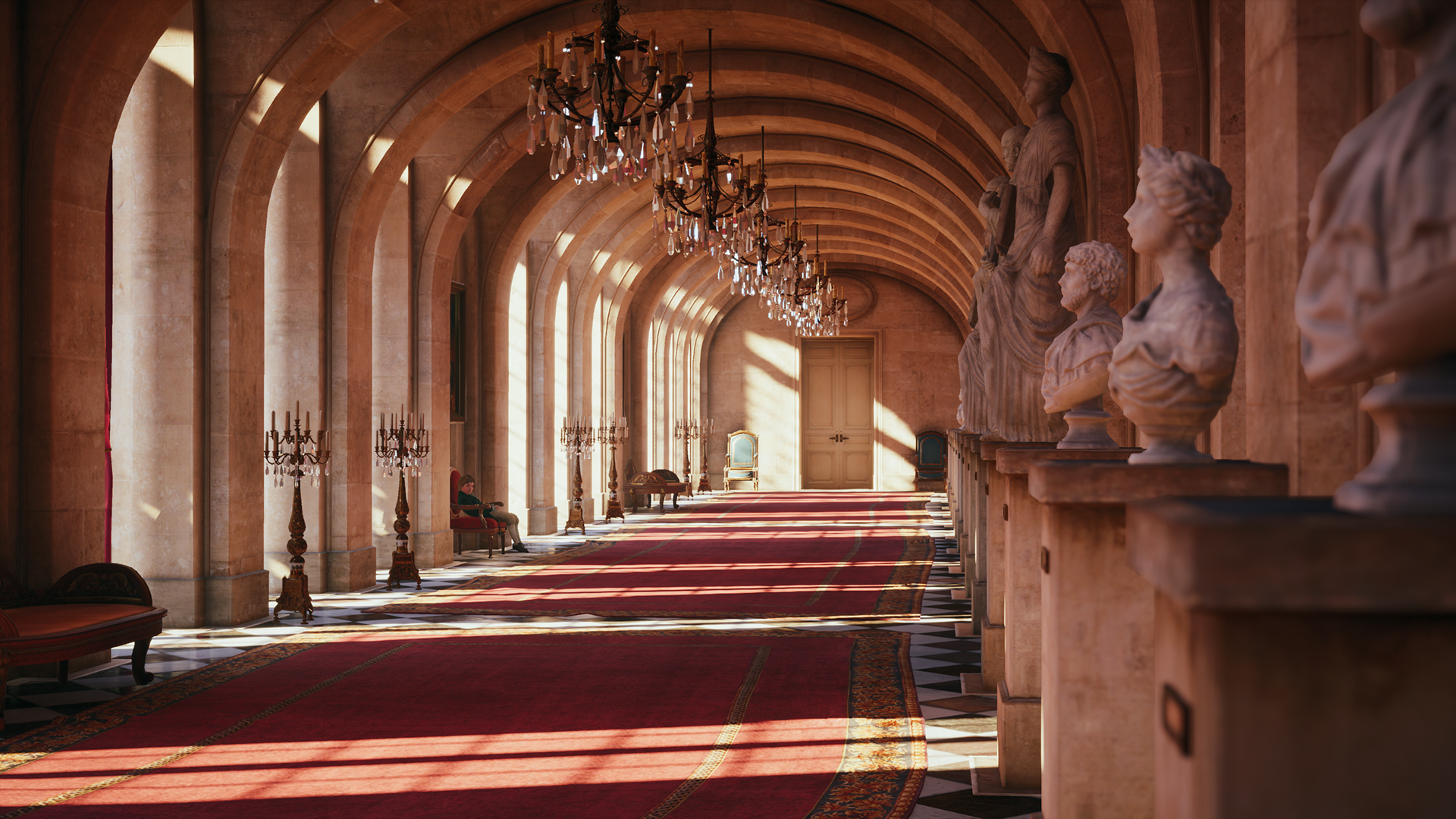
This might be an odd request. Please redirect me if it shouldn't be here. I'm making an audio course on art discovery. I believe teaching through stories is much better than stating facts or telling the student a view. So I'm looking to start my audio course on why anyone should go looking for art (or simply new ideas). But I want to communicate this answer with a dark (not scary, or dreary, but cunning - like the antagonist has a trick up his sleeve) non-fiction story with a tone a la Assassin's Creed Unity, 2, 3, 4 - the one set during the French revolution. I'm composing music similar in tone to that. + The Red and The Black (simply a stylistic choice).
I'm looking for a real story that sends a particular message which is this:
"A child never writes his own alphabet" - Jacque Fresco
"You can't exceed your environment. If you give a cannibal a watch, he doesn't look at it and say "the gears are not precise, they are ten thousandth of an inch off" He doesn't say that. It's impossible. That's what I mean by you can't exceed your environment. You can't exceed what you've been exposed to." - Fresco
This most effectively summarizes my perspective.
Basically the message I want to send is: the more ideas (art, music, etc.) you expose yourself to, the better you will be (because you will then be able to conceive of newer heights (which are subjective) you couldn't previously conceive of and you can then climb through practice and honing technical skill. In addition to that, you'll know how to surpass your influences by doing the opposite of shutting yourself off from the world - instead you look for more influences to refine your taste and climb past existing influences. But technical skill on its own is nothing compared to exposure to new ideas.)
Preferably the story is in Europe/France, and is somewhat dark and eerily moving.
As Robert McKee once said “If the story you're telling, is the story you're telling, you're in deep shit.”
To clarify further my definition of story: a person is obsessed with a certain thing they want, but antagonists stand in their way of getting that thing. Goal and ambition + conflict.
I know it's a pretty specific strange request, but I'm hoping someone out there is aware of a story like that.
1 Answers 2016-04-18
Maybe this is a subjective question, but I'd be curious to hear the opinions of learned (or at least relevantly flared people) on the matter?
2 Answers 2016-04-18
Emperor Alexius of Constantinople was an Orthodox Christian, it seems logical that he would've appealed to his fellow Orthodox Christians in Russia. Why didn't the Russians get involved?
1 Answers 2016-04-18
From what I can tell, he was a perfectly capable and intelligent finance minister, so it wasn't incompetence. Was it his own personal ambition and desire to not be tarred with the disastrous state of finances?
1 Answers 2016-04-18
Dan Carlin mentions in 'Hardcore History: King of Kings 1' that there are ancient egyptian figurines where one has a guy sitting on a horse's rump, attempting to ride it, "as if they hadn't figured out the proper way to ride a horse; stuff that would be obvious to us today".
Someone in a youtube comment mentioned to me that people rode horses in the bronze age. But I also heard from Dan that cavalry first appeared in 1000 BC, which is a little ways after the bronze age.
I learned from lindybeige in one of his videos (I think the one on light chariots?) that cavalry had to be bred large enough to to ride, and couldn't be ridden in the bronze age.
The information together is a bit cloudy, so could someone with good sources help me clear up the current view of the origin of cavalry? I'll even give you a thumbs up. :P
1 Answers 2016-04-18
1 Answers 2016-04-18
I'm talking about ancient times and middle ages.
It is my understanding that horses weren't fully protected (most of the time). Should a horse take an arrow, say, in the thigh, what would be the consequences ?
2 Answers 2016-04-18
I've recently finished the ninth episode of the TV-series Vikings and I noticed that in the scene in the cathedral in Rome the guards had a very Roman styled armour. My question is if that kind of armour was still in used in the "dark ages"(8-9th century)?
1 Answers 2016-04-18
For example, I see so many pics of American soldiers with graffiti on their helmets and a strapped box of cigs for Vietnam but nearly never for WW2 soldiers.
2 Answers 2016-04-18
Hi
I am writing a paper asking that question, so far I have placed the reasons for Soviet victory into four sub categories:
*Soviet strength
*Failings of the Wehrmacht
*The inclement weather
*Russia's natural geography (it's real big for blitzkrieg style tactics).
This is a bit of a "mythbusting" project for me, as a lot is made of the harsh weather defeating the German army within several popular culture references, particularly the cold and the snow.
From what I have read the very warm summer as well as the very harsh winter slowed the German advance a great deal and hence the favoured Blitzkrieg tactics were made increasingly difficult to adopt. The weather weakened the German Army and allowed the Soviet's time to regain their strength and prepare a counter-offensive.
Of course there are other factors at play and there can be comparisons drawn with Napoleon's failed invasion of Russia. I won't go into what else I have found out but if anyone can champion any other reasons I would be interested to hear what you have to say.
I wanted to bust this myth but it's looking like the fuss made over the weather is with good reason so far....
Thanks all.
1 Answers 2016-04-18
The Arabian peninsula has played an important part in history, but how were the bedoin populations there able to sustain themselves? From the information I've gathered food seems so sparse ad rainfall so rare that living there would probably get you killed. And to my knowledge there are few or no major river systems that could support agriculture.
1 Answers 2016-04-18
2 Answers 2016-04-18
Stories sometimes include the Viet Cong deliberately planting infected prostitutes in brothels to infect American soldiers; in pretty much all versions I've heard the disease made the victim's penis turn black and experience permanent damage. Also heard it called Black Clap, Black Syph, and Cockrot.
Were there actually any cases of unknown species or resistant strains of known STDs ravaging the bodies of unlucky American soldiers?
2 Answers 2016-04-18
Hello there, I'm looking for reference books or articles on the Neolithic Revolution, the context (I'm new to the Stone Age) and some light on its aftermath (which seems pretty overwhelming). I can read English and French. Thank you!
2 Answers 2016-04-18
My impression is that the Zulu and their neighboring clans were lineage-based societies, so how did the Zulu erase the lineage-based identities of their conquests and integrate them into their lineage system?
1 Answers 2016-04-18
Excluding the saami. I'm mostly curios if there was a non-indo-european people that was superseded by the germanic tribes.
1 Answers 2016-04-18
I'm listening to Dan Carlin's blueprint for Armageddon podcast and one thing he never addressed is why the German second army was en route and drawing nearer to Paris but then changes course and moves east of Paris a few days before the First battle of Marne? I wouldn't mind a simple or short answer as its a short question.
I'm wondering this because the Second army moving east was basically the reason the battle of Marne was given an opportunity to work.
1 Answers 2016-04-18
In the modern period, or perhaps more 20 years ago, it is important to keep your grass nice green and cut, but would that have been the case before the lawnmower?
Now, I know farmers would of course, but would there have been any cultural expectation to have a nice lawn?
2 Answers 2016-04-18
Was there a greater concern for humanitarian rights than for profit? With the industrial revolution, it was my understanding that expanding profit in pretty much any means was prioritized.
edit: As a Canadian learning thoroughly about the Civil War for the first time, any background information would be much appreciated.
1 Answers 2016-04-18
/u/commiespaceinvader
1 Answers 2016-04-18
For example
Gulliver's Travels: Travels into Several Remote Nations of the World. In Four Parts. By Lemuel Gulliver, First a Surgeon, and then a Captain of Several Ships
and
Robinson Crusoe: The Life and Strange Surprizing Adventures of Robinson Crusoe, Of York, Mariner: Who lived Eight and Twenty Years, all alone in an un-inhabited Island on the Coast of America, near the Mouth of the Great River of Oroonoque; Having been cast on Shore by Shipwreck, wherein all the Men perished but himself. With An Account how he was at last as strangely deliver'd by Pyrates.
How did we transition to modern titles which are mostly single words or phrases that tell you almost nothing about the contents. Further information being provided on the synopsis on the back.
A tangential question: when did numbered sequels come into use? For example, Terminator 2 or GTAII.
It's hard to imagine a "Pride and Prejudice 2"
3 Answers 2016-04-18