2 Answers 2015-12-08
1 Answers 2015-12-08
It seems like there's a glut of books on Stalingrad, tons of scholarship on Operation Barbarossa, and a smattering on The Siege of Leningrad. I saw some good documentaries on the battle of Kursk, but after Kursk there's this black hole. I can't find anything good on the Eastern front after Kursk until Anthony Beevoir's book on The Fall of Berlin. Were the circumstances of the war such that records are difficult to interpret, or are nonexistant even, or is there a general lack of interest on the topic, or am I just missing obvious books here?
1 Answers 2015-12-08
2 Answers 2015-12-08
What sort of reconnaissance was undertaken as the Japanese planned their attack on Pearl harbor? Did they have any intelligence sources on the ground? Did they use any commercial planes or ships to secretly gather intelligence? Was the attack planned for a specific date based on intelligence?
Did the Japanese pilots have a good idea of which ships were in port? Did they know that carriers such as the Enterprise and its task force were not in port?
Did the pilots have any idea of where things would be, or was it a "go that way, blow up ships" situation?
I checked for previous posts on this topic, but didn't see anything similar. Hopefully this is a slightly new angle on questions around Dec 7, 1941. Thanks for any info!
1 Answers 2015-12-08
Did the codebreakers who broke Enigma in WWII, or higher ups in the Allied forces really get to decide basically which of their forces they would sacrifice to keep their knowledge of the German code a secret? Something I found unbelievable in The Imitation Game that they would decide on such a thing so I always wondered.
1 Answers 2015-12-08
1 Answers 2015-12-08
1 Answers 2015-12-08
I like it a lot, but I have little to no training in historiography and it's not a recent book. I would like to ask if the portrait he makes of european states' evolution is generally accepted in academia and if not, what the critics say.
1 Answers 2015-12-08
This was a follow up question posed by /u/Vladith in a recent thread here:
https://www.reddit.com/r/AskHistorians/comments/3vohs2/6_million_victims_of_the_holocaust_huge_number/cxpwxui
Since it hadn't been submitted yet and it is an interesting inquiry I thought I might as well do it myself.
2 Answers 2015-12-08
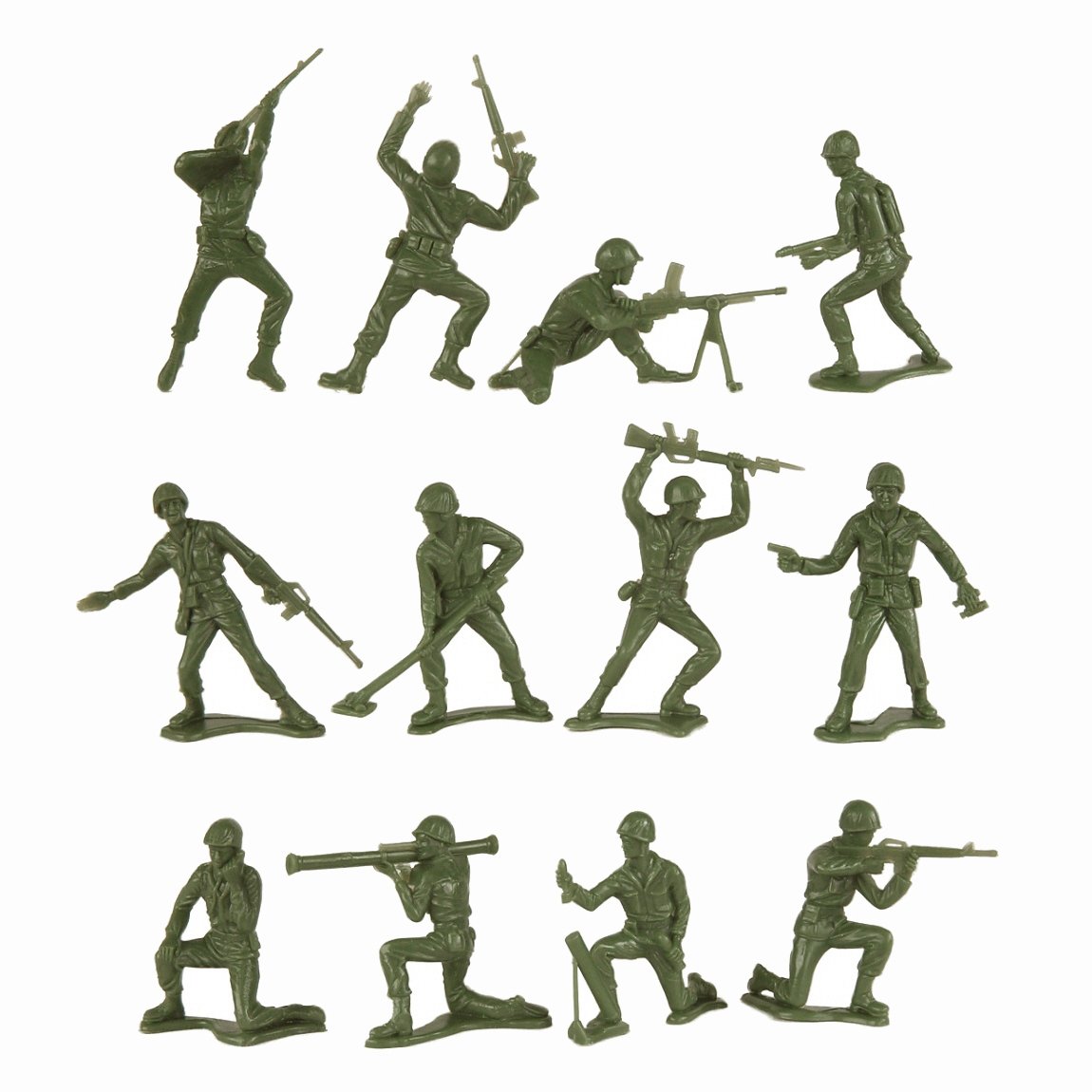
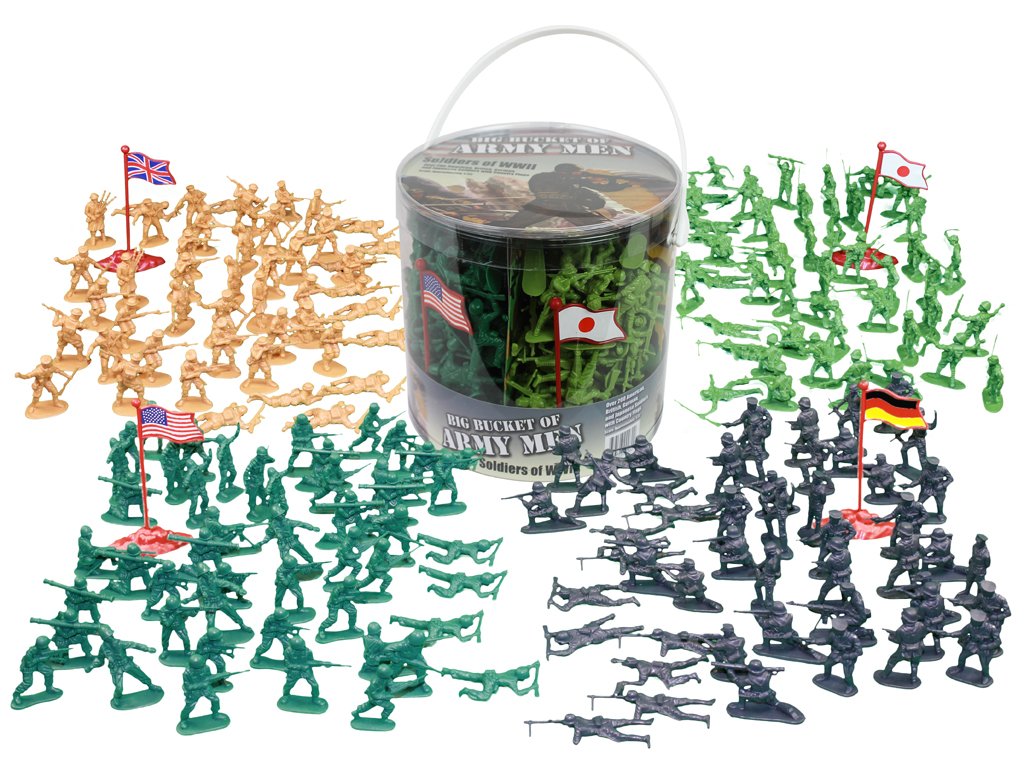
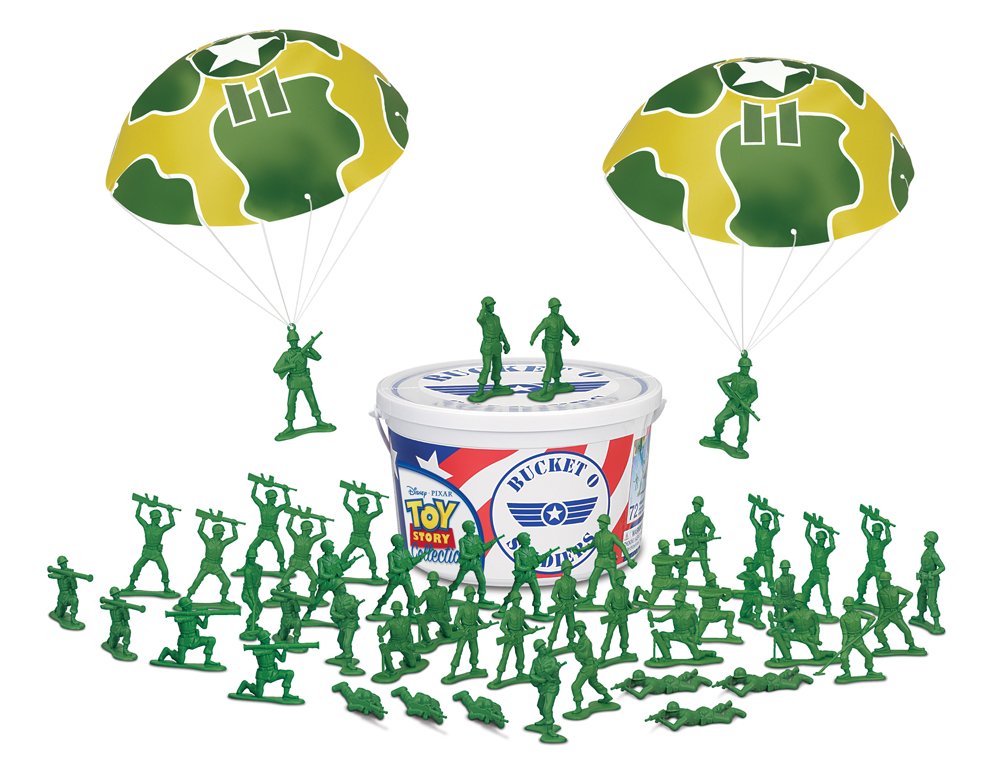
The same set of poses and props (for instance, a minesweeper, a guy holding his rifle over his head with a bayonet, a spotter with one arm raised looking through binoculars, a guy about to place a shell inside a mortar, etc.) can be found in toys made (or at least sold) by several different companies, in stock art, in movies, there's even an army men font. What's the deal? I assume since they're mostly patterned after WW2 soldiers (And more elaborate sets often include British, Japanese, German, and sometimes even Russian figures) that they must have arisen sometime after the 1940s, but can anyone narrow it down, point to a specific manufacturer or even an individual creator?
Bonus question: Why are they so commonly referred to as "army men" rather than just as soldiers or whatever?
Edit: I'd also be interested in hearing any answers to the same questions for other stock plastic figurines (spacemen, cowboys and indians, dinosaurs, civil war soldiers, that sort of thing) which have similar standardized designs.
1 Answers 2015-12-07
Had most of the U.S. fleet been transferred to the East Coast and Pearl Harbor or was there still a strong presence in California and other Western states?
1 Answers 2015-12-07
In older texts, single quotes are used for a normal quote, and double quotes are used for quotes within quotes, which makes more sense to me. Nowadays its the other way around. I noticed that in some older books (a version of a Dickens book does this) do double quotes for normal quotes because the entire book is encompassed in single quotes, as though the narrator is a third person. When did this switch happen or am I wrong and its just been a matter of preference?
1 Answers 2015-12-07
Bhutan and India have a close relationship, and India is one of its biggest suppliers and allies. This relation is supposedly one that resulted from historical friendly ties. But why does Bhutan ally itself with India over China? It actually shares borders with China, whereas India is separated from Bhutan through several countries both.
Essentially, why do Bhutan and India have these long-lasting historical relations?
2 Answers 2015-12-07
Hey so I'm working on a historiography of the Xinhai Revolution. I've identified a few schools of thought, the main groups are East and West (referring to Chinese scholarship and English, American, Canadian, etc). The Chinese historiography of the revolution can be further broken down into: CCP/Maoist publications and KMT/Nationalist publications. The CCP historiography reads inline with Marxist theories, claiming the revolution was a bourgeoise revolution is ever sense. Examples: modern economic enterprises brought by encroaching imperial powers led to the emergence of nation capitalism in turn a bourgeoise. Looking at individuals in revolutionary groups, casting them into a bourgeoise mold. By and large linking bourgeoise to any revolutionary activity. The KMT/Nationalism publications instead of blanketing the revolution as completely a bourgeoise or not break it up into many pieces. Including anti-imperialist forces, global markets, anti-Manchuism, and treacheries committed by Yuan Shi-Kai. Where I fall short and need help is identifying the general consensus of Western historiography on the Xinhai Revolution. Additionally correct me in anything previously mentioned is wrong.
1 Answers 2015-12-07
Amazon is unfortunately full of nonsense by people like Graham Hancock and David Limbaugh.
2 Answers 2015-12-07
I've been trying to find books that give overviews, rather than focussing on specific periods. I don't mind so much if the book is focussed on a specific country (Including Iceland and Finland by the way), just as long as I get a good overall sense of how things went.
I apologise if this is the wrong way or place to ask a question like this, and thanks in advance to anybody who answers!
1 Answers 2015-12-07
In the last few centuries of its existence what the purpose of the HRE, I once heard that it was less symbolic and more practical than people think
1 Answers 2015-12-07
I've heard that Sparta was a relatively egalitarian society as far as the citizens were concerned - men and women has equal rights and everyone had a vote, fine and dandy.
But then I read up a little on the factors of citizenship, and it seems like a pretty exclusive deal - you had to both be able to trace your lineage to the founders of the city and go through the agoge to qualify for citizenship, and then make enough corn to sustain your status.
But then, what about the Spartans who didn't go through the agoge, and for that matter women and immigrants? Was it an Animal Farm "some animals are more equal than others" type of thing or was it more of a technical distinction?
1 Answers 2015-12-07
1 Answers 2015-12-07
I've heard that the German commander's justification of 'bleeding France white' through the attack at Verdun was just him covering his ass after his offensive completely failed, while I remember hearing this disputed, and that the offensive was conducted in such a way that attrition was the goal. Did the Germans intend to break through and tear the front open, restoring mobile operations?
1 Answers 2015-12-07
I was watching a video that said in the early empire, Legionaries used to march into battle in a strictly enforced silence. Is this true? And if so, was it effective, and why did it stop?
1 Answers 2015-12-07