I know it's a somewhat obscure conflict, but I was wondering if anyone here could point me to a volume or two worth reading covering the Border War between the South African Defense Forces (allied with UNITA) and the Angolan MPLA (supporyed by Cuba), with a special focus on the Battle of Cuito Cuavanale, or failing that a solid, wider history of the Angolan Civil War.
1 Answers 2015-07-19
1 Answers 2015-07-19
Considering how the Polynesians practically settled all islands across the Pacific Ocean I thought that the Atlantic Ocean would have been the same.
Bermuda and the Azores stand out to me.
EDIT: I just learned that the Canary Islands were populated pre colonization.
If this belongs in Ask Anthropologists please tell me.
1 Answers 2015-07-19
I suppose this is a couple of questions at once, but I'm trying to understand exactly what happens to a society when it falls.
I guess the general idea of my questions are asking about, 'why was the Roman way of life forgotten, and how?' But I'm not sure if that's even a proper historical question.
Sorry if any of these questions completely miss the entire truth of what happened, I'm not too strongly well-versed on the Late Classical/Early Middle era, I'm just really trying to wrap my head around such a huge change in the dynamic of a continent.
2 Answers 2015-07-19
1 Answers 2015-07-19
Was there no established alphabet prior to European colonization?
3 Answers 2015-07-19
I was on the plane watching a recent movie based on the Book of Exodus and the story of Moses seems to be quite strongly hostile towards slavery.
I'm curious how Christian nations like the United States (which I believe has been quite strongly Christian since inception) and England (which has the Church of England embedded in government) justified their practices given that their holy text explicitly denounced them.
I'm particularly interested in whether religion was taken into account regarding slavery in the southern states in the time leading up to the US civil war and any role the Church of England played in the atlantic slave trade.
2 Answers 2015-07-19
when the Hastati started to fall back, what stopped them from being massacred by pursuing enemies?
1 Answers 2015-07-19
Example, my friend said the women "Little Women" took place in the Victorian era even though it's set in the states. I felt like Victorian Era strictly referred to England and surrounding countries during that period of time, which is correct?
1 Answers 2015-07-19
Greetings everyone!
I have a commission for a scale model of a B-24 that I will be working on shortly. The customer is a big fan of the 'War at home' side of WWII and the B-24's; I have suggested that I build a diorama of a B-24 on the assembly line.
I would like to ensure as close to historical accuracy as possible and as a result have some questions I was hoping you all could help me out with.
How and at what point in the assembly process were the plane's marking painted on? I'm making an educated guess that unit specific markings like nose art would be applied after delivery to the unit.
Would you suggest any online resources for learning more about the steps in the assembly process?
I thank you all in advance and I am sure I will have more questions come up as I continue to work on the project.
1 Answers 2015-07-19
I know it's probably dumb, but my father, a smoking addict, constantly talks about this. He says that "the Nazis ran out of jews and then they went after the smokers", nevermind that there were more than enough gypsies and such.
So I want to know if this true, hopefully with some reliable sources (though I don't really know how you could use a source for something that didn't happen).
2 Answers 2015-07-19
3 Answers 2015-07-19
I'm teaching an English 1001 course, and am looking to diversify my students' reading with lots of different stuff - last year (my first) I did long-form journalism from the last five years, this year I wanted to mix things up a bit.
Since my field is English, I'm coming to r/history looking for the best history essays available. Note that I'm not looking for history essays that redefined the field - I'm looking for essays that are really interesting, creative, and enjoyable to read. I know that's a bit subjective - if it helps, consider that I'll be sharing these with college freshman who may have no prior interest in history. I'd prefer if they were essays I'd be able to find on Jstor or Project Muse (but feel free to suggest book chapters or harder-to-find essays).
As an example, one of the essays I'm considering is Jeffery Todd Knight's "Fast Bind, Fast Find: The History of the Book and the Modern Collection." Here's the first two paragraphs:
In 1799 at Cambridge, a cataloguer named William Pugh was dismissed from his post for making insufficient progress on a new category of books, the "AB class," which was to comprise all valuable specimens of early printing then held in the university's Royal Library. Pugh, a respected fellow at Trinity College, had been at the job for nearly ten years, having been hired almost immediately after taking his bachelor's degree on the strength of his reputation as a voracious reader. He was widely knowledgeable and passionate about working with rare books. But, according to contemporary accounts, he was also eccentric, and eventually he became slovenly, obsessive, and antisocial. After his dismissal from the library, Pugh reportedly "dreaded the society of everybody." He would lock himself in his room for long periods, emerging suddenly to scandalize the college by throwing all his linens in the Cam or by doing something comparably erratic. One evening at the height of his madness, and after a rash of unexplained vandalism in the town, Pugh was spotted outside of his room and followed. On leaving the college grounds, he went down to the water's edge, and from among the water flags and duck-weed brought up a long stick. This he seized and hurried back to the street. No sooner had he got there than the frenzy seemed to seize him. He gnashed his teeth and rushed along like a madman. Presently he saw a lamp . . . and with a loud oath exclaimed "You are Robespierre" and dashed it to pieces with his stick. So he went on with the others, crying Danton, St Just and other names till he had broken six or eight, when he returned to the ditch, hid his stick, and made his way back to the college.
Tolerance for fellows' eccentricities was high at the time, but the incident was enough for Pugh to be dismissed from college and declared insane. Many years later, he was said to have regained some of his former reputation, but he never returned to work. According to contemporaries, "he still had a somewhat insane look."
The essay is about how books used to contain a bunch of different works binded together, but earlier librarians took them apart and separated them into single works. It caused us to lose a lot of insight into how people read, and what sorts of connections they drew between disparate texts. But it does so, in part, through the story of a late-18th century madman who refused to "properly" catalogue books.
TL;DR Know any good essays on history?
1 Answers 2015-07-19
In the Army I've always heard the myth that since our intermediate mortar is 81mm the Soviets designed theirs to be 82mm so they could fire captured rounds if necessary. I was wondering if there was any truth to this or the idea that to Soviets would in general "one-up" the US so they could utilize captured ammunition?
1 Answers 2015-07-19
I imagine the defeat in WW1 created a bit of doubt on weather the German nation could succeed and if it caused any rise of support for independence in states such as Bavaria, etc.
2 Answers 2015-07-19
I know he didn't, I just want someone professional to tell me how ridiculous this is (ie. what evidence would we have found if he did).
This is with regards to a certain early islamic revisionist theory that places mecca and the Quraysh in palestine. Abraha's attack on mecca is attested to in genuine pre-islamic sources and seems quite plausible with the discovery of recent Sabean inscriptions. If the revisionist theory is correct, then Abraha must have lead an attack on palestine which is in the byzantine empire.
I already find this implausible due to Abraha being an ally of the byzantines at one point.
1 Answers 2015-07-19
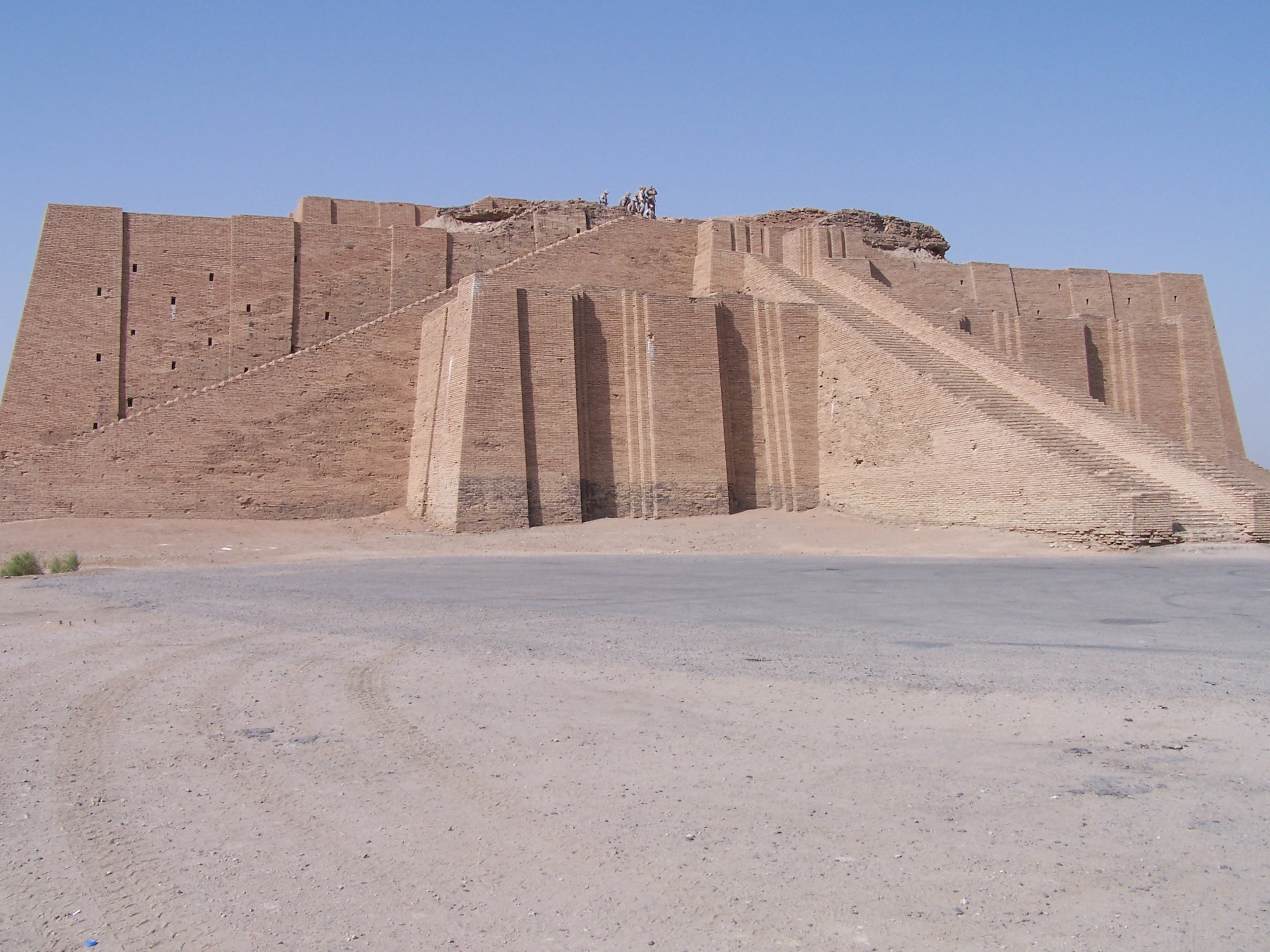
This is what the ziggurat of Ur looked like after it was excavated, and this is what it looks like now, after having been reconstructed. This is a rendering of what it looked like complete.
How do we know these details about its structure? How do we know, for example, that there were little towers on top, and how do we know what those would have looked like? What kind of evidence is there for the structures that we don't actually see in the ruins themselves?
1 Answers 2015-07-19
2 Answers 2015-07-19
I've heard that it was promised to Japan that the western allies would not interfere against their invasion of China so long as no one intervened on their side. Was this the case? Were they therefore tricked into starting World War 2 when the US embargoed them?
1 Answers 2015-07-18
1 Answers 2015-07-18
According to Islamic writings, during the prophet Muhammad's lifetime there was a ruler of Egypt know as the Muqawqis. Most Islamic biographies of Muhammad say that from the period of Hudaybiyya(628) and his death(632), Muhammad sent out letters of invitation to Islam to Arabs kings, the Sassanian Shahanshah, The Eastern roman emperor, the ruler of Aksum, and a man they called the Muqawqis of Egypt. Not only do these sources talk about the Muqawqis being a ruler of Egypt(with little mention of rome) but they also say that he joined Islam and replied to Muhammad with gifts of two maids, one whom was Maria the copt who would bear Muhammad's third son Ibrahim who would latter die in infancy.
Obviously I suspect historical bias, but how much of this story is true? Was there ever a Muqawqis or at least someone that governed egypt at that time who could fit the role? If yes, would this person reply to a self-identified prophet in Arabia with gifts; if no, should I also doubt the existence of Maria and Ibrahim?
If you have any good suggestions for further readings, please leave them for me.
1 Answers 2015-07-18