2 Answers 2014-12-04
Nowadays whiskey is usually around 40%, vodka is around 40% and many others spirits seem to be hovering around 35-40%. I remember reading somewhere that beer or some equivalent of beer used to be a much lesser alcohol percentage in the far past than it is today at around 5% alcohol. I am wondering if something similar is true liquors in the American frontier when there was far less regulation, or in that same time period in other parts of America and the world.
2 Answers 2014-12-04
1 Answers 2014-12-04
Why or why not? Kind of broad and vague, so sorry about that.
I have an exam tomorrow and I'm having a hard time justifying one way or the other. Thank you in advance!
1 Answers 2014-12-04
What was the name (names) of the ancient Egyptian empires? Were there more than one, such as before and after the Alexandrian conquest/Roman conquest/different dynasties? I'm want to know what they called themselves, not what we call them now. If it's unpronounceable, feel free to translate into English.
I've read a few history books on Egypt over the years so feel free to use complex answers.
1 Answers 2014-12-04
1 Answers 2014-12-04
I'm currently reading Crime and Punishment. The importance of poverty and money is already clear 100 pages in.
The money of the time, as you know, was Rubles. They also use Kopecks, which I believe are the equivalent to a USD cent?
My question is: What is the current USD equivalent of one Ruble and Kopeck?
2 Answers 2014-12-04
I recently finished reading Tom Holland's Rubicon. On page 331, he notes that in 45 BCE, Caesar had plans to rebuild Carthage and Corinth, two cities destroyed by Rome. Despite his assassination the following March, were the beginnings of his plan ever put into effect? Or did Caesar's ambitions die with him?
1 Answers 2014-12-04
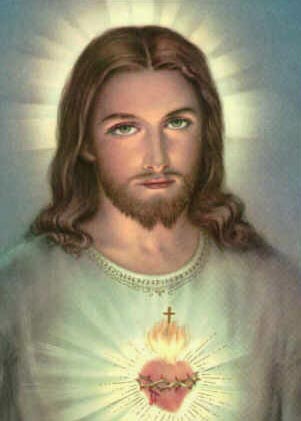
The quintessential modern depiction of Jesus often looks something like this, however I would be very surprised if this looks anything like he actually did. I would expect a guy from Israel 2014 years ago to have very dark skin, at the very least.
So where did this pale skinned, long haired, bearded appearance come from? What would he have really looked like? Are there any historical descriptions of his appearance? I feel like most religious people would be extremely shocked if they saw what he actually probably looked like.
2 Answers 2014-12-04
I was at the "Psychiatry: The Industry of Death" museum in Hollywood this weekend, and the very first plaque in the whole museum alleges that Benjamin Rush, considered the father of modern psychiatry, killed George Washington. MAJOR CAVEAT, I know better than to trust anything at a museum run by the Church of Scientology, but I was curious about the story behind this allegation. I learned through some quick Googling that Rush was not at all present at Washington's deathbed, so a statement as direct as "he killed him" is very misleading, but I also learned that Rush was a major advocate of bloodletting. Is there even a tiny bit of truth to the statement--do (actual) historians indirectly blame Rush's advocacy for Washington's death? Or is this link between the two entirely fictitious?
1 Answers 2014-12-04
1 Answers 2014-12-04
2 Answers 2014-12-04
I want to make a scale replica of a main cannon on a 18th century pirate ship and I am having trouble finding information on what was standard sizes on them.
1 Answers 2014-12-04
I've been pondering the shift in cultures for a while now and I just can't think of a way that the names and surnames switched from Roman names like Spartacus, Romulus, or Julius, for example to Italian names such as Vicenzo, Giuseppe, or other Italian names.
Could anyone offer an explanation?
Edit: I'd like to open up the discussion a little more so I'm posting what /u/GenericName3 asked:
Was there ever in time a major shift when people located on the Italian peninsula began self-identifying as Italians as opposed to Romans?
5 Answers 2014-12-04
Why is it that Northern Asians like the Mongols, Khitans, Jurchens, Huns, Xiongnu, Turks, and Seljuks all have long histories of conquest and warfare, yet southeast Asian tribes do not? You never hear about the conquests of countries like Vietnam.
1 Answers 2014-12-04
A friend shared this documentary with me which is a small introduction to Bhutanese culture. I would love to learn more.
2 Answers 2014-12-04
1 Answers 2014-12-04
2 Answers 2014-12-04
1 Answers 2014-12-04
I realize that this is an extremely broad question. But it is my understanding that the industrial revolution marked the biggest transition in human societies since the invention of agriculture, so it seems like a very important question. Why did it happen when it did?
1 Answers 2014-12-04
I watch a lot of Star Trek and it seems like they are frequently asking questions along the lines of "What planet are we on?" or "What planet are you from?" I can't remember the episodes well enough to remember if any of them ever respond with "wtf are you talking about?", but it got me thinking. Surely not all these cultures would have a concept of their home being a planet, because we haven't always had that concept. Sure, many of the early cultures had some knowledge of various heavenly bodies, but that's distinctly different from having the understanding that we are ON one. If we went back 100 years, would they understand that concept? 200 years? 500?
Does anyone know the history of our understanding of the Earth's relation to the universe?
1 Answers 2014-12-03
1 Answers 2014-12-03
Hello.. I am very interested in Late Antiquity and have recently immersed myself in the development that religion took over this period. -Therefore, I would ask if there is anyone who knows anything about Three-Chapter Controversy. and have generel information regarding the Chalcedonian controversy. I have been looking for a map the at illustrates the theological development or delineation in the 6th century aswell. I hope someone can help. Best regards Bjarke.
2 Answers 2014-12-03
I'd like to give the book to my father for Christmas. He is woefully ignorant of how the text he believes to be divinely written and canonized came into being. He knows about the (legendary) origins of the LXX and the Council of Trent, but the intervening 700 years are a mystery to him. He's a fundamentalist Southern Baptist minister, so I'd prefer if the book didn't question the historicity of Jesus or approach the historicity of miracles/ the supernatural. I'd very much like the book to cover at least the major sects of early Christianity (e.g. Marcionites, Arianism, the various gnostic sects) and definitely how the canon was formed (e.g. "four gospels for four winds").
Thanks in advance for the recommendations.
2 Answers 2014-12-03