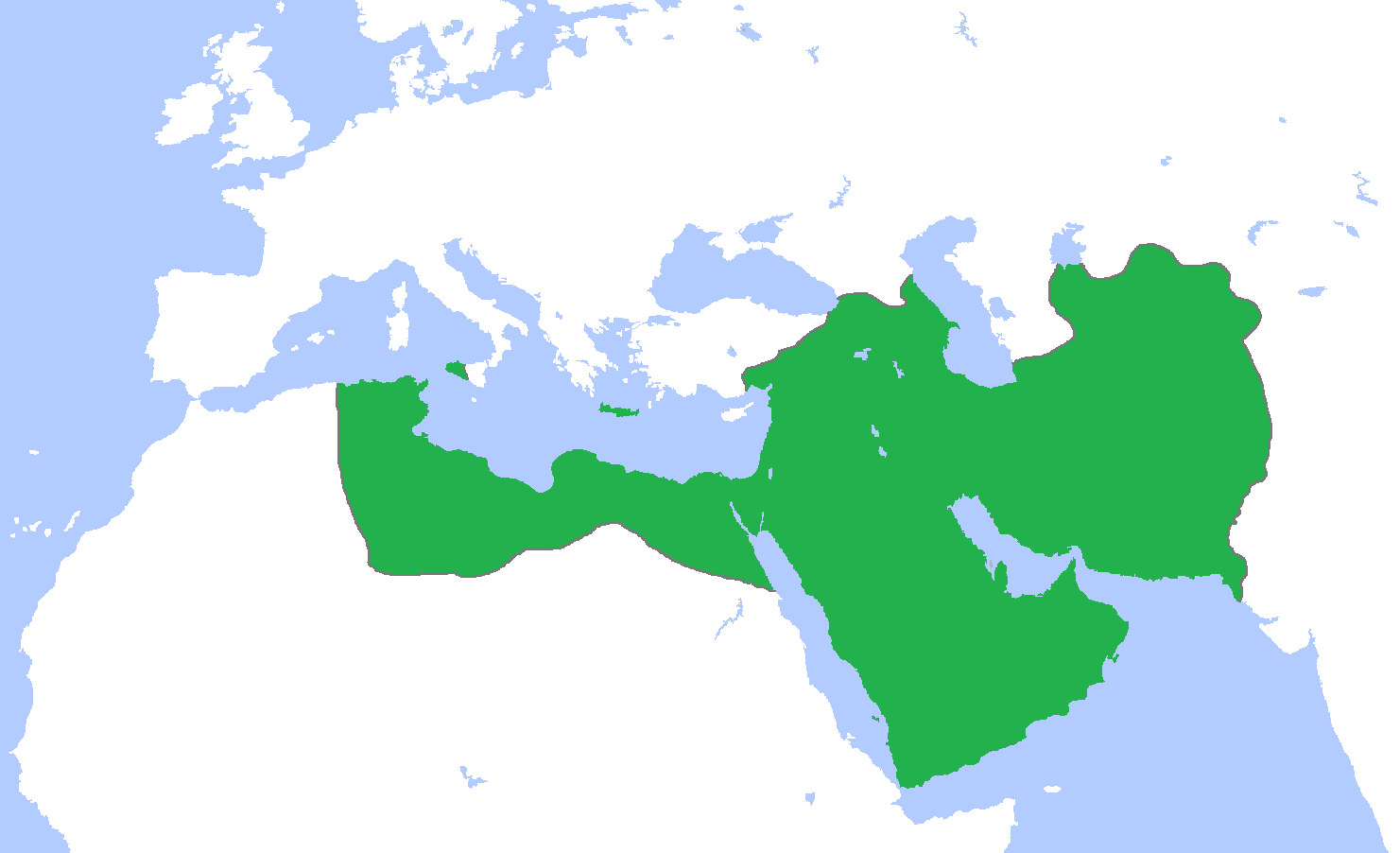
Various Caliphates seem to be referred to as single units at the top level, for example: The Addasids, Fatimid, and this.
So the Caliphates can be referred to as a single unit, but I have never seen this style used for Catholic Europe under the Popes...
1 Answers 2014-04-06
I am happy to announce that /u/Searocksandtrees, /u/Snickeringshadow and /u/henry_fords_ghost are your newest mods!
These three have long provided excellent, in-depth answers to questions. Additionally, they have exerted themselves to always be polite and helpful to every member of our community. For those reasons, we are very pleased to have them join the Moderator staff, and have every hope that they will continue to be great members of our community.
21 Answers 2014-04-06
Are there any papers/quotes on how military leaders described the power of the atom bomb to Truman leading up to the Hiroshima and Nagasaki bombings?
1 Answers 2014-04-06
I know that the Germans used lots of captured (and converted) French vehicles but did they also produce new vehicles/weapons/other in occupied French factories?
1 Answers 2014-04-06
I obtained these two large photos and need help identifying a person in both. My first two guesses were wrong (Willie Brandt and Jimmie Hoffa).
The first is a JFK campaign photo. The second is the unidentified man shaking hands with LBJ's daughter, Lucy, on a tarmac, with LBJ standing by.
Any help is appreciated.
1 Answers 2014-04-06
SA had 3 million members pushing for radical socialism, had weapon caches, and even had the potential of absorbing the regular German army into its ranks. When Hitler purged its leaders, why didn't the 3 million strong rise up and rebel against Hitler's government?
1 Answers 2014-04-06
My grandmother was half Thai. She has stories of growing up in Bangkok in the 30's...being tied to her chair to finish her food, her feet were bound, etc...
As some of you may be aware, there were a number of coups d'etats during the 30's, and my grandmother was caught up in one. She was five or so years old and was ushered out of the country with her mother, hiding in the footspace of a car, whisked to the airport and brought back to the UK. Her father stayed behind and was killed.
Only, from what I can discern, the 1930's coups were bloodless.
My grandmother asserts that her father was a Thai prince. Her mother was a governess in Bangkok.
Look, I know this sounds like the plot of "The King and I", but this is the family history I've grown up with. When my great grandmother returned to England, she settled in Birmingham and held a scholastic position at the University of Birmingham for some time (I forget what right now. I assume this is verifiable, but I haven't put any work into it at this point. Suffice to say, I know that's what she did). My grandmother and her sister were placed in an orphanage. Again, I forget why and this isn't the focus of what I'm asking.
What I would like some help with, if anyone can offer it, is with identifying my great grandfather.
I have a name. My grandmother's birth certificate has the Father's name as "KROM".
I have seen another piece of paper. I forget what is was, but a lengthier name was on it:
NAI KURM INKAWANID.
My grandmother says the last name is pronounced INGAVAJIAH.
The cursory research I've managed to do suggests that NAI KURM is a slightly mangled version of a regal appellation used around that time: NAI, which denoted a Senior page in the court and KROM, which was an honorific given to peers.
I have more information on the British part of the story, but that's all i know about the Thai side of things.
Hoping someone can throw some light on the subject, as I've come to a grinding halt.
1 Answers 2014-04-05
I regularly read stories about the Gods of ancient Greece, Rome, Egypt, etc. Even if we wind the clock forward, we see huge battles such as the Crusades fought in the name of religion. The concept of a God is something which has dominated our history in so many ways. However, as a casual observer, I have never come across atheism throughout history - it seems to be a fairly modern idea.
Were there people in ancient Rome, Greece etc where they simply said they do not believe in Gods? If so, how were they treated? How common was this? Did the masses genuinely believe that it was the Gods who brought the sun up each day?
1 Answers 2014-04-05
My own personal observations would have me conclude, that while written or oral narratives are not confined to a specific style, it would seem that the cultures in which they are told possess an overarching narrative sense of style. For example, in Germanic cultures it seems like a very common narrative style for the progression of a story to be powered by the actions of characters, like in Beowulf, which subsequently inspired the narrative style of J.R.R. Tolkien. Likewise, Roman stories and legends feel very factual and solid, compared to the loose and fluffy Celtic fairy tales we have today.
That being said, out of the entirety of Celtic Europe, are there any surviving stories, legends, myths, or epics from the Celtic world that paint an accurate picture of the way the Celts viewed and interacted with the world, both emotionally and spiritually? If there are, do they carry a distinctive Celtic sense or narrative style that would be unique from others; Germanic or Greco-Roman for instance.
Any answers or replies would be eternally grateful, as well as any resources and books which deal with the topic. Thanks!
1 Answers 2014-04-05
Although the German annexation of Austria is shady. It was popular and recognized before the war. The western allies wanted a strong Germany against the USSR so why did they remove Austria?
1 Answers 2014-04-05
After reading The Kite Runner I want to know more. What specifically happened and more importantly why? Why did the Russians invade? Why did the problems continue afterwards?
1 Answers 2014-04-05
1 Answers 2014-04-05
2 Answers 2014-04-05
By this I mean access to the fresh stuff as a resource, not ports or harbours.
1 Answers 2014-04-05
Why aren't they included with, Taiwan (ROC), Singapore, South Korea, and Hong Kong?
1 Answers 2014-04-05
Did Cromwell's republic last long enough to impact the government and culture of the Thirteen Colonies? Were there any specific events/reactions in the colonies founded by Puritans (i.e. the Massachusetts Bay Colony).
Thanks!
3 Answers 2014-04-05
"Dances With Wolves" and "Open Range" are great movies. What other films out there best depict the real wild west?
1 Answers 2014-04-05
1 Answers 2014-04-05
I've read the book "The Bill Of Rights: Creation to Reconstruction" by Akhil Reed Amar that covers the drafting of the 14th Amendment, what John Bingham was trying to do and the reaction of the courts in cases like Slaughter-House and US v. Cruikshank. I intend to read "The Day Freedom Died" by Charles Lane on the events at Colfax LA and the Cruikshank case that came out of it.
I guess the answer is really "we were still a bunch of racist fucks" but...I think there's lessons here to be learned about an entire civil rights movement that failed hard...
1 Answers 2014-04-05
This has been driving me nuts and I can't find the answer in any books or online. Please help!
1 Answers 2014-04-05
I know Chemistry stems from alchemy, and so is literally thousands of years old. However, it was considered a philosophy rather than a science before Newton. So are his theories that helped spark the modern ideas Chemistry new in comparison to other sciences?
2 Answers 2014-04-05
How much would 30 silver pieces be worth in today's currency (American dollars, please)?
1 Answers 2014-04-05
Hello. Im writing a essay about USA's involvement in Vietnam War, and I was wondering what were USA's interests in Vietnam War? Would also appreciate if anyone could point out any books or texts about this topic. Thank you in advance!
2 Answers 2014-04-05