As an Indian, I cannot get my head around why a country will keep the Queen of the UK as their head of state even after independence.
What are the reasons, is it Economical or social or something else?
1 Answers 2020-01-26
Potato peels have nutrients. If you're trying to feed an army, why waste a bunch of nutrition and food stock? In TV and movies, it's long been a trope of a single person getting punishment and sitting next to a mountain of potatoes needing to be peeled.
I found this photo documentation of soldiers peeling potatoes back to the early 1900s, although it's not apparent that it's a punishment and most don't appear to be an official KP duty. Those photos are before science knew about glycoalkanoids, but it was common knowledge that green potatoes could make people sick. So peeling could have been a way to reduce poisoning.
So did the military peel potatoes to prevent against illness of green/sprouting potatoes? Did people get military punishment of peeling potatoes? It seems people have been eating baked potatoes a long time (skin and all), but most industrial preparations of potatoes is mashed with peeled potatoes. Is eating potato skins a more modern convention?
Edit: forgot to add the link to photos. It's there now.
1 Answers 2020-01-26
Hello,
I am about to write my bachelor thesis. The general scope of my studies will be "The U.S. and Iran in the 19XXs", where the scope can be any decade ranging from the 1950s to the 1970s/early 1980s". I will naturally have to limit the overall scope and specify a lot more, but this is what I am working with right now.
My studies of the Middle East have so far been limited to Arab history in both a narrow (regional) and broader (international) geographical scope, and for this reason am I going into my bachelor thesis without much knowledge of authorities and experts on the topic of Iran (and its relation to the U.S., and vice versa). Could anyone here perhaps help guide me to some solid researchers/experts I can start with and expand from?
Thank you for your time.
EDIT: I do not want to make it seem like I am delegating my source-work to you guys. I am only trying to utilise my resources—of which I regard AskHistorians to be one—to the fullest.
2 Answers 2020-01-26
I hope book recommendation threads are ok. I didn't see anything specifically against it, maybe it could fall under "poll"-type questions? Anyway, mods delete if it breaks the rules.
I was hoping to find a history on the Greek War of Independence. Something that dives into the causes of it and what influenced the leaders of the movement. I also have heard that the Greek's weren't particularly unified until the great powers got involved, so I'd also like if it went through the whole war up to the establishment of the independent state.
Essentially I'm looking for a general history of the Greek War of Independence that talks about the major figures on both sides, the influences around them, and a telling of how things shaped out.
1 Answers 2020-01-26
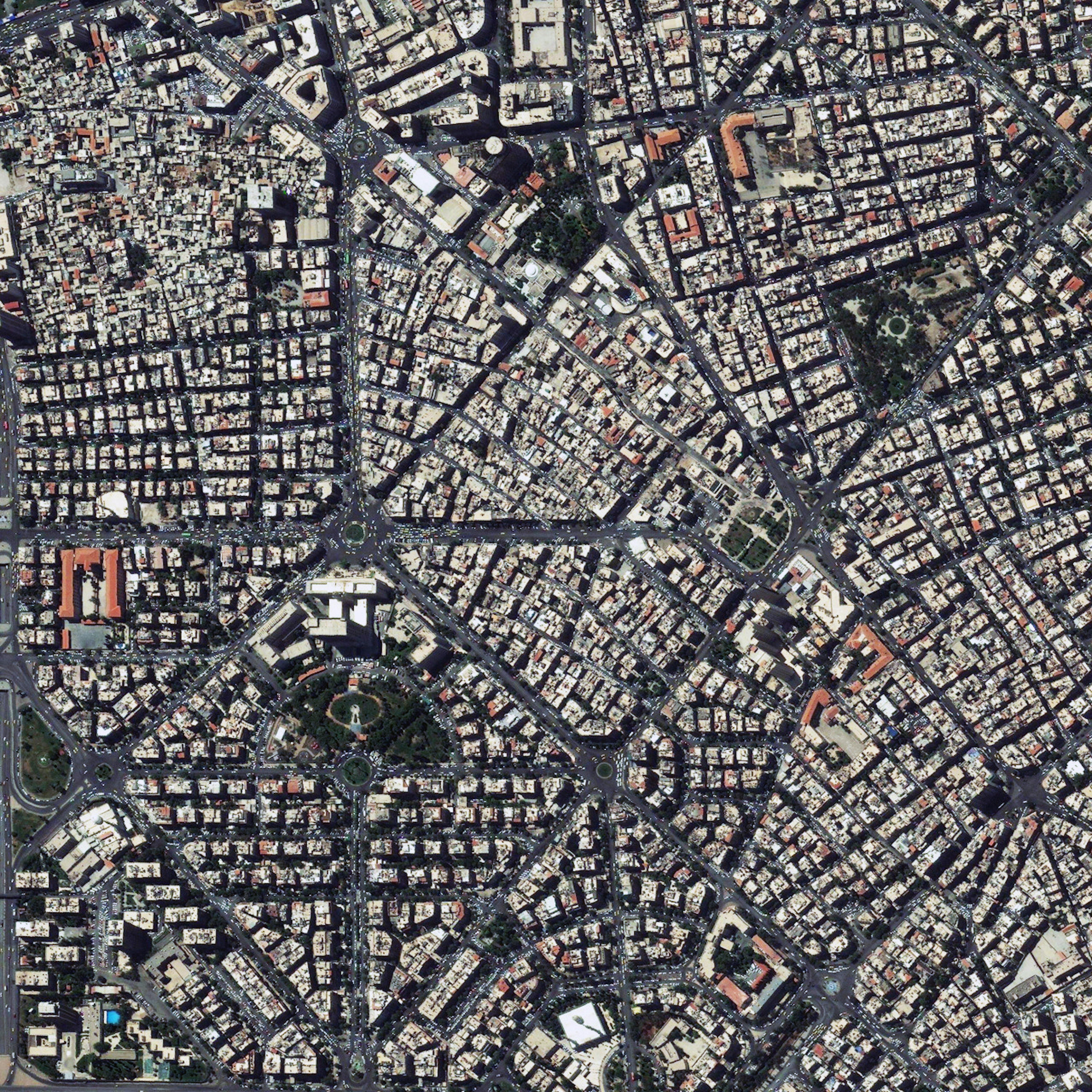
I recently saw this picture on the Daily Overview. The wide straight avenue immediately reminded me of pictures I've seen of Paris. Is this just a coincidence? Or is this from when France controlled Syria (if so did they do this in other colonial capitals)? Or perhaps something else?
1 Answers 2020-01-26
Today:
Welcome to this week's instalment of /r/AskHistorians' Sunday Digest (formerly the Day of Reflection). Nobody can read all the questions and answers that are posted here, so in this thread we invite you to share anything you'd like to highlight from the last week - an interesting discussion, an informative answer, an insightful question that was overlooked, or anything else.
2 Answers 2020-01-26
Are there any written sources describing the use of such a flag/banner or is it just based on symbols used throughout the Empire in stone/marble (more extant) remains?
1 Answers 2020-01-26
I would like any advice on how to tell if a biography is putting a spin on how a person acted or if it was written without important information? There are so many biographies about historical figures any advice on how to tell which is the best source would be welcome.
1 Answers 2020-01-26
Did the war spill over to the western hemisphere? How was it perceived among the people?
1 Answers 2020-01-26
Wikipedia, on the battle of Breitenfeld, says in the aftermath section that Gustavus "had a larger army after the battle than before" but cites nothing and doesn't explain why. How is this possible? I get that it was an absolutely shattering win for the Swedes, but they must still have lost some men. Did captured Imperial troops change sides? Was Gustavus more able to recruit (either at home or in Germany) due to the victory? Or is this a misstatement?
1 Answers 2020-01-26
I am trying to get a little more educated on the "theories" (is it proper to call them that?) that inform methodologies, methods and the views of people and researchers. And I am hoping someone can explain to me what is meant by this short excerpt from Iggers, Historiography in the Twentieth Century, Middletown: Wesleyan University press (2005), p. 125 about Geertz.
In Geertz's essay "The Balinese Cockfight": "The reactions of the audience [...] reflect a culture, seen as a semiotic system, that is both integrated and stable, forming a whole. Gerrtz [sic] does not see the culture within the framework of social processes taking place in Balinese society; nor does he consider social divisions and social conflicts. Thus despite his avowed purpose of avoiding systematization and concentrating instead on the unique manifestation of behaviour, he resorts to the very macro conception of society that he rejects. And this results in methodological irrationalism."
In what way is this a macro conception of society? Why is Geertz's essay an example of systematization? And how could a consideration of social divisions and conflict circumvent those "issues"? Apologies if I misunderstand, but please bear with me as I am just trying to get a better understanding of Igger's view of Geertz.
Any recommended readings are also welcome. Thank you for your time and understanding!a
1 Answers 2020-01-26
Ive always been interested in African history, and would really love some good books that cover it. Anything from precolonial africa, the scramble for africa, belgian congo, etc. Any suggestions would be fantastic!
1 Answers 2020-01-26
I'm familiar with the use of radar to spot incoming bombers at high altitude or over the ocean, but what I'm more interested in is what happened when attack aircraft or light bombers passed over the front line at low or medium altitude and were sighted by soldiers or civilians on the ground. Did front line units have dedicated observers who would phone in sightings? Would radio-equipped tanks attempt to report sightings of enemy aircraft? Did any side deploy radar that could be used to spot aircraft flying at low altitude over land? Could fighters at a front-line airfield be scrambled to intercept attackers? If so, how quickly would reports of enemy aircraft make it to pilots, and how much information would they receive from ground control once they took off? Or were attackers more or less free to roam unless they happened to stumble upon patrolling fighters?
I'm most interested in the Eastern front, and also what was done in North Africa and Western Continental Europe. Is there perhaps a field manual I can read?
1 Answers 2020-01-26
1 Answers 2020-01-26
I ask this because in my class of South American dictatorships the teacher always put South Africa as a counterpart on terms of memory and reparation to the southern cone, but never went into details. I mean, Chile didn't arrest the military Junta members (Pinochet, Leigh, Merino, etc) but it's still arresting middle-lower ranks of the dictatorship. Argentina arrested the military junta, but it didn't arrest middle to lower ranks (military pressures) and Uruguay simply decided to forget about it and serious researchs began around 2015-2017 IIRC.
So, what happened in South Africa with Mandela? Was there any reparation program? Any statistics of victims? Were there arrested criminals?
1 Answers 2020-01-26
1 Answers 2020-01-26
1 Answers 2020-01-26
2 Answers 2020-01-26
Writing an essay and couldn't find any information in our textbook. My professor discussed Russia rejoining the alliance but never why or what the motive was. Any information is helpful, thanks.
1 Answers 2020-01-26
Source: Harari, Yuval Noah (2007). Special Operations in the Age of Chivalry.
1 Answers 2020-01-26
1 Answers 2020-01-26
I've been reading a great deal about Native Americans in the Northern parts of the continent, especially the Tlingit, and to a lesser extent some East Coast northern people too. One thing which amazes me about the Tlingit is their technological sophistication.
Technologically speaking, they seem to have advanced beyond even the Aztec and Inca in terms of metallurgy, producing what I would call swords though what archaeologist want to call knives. Here's a few examples of their knife/sword style. Apparently they were mostly copper, but it's possible some iron ones were made. EDIT: By that I mean, iron ones exist but it's unclear if they are pre or post contact.
They seem to also have developed fairly sophisticated armor using similar techniques, my favorite being this kind of copper-wood masked armor seen here. But also much more scary examples that cover more like this
They appear to be on the same level as the Mississippi Valley people and the Pueblo in terms of engineering skills, building large wooden towns and settlements, and as far as I am aware, this would constitute the only known example of "log cabin" like buildings in North America. Interiors also were fairly well designed and articulated, and as far as I can tell would be the only known north American example of native flooring.
They also developed beautifully complex ship designs and appear to show a degree of artistic expression not seen elsewhere in the Americas.
What I cannot grasp is why they didn't expand? They appear to have all the ingredients to build a powerful civilization. Others in similar situations always do. What Am I missing? Why didn't the Tlingit build a Northern equivalent of the Incan or Aztec empire?
1 Answers 2020-01-26