1 Answers 2018-12-14
"Often considered" by whom? Certainly not by respected historians.
Ironically this was the period in which Christianity had the strongest hold over Europe (for comparison, the Islamic world, China, Mesoamerica, and more regions of the world were thriving, with various problems but they were still better off than Christian Europe).
This Mesoamerica?. Come on now. Admit that was a bad example.
As the Enlightenment arose and more secular ideas prevailed, the world gradually got better in almost every way: science and technology flourished, morals continued to evolve, and while violence and crime continued at incredibly high rates, it was less common.
Science and technology were already making huge advances since the Renaissance. You all might have heard of this person.. Da Vinci, for example.
1 Answers 2018-12-13
I know this isn't the usual type of question that is often asked here but you historians have to have gone through this one time or another. I'm doing a project about one of Napoleons sieges and I cant find a way to find any of his letters he wrote leading up to it. If you go to the French national archives it's in French. Even if you translate what you need to find into French it wont register. If you guys have any pointers it would be very much appreciated.
3 Answers 2018-12-13
In fact, it's hard to find any in-depth Basque history. Am I searching in the wrong places or has this topic really gotten so little attention?
2 Answers 2018-12-13
This seems to be unique to China. In all the other regions I've studied, emperors are referred to by the title first, then the name. Emperor Julius Caesar, Emperor Napoleon, Emperor Akbar the Great, etc. Why is it the opposite in China?
1 Answers 2018-12-13
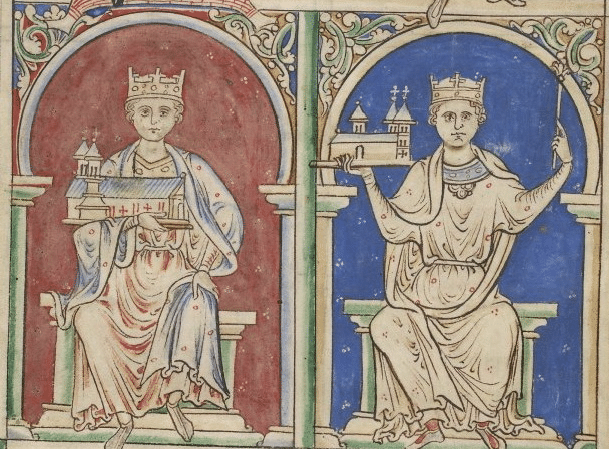
When I look at miniatures of kings during the middle ages, I see that most of them are depicted holding a building in one hand. Is there any symbolism/significance behind this?
1 Answers 2018-12-13
I guess Jazz requires a lot of musicianship with regards to technical skill and interpretation, and Jazz was most popular in the 20th century, but bluegrass also has a lengthy history in the US. What makes Jazz 'America's classical music'?
1 Answers 2018-12-13
I would like to write a little story about three german soldiers and brothers dieing in the same battle and their kids struggle after their death. The story would be set in the HRE either during the High or Late Middle Ages, maybe even during the Renaissance, so I need a (long) war where the three brothers can die to move the plot forward, but I dont really know which exact war/period to chose. The war doesnt have to happen in the HRE, but I want a reason to have german soldiers involved in the war (Im not particularly fond of the idea of chosing the brothers to be mercenaries). I appreciate any kind of help and thank you in advance
1 Answers 2018-12-13
I see a lot of resources detailing how the Portuguese dominated the Indian Ocean trade network in the 1500s, but what goods did they bring themselves?
1 Answers 2018-12-13
[deleted]
4 Answers 2018-12-13
For the two battles I've mentioned, I read their Wikipedia articles, and the ways the preparations are described seemed pretty basic:
intelligence received of the enemy fleet --> ships are prepared --> fleet departs to engage the enemy
Surely there is much more to it but the Wiki articles don't go in depth about the preparations (yes, I'm aware Wikipedia is not the most reliable source but it's the only thing I can access now):
Less than a week after the Capture of Gibraltar, Admiral George Rooke received intelligence that a French fleet under the command of Toulouse and d'Estrées was approaching Gibraltar. Leaving half his marines to defend the newly won prize, Rooke immediately set off with his combined Anglo-Dutch fleet to engage the French.
The same month, Nelson returned home to Britain after two years of duty at sea. He remained ashore for 25 days and was warmly received by his countrymen. Word reached Britain on 2 September about the combined French and Spanish fleet in Cadiz harbour. Nelson had to wait until 15 September before his ship, HMS Victory, was ready to sail.
On 15 August, Cornwallis decided to detach 20 ships of the line from the fleet guarding the English Channel and to have them sail southward to engage the enemy forces in Spain. This left the Channel drastically reduced of large vessels, with only 11 ships of the line present. This detached force formed the nucleus of the British fleet that would fight at Trafalgar. This fleet, under the command of Vice-Admiral Calder, reached Cádiz on 15 September. Nelson joined the fleet on 28 September to take command.
I have several follow-up questions further regarding intelligence, preparations, and fleet departure (which are focused on the Age of Sail, but because it is a wide time period, I will narrow it down to the 18th century):
Intelligence:
when Rooke received intelligence and when word reached Britain after Nelson returned there, how were these two men actually told of the news? Who, specifically, would have told them? (naval agents? spies? some other colleagues?) Would they have been given letters, or was the news told verbally because letters might have risked being intercepted by the enemy?
Who were usually the first people to know of an enemy fleet and spread the intelligence?
Was there some sort of organized way that the news of an enemy fleet to be fought was spread? Down from the head of the navy to the admirals, to the ship captains and to the lowly sailors?
preparations:
what was the first action that was done after intelligence was received? Were there decisions on which ships should join a line of battle fleet? (e.g. "HMS Portsmouth under Captain Smith should join the fleet") What responsibilities and duties did the admiral(s) or other high-ranking naval personnel have?
Before a fleet was to even depart, were there plans drawn up (like, on paper?) and discussed for how the fleet would physically approach the enemy? If so, which people in the navy would be involved?
fleet departure:
Wikipedia says that Admiral Rooke immediately set off with his combined Anglo-Dutch fleet, but just how long would it have actually taken to depart with a fleet of 53 ships of the line? Did all the ships depart at once, or did smaller sections of the fleet departed one by one and wait for the others to reach the sea? I've read from another thread on this sub that 18th-century fleet preparations took a very, very long time.
Wikipedia says that Cornwallis decided to detach 20 ships of the line from the fleet. Though being an admiral, was this his own decision he was able to make fully on his own, or would he have first had to seek permission from someone of a higher position in the navy? (I honestly do not know if there are any higher positions than 'Admiral' in the Royal Navy forgive me for my quick assumptions)
I know my question is loaded but this is a topic that I have been interested in for a while and would love to read any answers received
1 Answers 2018-12-13
Musicians today are revered, often because they are very, very talented individuals who make us feel things words cannot begin to describe. My question is, in ancient history (for the sake of a time frame lets say from B.C. Era - 1000 A.D.) were musicians held in such high regard as they are today? Were they given incredible amounts of wealth and fans like we see today?
1 Answers 2018-12-13
1 Answers 2018-12-13
1 Answers 2018-12-13
In this interesting post about Italian food, one man writing about Italian cuisine in the 1800s said he went from eating meat three times a year to three times a day when he moved to the US.
Did immigrants adopt more meat in their diet because they could suddenly afford it, because of pressure from the dominant American Cuisine which was already in place, or something else? If it was all about affordability, why did the US have cheap meat compared to other countries?
1 Answers 2018-12-13
Was this a 17th century moral panic, or is there something deeper to it? What scriptures were used to vilify dancing? When did dancing become socially acceptable in American colonies/states that had previously frowned upon it? And how does Footloose fit into all this?
1 Answers 2018-12-13
This is a very specific question which I imagine has been asked before, but I’ve always been curious about how women dealt with periods and how societies treat them before the advent of modern technologies (aka pads and tampons). I already know a bit about medieval attitudes towards periods (and, consequently, about Biblical attitudes towards them). I was wondering how different this might be from pre-Medieval Europe attitudes, especially those separate from the Biblical/Christian paradigm
1 Answers 2018-12-13
We use the Standard system in the USA and from my understading the internet was invented in the USA. Yet we use the Metric system for units of data ( kilobyte megabyte gigabyte). Why is that?
1 Answers 2018-12-13
Thursday Reading and Recommendations is intended as bookish free-for-all, for the discussion and recommendation of all books historical, or tangentially so. Suggested topics include, but are by no means limited to:
Asking for book recommendations on specific topics or periods of history
Newly published books and articles you're dying to read
Recent book releases, old book reviews, reading recommendations, or just talking about what you're reading now
Historiographical discussions, debates, and disputes
...And so on!
Regular participants in the Thursday threads should just keep doing what they've been doing; newcomers should take notice that this thread is meant for open discussion of history and books, not just anything you like -- we'll have a thread on Friday for that, as usual.
7 Answers 2018-12-13
I was watching the movie the other day and was thinking about the accuracy of a few scenes. There is a scene with Cornwallis explaining to Col. Tavington the British plans for a post-revolution America. Cornwallis explains how there would be an aristocracy governing the colonies rather than colonial legislatures. In addition how accurate is the pillaging of the South Carolina countryside by the British? Is there anything that historians despise from this movie?
1 Answers 2018-12-13
2 Answers 2018-12-13
i'm having trouble finding primary sources on Caesars invasion of Gaul besides his book the The Gallic wars. Can you help me?
1 Answers 2018-12-13
3 Answers 2018-12-13