Did they work? How many died?
1 Answers 2018-05-28
I have found a small amount of info, such as details of his final mission in which he was shot down. Two of the carriers he was on. But that is really all I have found. Can I get my hands on more detailed records of his missions and career?
For those curious, he flew a Corsair in both wars, as far as I have been told he was an ace in WW2, and in his final mission he was run down while on a bombing mission by multiple MiG-15s.
I want to maintain some anonymity here, but I have probably said enough for some reddit detectives.
3 Answers 2018-05-28
I'm looking to get a PhD and right now I'm looking for advisors. As I understand it the goal is to find someone who specializes in the field you want to specialize in, then apply to work with them.
For those of you who made it into a PhD program, how did you go about finding the advisor who was right for you? For those of you who are professors, how do students usually go about finding you, and how do you select which students to enroll?
Thanks in advance.
1 Answers 2018-05-28
If not, what is generally recommended by historians?
1 Answers 2018-05-28
I'm not sure where to post so here goes it... My Grandfather was a Major General which was the 2nd highest rank in the Saudi Arabian Royal Land Forces at the time. Anyways my dad recently sent me these photos and I'm wondering who the US officers are? The only info I was given was they're pictures of him meeting US Army officers in 1968 in America.
His position in the pictures are in the captions.
1 Answers 2018-05-28
Crime had been high in the US since the late 1960s, and really exploded with the crack/cocaine epidemics in the 80s, but there was a precipitous decline after about 1992. I've heard several theories: mass incarceration, decline of lead poisoning, etc. I'm sure there was no one cause, but I'm interested in what most scholars have pointed to as likely.
1 Answers 2018-05-28
I'm watching a documentary on this, and while the presenter is making an intriguing case, he is clearly an amateur, and I was curious what professional historians make of this theory...
1 Answers 2018-05-28
[deleted]
1 Answers 2018-05-28
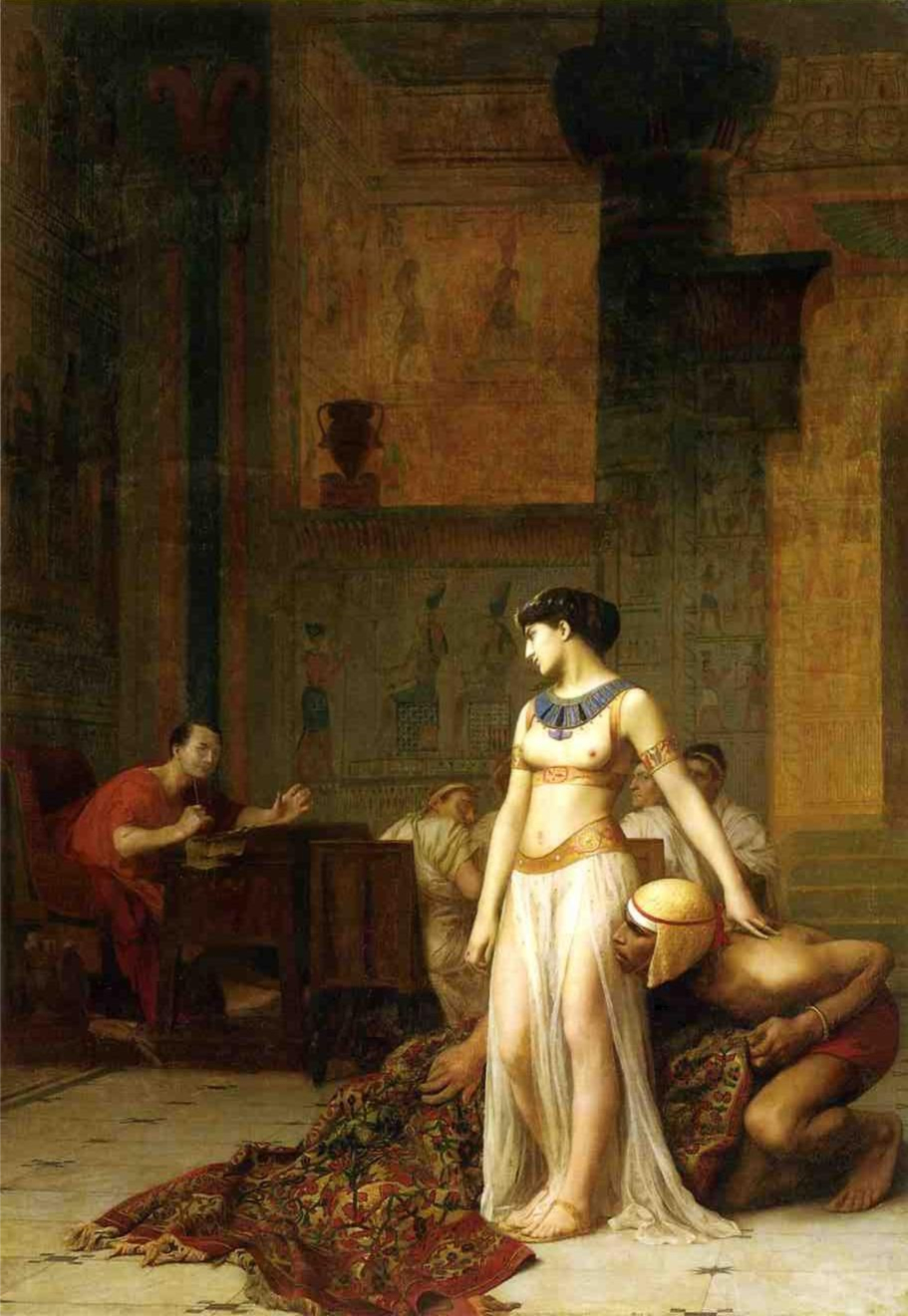
Apologies if I misused usekh collar, it was the first result when I searched for 'ancient egyptian collar thing'.
This is the sort of depiction I'm talking about.
1 Answers 2018-05-28
I can get that the Continuation War was an extension of wanting to get Greater Finland and regain White Karelia after having it lost during the Winter War, but wouldn't such concessions have been easier to receive if they were a formal member of the Axis?
On that note, were they ever seen as "unofficial" Axis members?
1 Answers 2018-05-28
I have been reading CS Lewis’ “The Screwtape Letters,” and I am confused as to what the “historical Jesus” means. In the book, the demon Screwtape says that the idea of a “historical Jesus” was made by the tempters of Hell to skew the idea of Jesus.
Browsing bookstores, I’ve seen many books with “historical Jesus” in the title, but I’m not sure of the meaning. Initially I believed that the phrase meant interpreting the Bible with social and historical implications in mind. However, I’m not sure why CS Lewis would believe this to be so negative. I’m sure that from a historian’s standpoint, this is a critical interpretation.
Can someone explain what the “historical Jesus” is? Why is it such a controversial term?
3 Answers 2018-05-28
The exact quote from the show in episode 3: "In these last ten years the Turks have taken Belgrade. They have lit their campfires in the great library at Buda. It is only two years since they were at Vienna. Why would you want to make another breach in the walls of Christendom?"
1 Answers 2018-05-28
Historically, how effective were cutting attacks from swords? While I am sure being slashed with a sword is not good, it seems like thrusting attacks and blunt trauma would be more likely to be lethal or produce disabling wounds. It doesn't take too much armour to mitigate the impact of a slashing attack. I could see a sword still producing some blunt trauma upon hitting a piece of light armour (it is still a lot of force concentrated in a small area).
On unarmoured opponents something like a flanged mace would be devastating with even non-lethal hits producing broken bones and other disabling injuries. Blunt weapons are also pretty effective against armour. Thrusting weapons, while somewhat mitigated by armour, are easy to use and cheap to make. A solid poke pretty much anywhere in the chest or torso area carries a pretty good chance of dealing a lethal blow.
Cutting with a sword must have been somewhat effective (otherwise why would they have made swords with cutting edges for so long), but it seems less likely to kill or maim with same efficacy a thrust would or a just good smack from a blunt weapon of some sort.
I don't really have any experience with swords, but I have chopped things with a heavy machete and razor-sharp (or at least pretty close to) camping knife so I am at least dimly aware of the mechanics.
1 Answers 2018-05-27
I was in particular thinking about the very broad strokes. the thirty years war, the seven years war, the Napoleonic wars, the treaties and deals after that.
Yes I know they took part in these wars but they never get more then a passing mention in mainstream accounts, Is it simply a lack of information? Was it the tension between Islam and Christianity?
1 Answers 2018-05-27
Is it true that wales is essentially the ethnic remnants of the Roman Empire and the rest of England was ethnically Germanic tribes who crossed over the English Channel?
1 Answers 2018-05-27
[deleted]
1 Answers 2018-05-27
So like in n.america Europeans moved and settled in but even after independence white people were still present in America(I mean the early Europeans did kill off the native Americans). The same goes with south africa but in s.africa they didnt kill a large number of the indegenous black people. So why are there a lot of white people in countries like these but not in other countries colonized by Europeans like say Ivory Coast, Kenya etc
1 Answers 2018-05-27
I've been playing the game Crusader Kings II for years (it has been mentioned on this subreddit many times). In this game you can't attack any other count/duke/king unless you (or your vassal) has claim to one of their titles/territories. There is an option to ''fabricate'' claim, so that's what's what my question is about:
How common were usurpers with obviously dubious claims on some lands, either fabricated (if ever proven by history) or just forcefully taken without giving anyone explanation? Follow-up question would be, i guess, was feudal Europe really such a strict law-based society where conquests were possible only with a provable claim?
1 Answers 2018-05-27
Trying to plan a summer vacation to entertain my 17 year old son. His current favorite part of US history is the robber barons. Any suggestions on where to travel that would interest him? I assume there would be places in Boston, Philadelphia, Washington DC? I'm in Texas, so I'm kinda clueless.
3 Answers 2018-05-27
Nowadays you can simply stop at the gas station but I'm assuming they didn't have many of those back then
1 Answers 2018-05-27
I have always read that native Americans were victims of genocides and I was always, and still am, inclined to believe that narrative.
Recently I have been reading The History of the American People. The book, as far as I understand, describe the plight of the native Americans as a struggle for interests andland between the natives and the European settlers rather than a black-and-white genocide. I have also learned that the natives themselves have had a fair share of brutality between themselves long before the arrival of the whiteman.
Were the natives always targeted by the new settlers since the beginning? Was there a turning point between them? Were their leaders among the Europeans who wanted to take a different approach with the natives?
2 Answers 2018-05-27
This has less to do with the historical truth of the Exodus and more the Israelite society allegedly being founded by ex-slaves. After whatever event freed the Israelites from Egyptian rule, how was slavery perceived in the society and amongst its people? How was it treated legally?
1 Answers 2018-05-27
The anglosaxons had a wealth of writing going back to Bede, and the 'northumbrian golden age' (or whatever it's called). By the time of 1066, it was approx. 300 years later. Did latin lose influence in the england that was united (for the second and final time) by the mid 10th century? Or did it gain even more influence?
How did it have so much influence among the normans, who had only settled down approx 150 years earlier as former norse pagans?
1 Answers 2018-05-27