1 Answers 2017-12-13
How did farmer's go about tilling fields and planting before the invention of the plow? From what I understand, it's a fairly recent invention.
2 Answers 2017-12-13
[deleted]
1 Answers 2017-12-13
Are patriarchal societies as old as mankind, or has there been a time of matriarchal or gender-equal societies before? (disregarding exceptions)
1 Answers 2017-12-13
[deleted]
1 Answers 2017-12-13
For example England has "HMS", the United States "USS" but I have been trying to find the Soviet Union's ship prefix and cannot find anything, did they simply not have a ship prefix?
1 Answers 2017-12-13
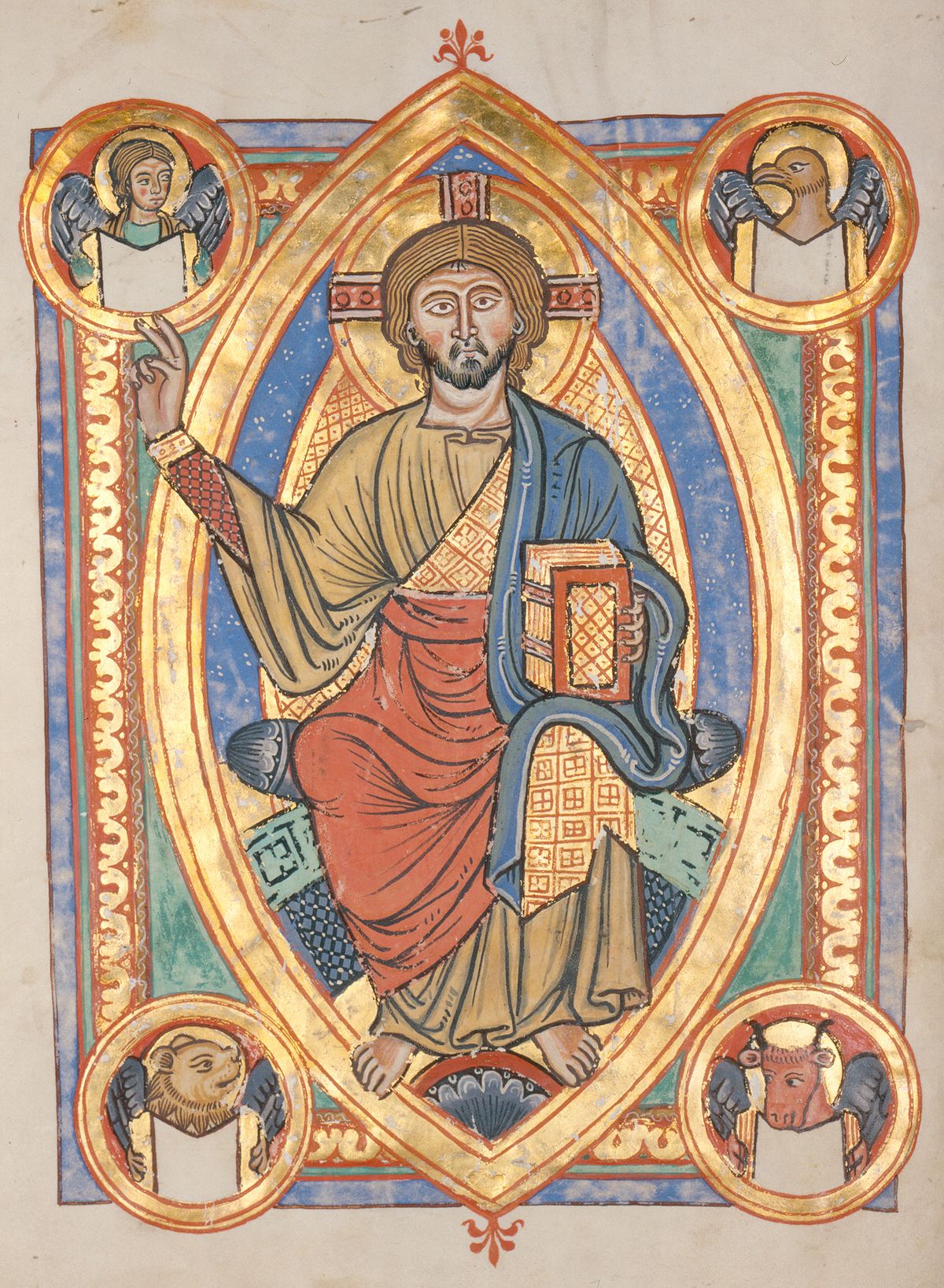
To start off, when I think of Medieval Art, I think of something like this, so, correct me if I'm wrong, but how did completely two-dimensional paintings, many of them goofy-looking, turn into the great works of art we see in the Renaissance?
I'm more interested in the techniques in shading (and who developed them) that led to 3D paintings like Mona Lisa, for instance, and improved even further in the Baroque period by painters like Caravaggio. Are there any known artists to develop such techniques?
1 Answers 2017-12-13
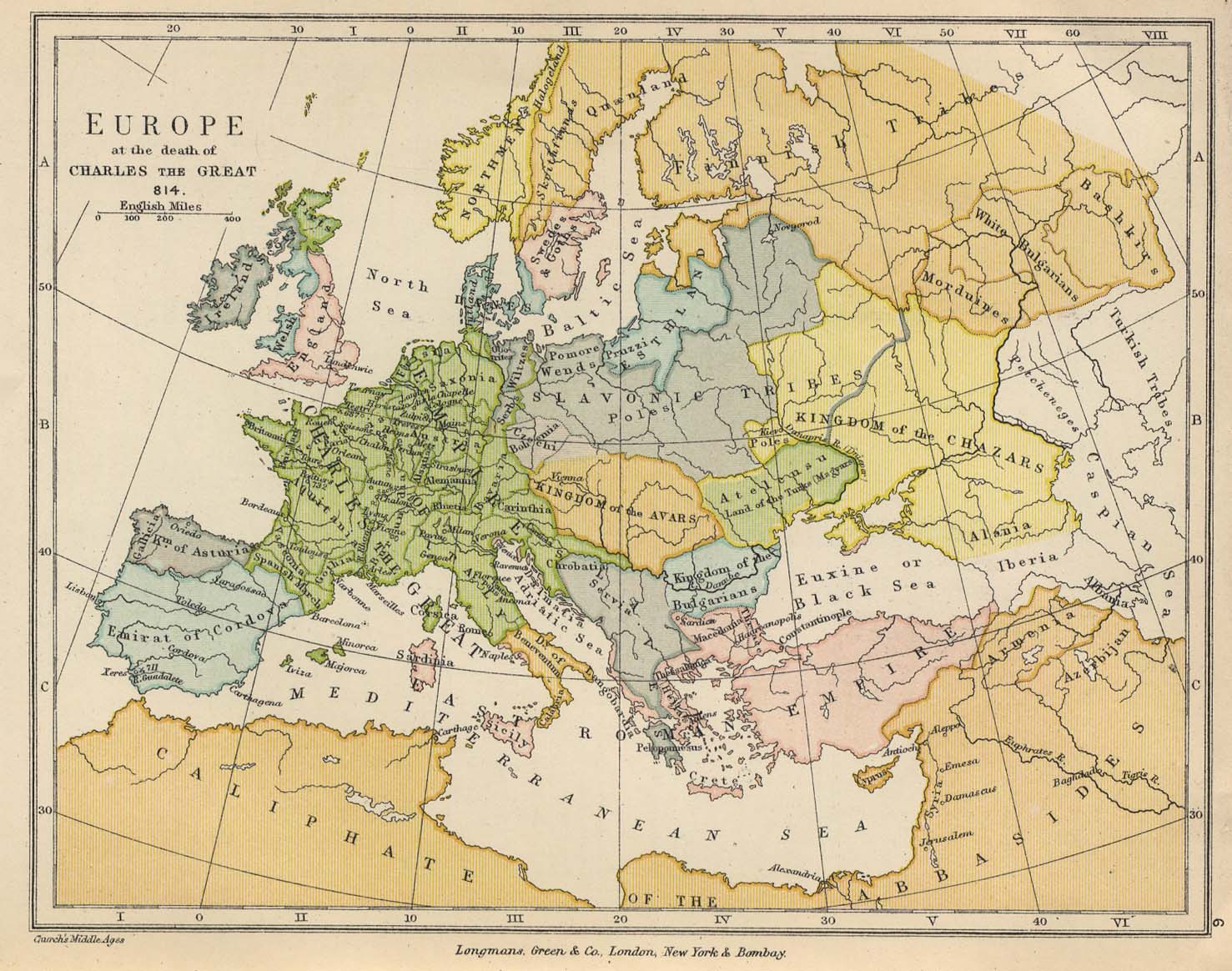
I can't find any useful information on it, but the interesting things about it are that 1. Albania is located near the Caspian sea (east of Iberia and Armenia) and 2. Serbia (Servia) is much larger than it is normally thought in that period, and if we take into account the fact that there was no people named Bosniaks, Montenegrians or Macedonians, does that mean that this is some precursor to the later Serbian kingdoms, empires etc.? Btw, this isn't a "homework" question, just interested in possible explanations.
EDIT: was going to say, especially since the first mention of the word "Serb" was in 822., officially.
2 Answers 2017-12-13
Today, it is common for political websites to pull stories from local news outlets so they can write about them to promote their political agendas. To avoid political soapboxing and the 20-year rule, I’ll give a generic example:
Person X says or does something political.
A local news outlet near where Person X lives writes a story about what they did.
A political news website finds Person X’s story and writes a new article about it so the site can promote their agenda.
In 20th century USA (prior to 1997), was it common for political newspapers or other journalism outlets to pull local stories to promote their agenda, or is this a newer invention because of the internet and social media?
Also as a reminder, no political soapboxing or post 1997 events.
1 Answers 2017-12-13
From just googling this question I haven't gotten a sufficent answer. There doesn't seem to have been a war or intentional colonizing like in the Americas. It just seems like one day England owned India. How?
2 Answers 2017-12-13
1 Answers 2017-12-13
2 Answers 2017-12-13
2 Answers 2017-12-13
Furthermore, was Machiavelli's book by the same name intentionally titled the same as Sunzi's masterpiece?
1 Answers 2017-12-13
In The Storm of War by Andrew Roberts, the author claims Churchill deliberately began his bombing campaign against Berlin in August 1940 in order to goad Hitler into retaliating against London/British cities, and thus draw the German bombing efforts away from strategically important airfields and airplane-producing industries. The claim is that Hitler had promised to defend Berlin to the German people, and that Churchill knew – based on Hitler’s modus operandi and the effect it would have on the German people – that attacking Berlin would likely provoke reprisals in-kind, sacrificing British civilians in the immediate term, but protecting critical military assets.
But is it true? Is there any evidence that Churchill planned this, or that such a line of thinking existed anywhere? Is there evidence to the contrary, eg that the Germans were already planning a switch to city-bombing well before the British attacks on Berlin in August/September?
Hopefully this is allowed by the rules, but as a more general question which may speak to the plausibility of the claim, do we have any concrete evidence of instances where Churchill took actions specifically in an effort to manipulate Hitler and other Nazi decision makers on the basis of their personalities/ideologies – using “psychology” and his understanding of the political necessities of the Third Reich, as opposed to more conventional military subterfuge like disinformation?
1 Answers 2017-12-13
Need to know where this quote is from, and what it was. Thanks!
Field Marshal Helmuth von Moltke: 1866
“The war of 1866 [between Prussia and Austria] was entered on not because the existence of Prussia was threatened, nor was it caused by public opinion and the voice of the people; it was a struggle, long foreseen and calmly prepared for, recognized as a necessity by the Cabinet, not for territorial aggrandizement, for an extension of our domain, or for material advantage, but for an ideal end--the establishment of power. Not a foot of land was exacted from Austria, but she had to renounce all part in the hegemony of Germany. . . Austria had exhausted her strength in conquests south of the Alps, and left the western German provinces unprotected, instead of following the road pointed out by the Danube. Its centre of gravity lay out of Germany; Prussia's lay within it. Prussia felt itself called upon and strong enough to assume the leadership of the German races.”
1 Answers 2017-12-13
1 Answers 2017-12-13
1 Answers 2017-12-13
1 Answers 2017-12-13
Going into research in Japanese studies next year. I'll be focusing on modern/post-modern Japanese aesthetics. Looking for a history reading list. I know a basic Japanese history like the eras and defining features of that era. I'm looking for an intellectual history of Japan, economics from Meiji onwards, "subaltern" histories and "modern girls" (moga)
1 Answers 2017-12-13
1 Answers 2017-12-13
1 Answers 2017-12-13
I was talking to my piano teacher last night about this and we agreed that the term 'classical' is a layman's term and actual 'classical' music is really only from the late 1700s to the early 1800s (preceded by baroque and succeeded by romantic). In which case is there an agreed upon historical term for this period? If the Renaissance is considered to be 1300-1700, is there a name for the period of 1685 (Bach's date of birth) to 1975 (Shostakovich's death)?
Also is there any agreed upon explanation for why this massive increase in compositional sophistication happened? In conversation with my teacher, I suggested perhaps it was thanks to the invention/perfection of keyboard instruments such as the harpsichord, pianoforte, piano and organ.
1 Answers 2017-12-13
In general, Wikipedia is very lacking in this topic:
History of Chinese newspapers: The article says they started in the early 19th century (i.e., nearly 800 years after movable type became available, but the first gazette seems to have been quite limited in duration (21 years) and scope.
Media history of China: The article starts in 1956 (!).
1 Answers 2017-12-13