My great grandfather, Willis "Wink" Archibald was part of a tank corps in WWII out of Saskatchewan, Canada. He served in France, Britain, Germany, Holland, Belgium, and Italy. I'm big on WWII history and genealogy, so I mailed the Canadian govt. and received a full package of his military records. I was able to understand only bits and pieces, as there is lots of military jargon used and the cursive writing is hard to read. Where, or who, could I go to, to help decipher what exactly my grandfather did during the war? I can upload photos if anyone is interested. Thanks in advance for any input!
EDIT: I've uploaded some of the files. Images found here: http://imgur.com/a/yFce7
4 Answers 2015-06-04
Also what were the reasons for the reformation not relating to producing an heir or profiting from the churches that he controlled?
1 Answers 2015-06-04
I've only ever seen pictures of him standing up to the tanks. Did they stop? Or did they run him down in front of thousands of people?
2 Answers 2015-06-04
I would love to read more about him.
2 Answers 2015-06-04
1 Answers 2015-06-04
1 Answers 2015-06-04
to clarify i'm asking specifically about 1. neocon domestic policies and their ideological explanations and 2. why current definitions of the term and thoughts about it are 100% focused on hawkish foreign policy aims (though i'm aware this especially verges on breaking the 20 year rule).
1 Answers 2015-06-04
I recently devoured this book in it's entirety in three nights. I absolutely loved it, but have been told it's rife with historical errors etc. Can someone with more authorative knowledge clear up where Shirer was wrong?
1 Answers 2015-06-04
1 Answers 2015-06-04
3 Answers 2015-06-04
So a coworker of mine doesn't believe that the Pyramids were built by the egyptians, since "there isn't any evidence they did". I disagree, so I looked around online to find evidence for it, but I'm not having much luck. Most of the sources I find either discuss if slaves built the pyramids or how they pyramids were built, neither of which address my question.
So, now I'm curious: How do we know the Egyptians built the Pyramids, as opposed to it being another civilization that lived in ancient egypt before the ancient egyptians lived there?
1 Answers 2015-06-04
1 Answers 2015-06-04
1 Answers 2015-06-04
And did the Swiss army have troops sitting there to enforce their neutrality or were the two powers self regulating on that matter? I was looking at a map of the trenches in WWI and was wondering how that was all handled.
1 Answers 2015-06-04
The National Health Service (NHS) in the UK was set up in 1948. WW2 ended in 1945. I've heard that WW2 was very hard, economically, for the UK (right?). I'm guessing that setting up a socialised medicine system would be very expensive (right?). So how was the UK able to set up the NHS so soon after being bankrupted by WW2?
Which facts are wrong? They appear contradictory. Was the NHS not that expensive to set up? Was WW2 not that economically devastating to the UK? Was WW2 very economically devastating, but there was the political will to spend a lot of money on the NHS anyway?
2 Answers 2015-06-04
I understand it's a Persian suffix meaning "land of". Why did non-Persian countries choose to adopt it?
3 Answers 2015-06-04
'At the end of the Second World War the crown jewels were recovered in Mattsee, Austria, on 4 May 1945 by the U.S. 86th Infantry Division. The crown jewels were transported to Western Europe and eventually given to the United States Army by the Hungarian Crown Guard for safekeeping from the Soviet Union. For much of the Cold War the crown was held at the United States Bullion Depository (Fort Knox, Kentucky) alongside the bulk of America's gold reserves and other priceless historical items. After undergoing extensive historical research to verify the crown as genuine, it was returned to the people of Hungary by order of U.S. President Jimmy Carter on 6 January 1978. Most current academic knowledge about Hungarian royal garments originates from this modern research. Following substantial U.S. political debate, the agreement to return the jewels contained many conditions to ensure the people of Hungary, rather than its Communist government, took possession of the jewels.'
2 Answers 2015-06-04
6 Answers 2015-06-04
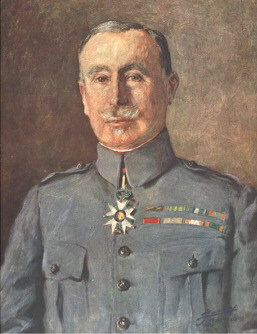
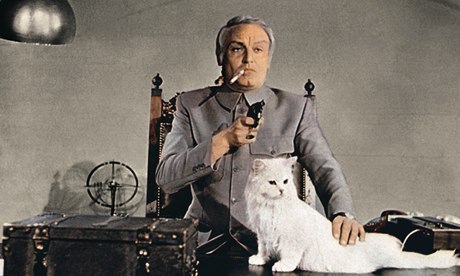
I'm speaking of this kind of coat which in Russian is called a "french" (after the British WW1 field marshal Sir John French.)
It appears it was popular with Western WW1 officers as well as Eastern WW1 revolutionaries from Sun Yat Sen to Joseph Stalin. In the Stalin era it would be worn both by state security and by the army elites and after the Destalinization it fell out of use.
Socialist leaders not aligned to the USSR, such as Mao and Josip Broz Tito would persist in wearing it, as would, surprisingly, the pro-Soviet Ho Chi Minh. And some anti-communist leaders in Asia would wear as well. Today the one dude who's still using it is Kim Jong Un.
Now the question: What is this kind of a vintage military coat thing called? Did it actually fall out of fashion in the Western armies or is it just the public that now associates it more with Bondian villains than with lion-hearted patriots?
1 Answers 2015-06-04
I believe that the U.S. has traditionally been more in favour of gun ownership and opposed to gun control than other Western countries. Why is this? Did public opinion in the U.S. diverge from the rest of the West at some point, and if so, when?
1 Answers 2015-06-04
We all know of the chart, that hilariously bad bit of history, but people also love to cite the rather embarrassing trial of Galileo as an example of the Church being anti-science. However, may people don't know that there is a Pontifical Academy of Sciences, that works under the patronage of the Pope and Church to study science and its relations to the world and their doctrine of faith.
Among it's historical members include: Schrodinger (of cat fame), Max Plank, Neil Bohr, and Stephen Hawking.
How did the Church evolve it's history of its relationship to science over the years?
2 Answers 2015-06-04