Our diet had to be nothing but plants and raw meat very early on. At what point did humans combine meat and fire, and how did they know it would be beneficial?
3 Answers 2015-04-16
It has so much feminist themes within it such as sexual freedom, and the strength of women, however it has also lots of traditional sexist views. What do you think Historians? Male student just interested in what you think =D
I meant proto - feminist.
1 Answers 2015-04-16
For example I know in iceland there was no aristocracy to speak of, they had chieftains but they did not rule a geographical territory, they competed for followers who could change allegiance if they desired. Was this the same in Norway, Denmark, etc. I'm assuming not due to the existence of jarls hired men etc, who can tell me more.
2 Answers 2015-04-16
1 Answers 2015-04-16
I am from Spain and I usually heard and read things about inestability in Latin America, specially Venezuela: Inflation is too high, Criminality and shortage are issues, etc.. with a strong focus in Hugo Chavez personality.
I don't want to ask about Chavez, but the pre-Chavez Venezuela. Was it a safe country? With a stable economy? Was Venezuela an unigualitariam society? And why are that hard to address those problems in Latin America?
1 Answers 2015-04-16
1 Answers 2015-04-16
Hello /r/askhistorians,
I come to you, not so much with a specific question, but a plea for help and ideas. I am attempting to write an essay with the aim of justifying the changes made to Roman politics, administration, and ultimately the balance of power during the early principate. I've structured my research into the bog-standard before, during, after approach, focusing on the reign of Augustus. I've looked at the primary sources, and secondary sources such as Sands, Salmon, Talbert and Syme to find out exactly how Rome itself, and her holdings, allies and enemies were managed during the late Republic, and then what was changed under Augustus. What I am lacking is an idea of how to actually assess the success of these political changes, justifying if they were "advantageous" to the empire. Of course, the flourishing of the Pax Romana is testament to the unifying effect Augustus had on the empire after such a long period of turmoil, but I am unsure as to how I can approach, dissect and tie such a large phenomenon back to my thesis.
Any suggestions for a potential structure, or secondary source material that may help me on my way would be wholeheartedly appreciated.
1 Answers 2015-04-16
I'm looking for book recommendations or information about Spain in the 1670's-1730's. I am mostly curious about the economy, ways of life, social status's...thank you in advance!
3 Answers 2015-04-16
I am looking for some books to read on:
1.) Soviet Military History 2.) In depth history of the WW2 invasion of Russia. 3.) Soviet Military Tactics 4.) In depth history of the Communist Revolution.
Cheers
3 Answers 2015-04-16
I've never posted here before so I hope I'm following all the rules correctly.
I was browsing the Yanker Poster Collection on the Library of Congress website with some friends, looking at interesting posters to buy to decorate a dorm room with. We found this really odd poster, and can't find any background on it. What is Chicken Delight? The theme of the posters in this collection is propaganda, social awareness, and public service announcements. Does it pertain to that at all?
Thanks!
2 Answers 2015-04-16
2 Answers 2015-04-16
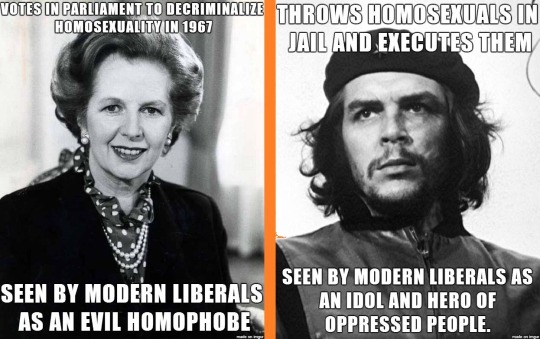
/u/MethodMan_ links to this graphic and asks how accurate its claims about Che Guevara are.
That made me curious about the way the graphic portrays Margaret Thatcher as unfairly villainized as being unfair to LGBT people. I don't doubt she voted to decriminalize homosexuality (as the graphic says), but how did she respond to issues LGBT people faced while she was Prime Minister, which would have included AIDS, discrimination and targeted violence. Is her vote towards decriminalizing homosexuality more complicated?
1 Answers 2015-04-16
For the sake of transparency, I'd like to admit that I am a first year college student working on a paper for school. I have read through the rules and am not looking to step on anyone's toes but I would appreciate some help understanding the time period more and developing my thesis. If there is an issue I will move my post to /r/HomeworkHelp but I thought coming to historians first might be more productive.
My class has gone over the colonization of the new world, Africa, and Asia. We recently past WWI and WWII and are discussing decolonization. We also previously discussed arguments in favor of Colonization and the rise of European nationalism. It is now my job to research and develop an argument related to decolonization but tie it back to European nationalism. I am thinking of arguing that the rise in anti-colonial nationalism and the desire for self determination brought about conflict in Asia such as the Vietnam war and the splitting of India and Pakistan.
I have done some research already. I have three books, two of which I feel pertain a bit more with my argument.
A Heroic People: Memoirs from the Revolution. 2d ed. Hanoi: Foreign Languages Pub. House, 1965.
Ho Chi Minh on Revolution: Selected Writings, 1920-66. New York: New American Library, 1968.
Mende, Tibor, and Jawaharlal Nehru. Nehru: Conversations on India and World Affairs. New York: G. Braziller, 1956.
these online texts: https://www.marxists.org/reference/archive/ho-chi-minh/works/1952/01/x01.htm https://history.state.gov/milestones/1945-1952/asia-and-africa
and my text book:
Strayer, Robert W. Ways of the World, 2nd Ed.,: .. a Brief Global History with Sources. 2nd ed. S.l.: Bedford Bks St Martin'S, 2013.
From what I gather, there was unrest over foreign control and the desire for self determination after how poorly colonies were handled during and after the wars. People wanted autonomy but there was resistance to give up power from Britain, Germany (due to the horrible economic collapse after WWI), and France but the US pressured them to release their hold on their colonies. This then lead to the rise in anti-colonial nationalism which fueled conflict between European powers and their colonies. I can relate this back to European nationalism that spurred competition and encouraged imperialism.
Does this make historical sense or is there something I'm completely off about? Are there any other sources you would encourage me to read? I am not a history major but any criticism is welcome
1 Answers 2015-04-16
From what I understand, the invasion of Korea in the late 1500s by Toyotomi Hideyoshi, the then de facto leader of Japan (and comparable to the devil according to a Korean friend of mine), launched an invasion of Korea with the aim of conquering it and using it as a stepping stone towards invading and conquering all of Ming China. Was this at anytime a realistic goal? I assume that Japan had the most skilled and most technologically advanced, if not the biggest, army in the area, through be sure to correct me if I am wrong about that. But even with an advantage in the quality of their armies, could the Japanese realistically compete with the sheer manpower of China at this time? If The Korean navy was not so successful would Toyotomi have actually stood a chance of success? Was it always a pipe dream? Were any of the higher ups of Japan at this time skeptical of the campaign's possible success? Please feel free correct me about anything in my question that I got wrong.
1 Answers 2015-04-16
I have noticed that the success of the Mujaheddin is mostly credited to the CIA's program of funding them with these launchers because it negated the presence of Mi-24 choppers? But is this really true? Were there other factors that contributed to the military defeat of the Soviets?
1 Answers 2015-04-16
1 Answers 2015-04-16
1 Answers 2015-04-16
I'm looking for good sources on Mesopotamian Law. I'm specifically looking for articles published in the last 10 years that might be of interest.
I was also wondering if anyone here had experience working with tablet databases online. I'm looking for primary source cases, and I find the websites a bit obtuse.
1 Answers 2015-04-16
This is meant as a LGBT friendly question. Societal norms would certainly rule out an openly gay president in our history, but I'm curious if there is serious/intelligent discussions on this by historians.
1 Answers 2015-04-16
Did sailors just board each other's ships and fight normally? Did ships ram each other?
How were ships destroyed? Were they lit on fire or their hulls broken by weapons?
5 Answers 2015-04-16
It's always seemed like a fairly complex but of ingenuity for "cavemen," and yet ancient native americans had it, which means that it was brought over when humans first migrated to the continent over the land bridge between present day Russia and Alaska.
Either that, or it was developed independently, and yet with very little variance, by multiple cultures in all corners of the world.
Neither option really make sense to me...
1 Answers 2015-04-16