I know early Europeans spread disease which the natives had no immunities built to withstand. Im just curious if it also happened the other way around too
2 Answers 2014-08-12
1 Answers 2014-08-12
I'm having trouble finding information about this time period. Would somebody mind explaining what happened in Palestine during this time? Here are the main things I don't understand:
Didn't the Jews conquer most of the area at their peak in 1000 or so BC? Did the Jews ever completely wipe out the people living there?
At the time the Roman empire caused the Jews to scatter, were there Palestinian Arabs living in the area?
I know the area was often conquered by various empires. Could one of you put a timeline together of who ruled over the area?
1 Answers 2014-08-12
(Trigger Warning: Not a question about actual history so much as historical technology)
I'm running a tabletop set about 4-500 years in the future, after human civilization destroyed itself through split factions warring for control and genetic modification changing the path of human evolution. Being 300 years in the future, most modern medicine will have been used, destroyed, or gone bad.
The tech level of the world is around the late 1800's where civilization has started back up and some groups can work steel and such while still salvaging old tech and refitting it.
I much prefer realism and hate telling a player things like "You have a first aid kit. Go nuts." I want to know what kind of things you would find in a first aid kit or doctor's bag in a setting like that. What kinds of plants could they find and use as drugs for various things? I know they would have alcohol and such. They also have limited capacity for modern chemistry, as some wealthy individuals might have access to precision gear. So, /r/askhistorians , what kinds of medicine, remedies, and drugs could be encountered and how rare or common would they be?
I'd be happy to provide any further info on the world itself if required, since I wouldn't be asking professionals/enthusiasts if simply googling an answer would be enough to satisfy my requirements.
Also, don't hesitate to tell me I'm stupid and uninformed, because I am.
1 Answers 2014-08-12
I'm wondering about the effects of weapons testing, as well as nuclear power on the people who were present for the testing, as well as those who lived nearby.
1 Answers 2014-08-12
2 Answers 2014-08-12
In Barbara Tuchman'ss Guns of August she says on the day war was declared that "...[Myron Herrick, the American Ambassador to France] had just recieved a request to take over the German Embassy and hoist the American flag ..." (Emphasis by me)
Why would he be asked to do this? Who asked him to do this, the French or the Americans? Was this a common thing? Was this just some kind of code? I am utterly baffled.
1 Answers 2014-08-12
I have recently become intrigued with the history of the early Islamic state after the demise of Mohammed. In particular, I want to know how a civil war ensued within the state over what I believe to be a struggle between two factions on where to locate the capital of the state. Moreover, related to the topic of the location of the capital, why were Mecca or Medina not considered as viable options?
Also, I've read slightly more about the time period recently and learned about the emergence of a third major faction called the Kharijites. I have not come across much in the way of an explanation as to why they emerged and how they came to have such extremist viewpoints. Lastly, I've been interested in how the early Islamic state inherited so many problems from rapid expansion within groups of disparate peoples, experienced multiple civil wars as a result, yet still managed to keep expanding afterwards.
4 Answers 2014-08-12
2 Answers 2014-08-12
Whilst browsing /r/astronomy , someone posted a collection of their telescope photos, including a "mandatory shot of the moon". That got me thinking about how all these photos of the moon these amature astronomers take are a lot of evidence for the moon's existance, in a wierd technical kind of way.
That got me thinking, what's the ealiest piece of historical evidence (pictures, writing, etc) that the moon exists?
One could easily imagine if the Earth lost its moon 3000 years ago somehow, written records would be a big reason we'd ever know today that it was there in the first place.
1 Answers 2014-08-12
I want to know, but I'm not sure if there are any chilean history experts on Reddit.
1 Answers 2014-08-12
Did they push on with the allies, or stay back in France.
1 Answers 2014-08-12
1 Answers 2014-08-12
I had read that some of the biggest problems in Africa and the Middle East today stem from the fact that the current nations there reflect the way that the Europeans divided their colonies instead of the preexisting conditions of those regions before they were colonized. What I want to know is, if that is the case, how come they kept those colonial boundaries instead of establishing new ones?
2 Answers 2014-08-12
I've read that slaves were allowed to save up money from their crafts to buy their freedom. Why were they allowed to do this? As they were slaves, wouldn't their masters just take all of the money that they made?
3 Answers 2014-08-12
Are there any examples of ancient comedians? Or famous story tellers who focused more on humor than anything else? Do we know any ancient jokes aside from the graffiti found in Roman ruins?
4 Answers 2014-08-12
2 Answers 2014-08-12
Back in the Middle Ages, how did papal inquisitions work? How did they suspect someone of heresy? How did the trial run (i.e. who was the judge, and who, if anyone, represented the accused, etc.)? And how did they determine what sentence is appropriate/how severe were the punishments? And (last question) how did they carry out the sentencing (since priests aren't supposed to kill)?
Sorry for all the questions- it's a topic I'm very interested in!
2 Answers 2014-08-12
I don't know much about the area or real estate prices during that time.
4 Answers 2014-08-11
So, Greek architecture, one of the most influential architecture you can find find on the planet, but was it just local or did it have external influences which came from other cultures?
1 Answers 2014-08-11
1 Answers 2014-08-11
I asked my prof this earlier in the year and he and his colleagues were stumped, so I'm moving up to reddit. I did not put the whole question in the title as I think the question needs some background so I do not confuse the question.
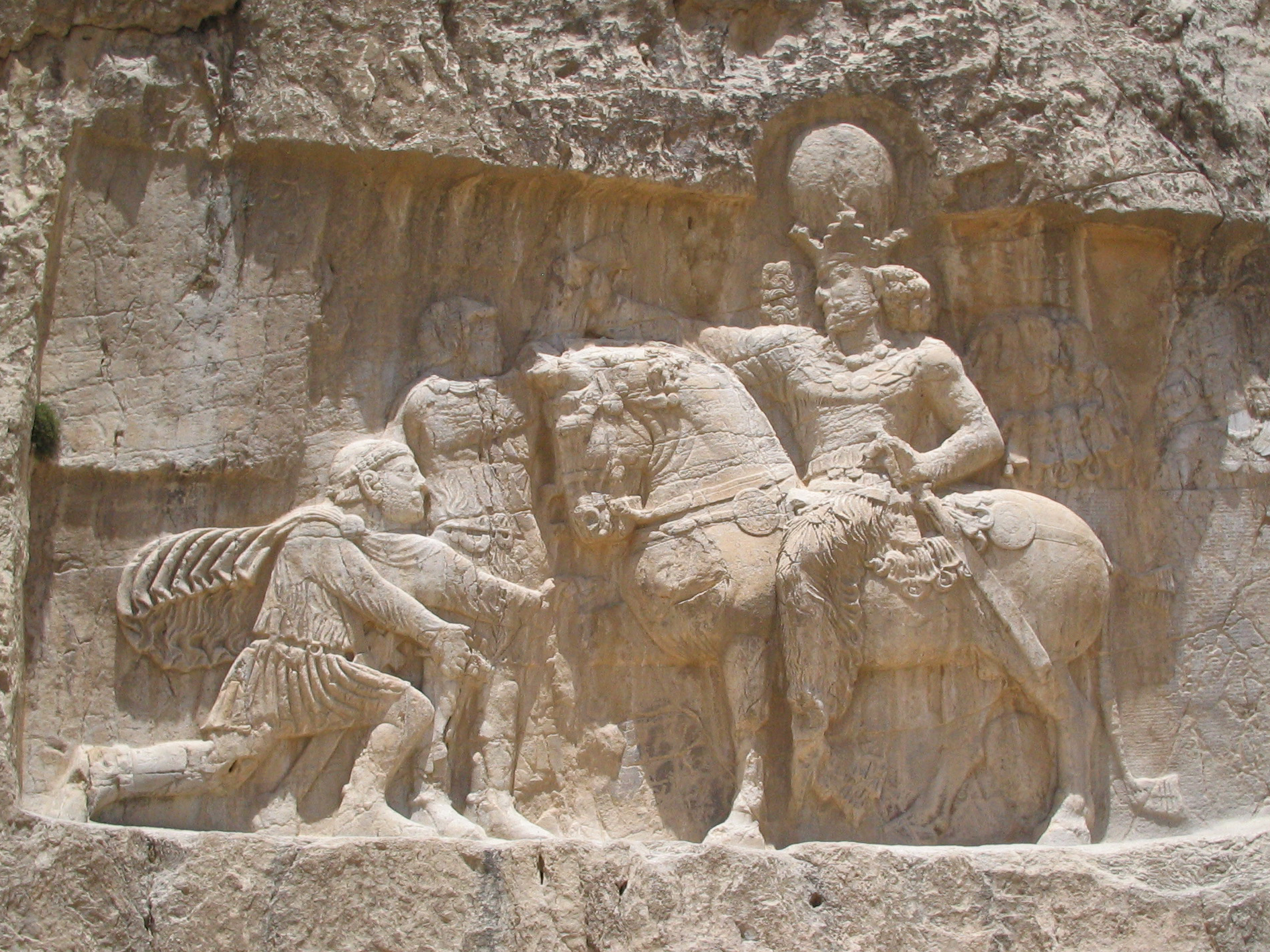
Most Sassanian Investiture reliefs, the documents carved in stone showing the monarchs rise to the throne, took roughly this form: https://c2.staticflickr.com/8/7091/7246704044_bf39de2b85_z.jpg
The framing of the relief is always interrupted by the symbolic crown on the monarchs head. Also the monarch is always given the right to rule by Ahuramazda, the chief divinity. One monarch, Ardashir III, broke this tradition to limit the power of the Zoroastrian church at a time when it was overbearing. In his relief, Ahuramazda is not present, the right to rule is granted by a lesser known divinity. This broke tradition quite significantly, but it also broke the artistic tradition of the reliefs in that the framing of the relief was changed so that there was no bulge.
This is the relief I am specifically referring to. http://www.livius.org/place/taq-e-bostan/taq-e-bostan-small-cave/
Another example of a typical relief I was shown in class is here: http://upload.wikimedia.org/wikipedia/commons/4/40/Bas_relief_nagsh-e-rostam_al.jpg
I am curious whether or not this change in the artistic tradition was:
Thank you for your time.
1 Answers 2014-08-11