If Eva Braun had survived World War II, do you believe she would have been prosecuted in the Nuremberg trials? As I'm sure you know, she was Hitler's mistress and then wife (for a brief time). Would she have been considered an accomplice to Hitler's crimes? Or was she not guilty by virtue of having had no power, essentially just being Hitler's easily manipulated girlfriend?
1 Answers 2020-03-05
From what I've read and researched. Vikings appear to mostly be successful through their raids and impact of their culture on the British Isle. However when it comes to actually defending the lands they managed to conquer. Northumbria, east anglia, I believe are some examples. They were obviously all conquered by English kings. An example of a strong viking army that comes to mind would be the great heathen army. That managed to defeat the kingdom of mercia then go on to take Alfred the Great by surprise at his own capital...it appears that the army used the viking tactic of surprise on the enemy. Instead of an open pitched battle, to great success. However although the obvious reason for the army not committing to an open field battle being. Well they didn't need to. Was it also possible due to them questioning if they were able to fight and win against an Anglo-Saxon army under the command of Alfred? Because guthrum went out of his way to bribe people to not announce his army's arrival so he could ambush. I find this interesting. Because at a later time Alfred the Great goes on to defeat the great heathen army. Also I believe his son Edward The Elder deafeated northumbria around 910AD. Also the the reinforcement sent to aid guthrum and his army against Wessex were defeated at Devon when the peasantry sallied out from their fortress and fought the vikings openly and surprising the vikings lost. My question is that we're vikings just less successful at battles and was this a big factor in there eventual downfall? because this appears to be the case. Which also seems to be the reason the vikings eventually disappeared. Of course christianity was a big factor in this but. It also seems that the vikings partial inability to adapt to open field battle, army to army. Which is obviously necessary to keep control of your kingdoms. The vikings could not do as successfully compared to there Anglo-Saxon and even Irish and Scots counterparts.
1 Answers 2020-03-05
Was is the testicles or the prostate that was cut off? Or both? Were there variations by region?
1 Answers 2020-03-05
1 Answers 2020-03-05
Germany spent all this time,money and resources to bulid up its high seas fleet and challenge the royal navy,so why did they leave it in port for the rest of the war? they did alright in jutland and while they had to retreat and did not achive their objective,they sunk more tonnage while being the smaller force,so why no make more attempts like this?
potentially breaking the royal navy and the naval blockade that was giving them such a headache seems like its worth the risk,even if the chance is slim,esspecially since the navy just sitting in port does not help the war effort at all and losing the war means loosing all the ships anyway.
1 Answers 2020-03-05
I occasionally read about Japanese History and I am admittedly rather clueless on that area. One thing I consistently see, however, is the idea that the Emperor was more a figurehead than a real political force. The Shogun was the real leader. However when I investigate further I by and large read about what sounds like a religious head than a political one.
I can't help but think, should we view the Japanese Emperor as more of a pope than a monarch? Granted, an hereditary papacy. But given how medieval popes behaved, I can't help but see similarities?
1 Answers 2020-03-05
1 Answers 2020-03-05
Edit upon reading u/LordHussyPants’ What sorts of food would Jesus of Nazareth have eaten? what foods were regularly eaten and which were for religious or cultic practices?
1 Answers 2020-03-05
I hear a lot of conflicting things about this. Some say that death was super common in the arena in Gladiator fights, but others say that Gladiators had long careers and that killing was uncommon.
Which is true? Are people confusing the prisoner executions in the colosseums with professional Gladiators? Were there professional Gladiators?
1 Answers 2020-03-05
Was it fairly effective? I've heard a fair bit about moles/agents within the Manhatten Project but much of that seems like a continuation of pre-war work. I'm particularly interested in later in the Cold War instead of directly after the war.
1 Answers 2020-03-05
1 Answers 2020-03-05
1 Answers 2020-03-05
I came across this newsreel from 1943. At appr 01:00 it shows the heavy weapons left by the Axis, collected and neatly parked in rows one year after the battle ended.
https://film.iwmcollections.org.uk/record/4694
After reading a lot about the battle lately, i`m curious for a more detailed list of captured equipment. From small arms to tanks and artillery. (types and numbers captured).
I know the total figures for Axis losses was around 500 tanks and 250 artillery pieces, but can it be broken down to details?
There must be an official record/document made by 8th army somewhere.
Thanks in advance for any answers!
1 Answers 2020-03-05
I've read many answers on this sub about the (il)legality of secession, the fallacy of claiming the south sought to defend "states rights" and so on, and have learned much from them. But there's a part of the narrative of sectional crisis about which I'm a little confused.
The 1850 Fugitive Slave Act, as I understand it, contributed heavily to the sectional crisis because it neutralized "personal liberty" or "free soil" laws that Northern states had implemented since the Revolution, where enslaved people who successfully escaped and reached Northern states could achieve free status.
What I'm confused about is how those laws were suffered to exist in the first place, given Article IV, Section 2, Clause 3 of the United States Constitution, which reads:
No person held to service or labour in one state, under the laws thereof, escaping into another, shall, in consequence of any law or regulation therein, be discharged from such service or labor, but shall be delivered up on claim of the party to whom such service or labour may be due
I am not a historian and I'm certainly no Constitutional scholar, and I'm certainly no neo-confederate goofball who tosses around all sorts of incoherent accusations at the Yankees, and I'm struggling to understand how the Fugitive Slave Act (apart from its provision requiring citizens to aid and abbett slavers in their pursuits) was anything more than a restatement of this provision of the Constitution. How were personal liberty and free soil laws able to seemingly contradict this clause before 1850?
Thank you for any answers!
1 Answers 2020-03-05
I see arguments from both sides. One thing we can look at is party switching - some republicans switched to the DNC in 2016, and some democrats switched to the GOP in 2016.
But does that mean that the ideologies of the parties switched? As in, republicans once supported open borders, taxes, and gun control?
Some republicans refute this by showing the 1934 firearms act, and how southern states never voted in a republican governor until the late 90s/early 2000s.
Is it more that the democrats became more liberal and republicans became more conservative, or that the economic policies changed?
1 Answers 2020-03-05
Is there any books on mesopotamian history that I can read? I'm an undergraduate student who's doing some independent research.
1 Answers 2020-03-05
I was chatting with an American friend last night about the civil war and alternate history and such, and when I asked him why the south succeeding the Union was "illegal" (probably not the word for it).
From my understanding as a non American, the union was a voluntary organisation when it formed, so surely if a state wanted to leave, regardless of the reason, there's some legal basis to them being allowed to do so. So why couldn't the CSA succeed the Union.
Sorry if this is more of a political question, I'm just curious.
2 Answers 2020-03-05
1 Answers 2020-03-05
Sorry for the poor terminology. I know Ancient Greeks didn't view rape/honor like how we do today.
1 Answers 2020-03-05
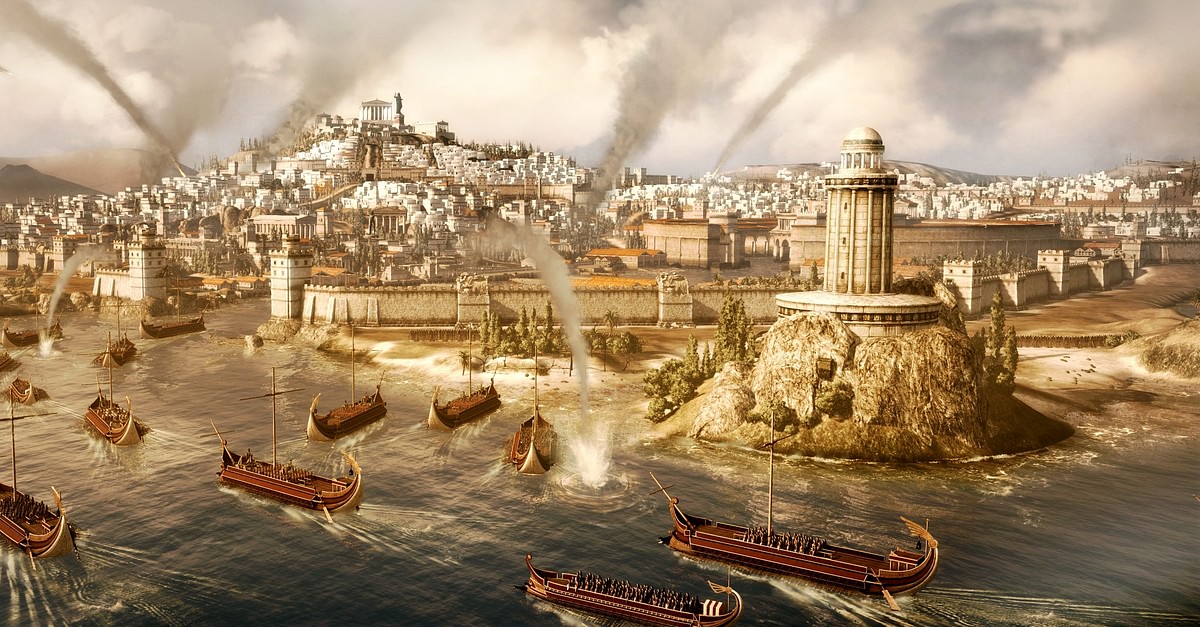
I know relatively little about this, but wikipedia tells me Carthage was totally destroyed by Roman forces in 146 BC.
When I look on google to try and find recreations of what Carthage might have looked like, I get images like this.
Is there anyway for us to know what Carthage would have looked like, or is this all fictional guess work? Do we know anything of its monuments? How did its grandiosity compare to that of Rome prior to its destruction? Are there many/any written descriptions of the city from the time?
2 Answers 2020-03-05
More specifically he says that they were provided with money packs of different currencies: USD, pound Sterling and Austrian shillings. Viennese owner of the restaurant preferred to be paid with USD
1 Answers 2020-03-05
Thursday Reading and Recommendations is intended as bookish free-for-all, for the discussion and recommendation of all books historical, or tangentially so. Suggested topics include, but are by no means limited to:
Asking for book recommendations on specific topics or periods of history
Newly published books and articles you're dying to read
Recent book releases, old book reviews, reading recommendations, or just talking about what you're reading now
Historiographical discussions, debates, and disputes
...And so on!
Regular participants in the Thursday threads should just keep doing what they've been doing; newcomers should take notice that this thread is meant for open discussion of history and books, not just anything you like -- we'll have a thread on Friday for that, as usual.
7 Answers 2020-03-05
There is a common popular conception that after the fall of the Western Roman Empire, Western Europe descended into the "dark ages". People who are knowledgeable about history tend to refute this conception, pointing to things like the high level of continuity in Italy in the decades after 476, and the Frankish and Visigothic Kingdoms.
The one area that really did experience a "dark age" in the centuries after the Roman withdrawal is Southern Britain though.
Based on the differing post-Roman experience between Britain and Continental Europe, have Continental Europeans been less likely to view the post-Roman period as a "dark age"? Is the conception of this period as a "dark age" uniquely pronounced in the English speaking world?
1 Answers 2020-03-05
I'm not here to insult or attack I just want to know the truth. They claim Byzantine empire was not real and that it actualy was Serbian Empire. To put it simply, territories of Byzantine empire were not Roman (eastern) but rather Serbian. And they also say that historians lied and made entire story/history of Byzantine up.
From what I know they did try to spread this information on english and to other parts of the world but they were laughed at as they put it.
Srbija Global: https://www.youtube.com/channel/UC5iujoUVaP-oVkgRdMY-BzA/videos (their YouTube channel, it's all on serbian but I can translate)
1 Answers 2020-03-05