How did Christianity become one of the top world religions? Any influential events that really changed the outlook of christian dominance?
1 Answers 2019-11-18
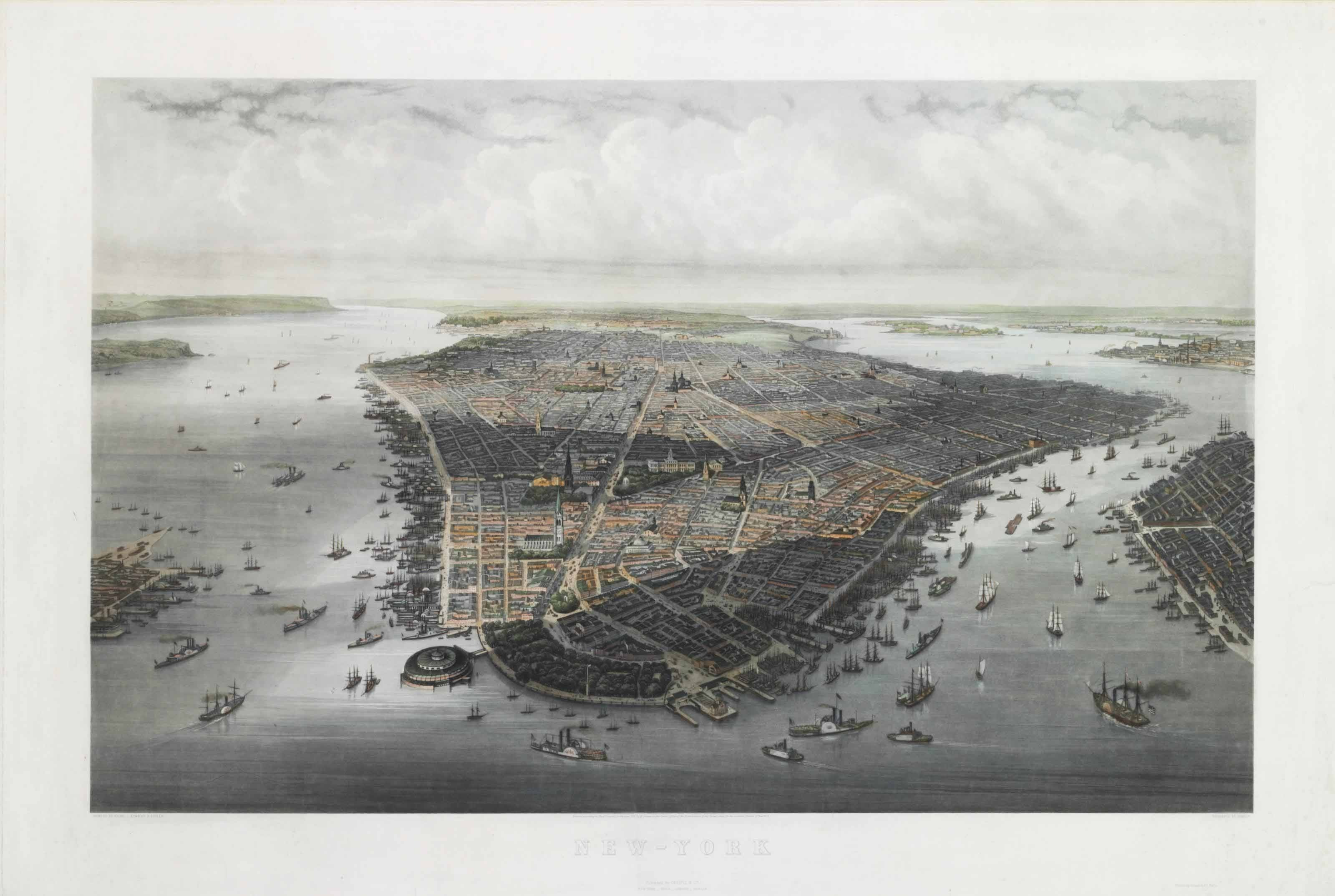
A graphic in the recent Tom Scott video on the Cooper Union Foundation Building caught my eye. It showed an apparently historical Manhattan dotted with churches and steeples clearly taller than anything else around. Tracing that graphic back (i.e.googling his reference), it's this drawing, the 1951 Birds-eye view of New York by Heine and Kummer.
Clearly it's not the case anymore that churches are the tallest structures in Manhattan, which made me interested to learn more about that transition and more specifically, the date of that switchover.
1 Answers 2019-11-18
This is about an artefact in the British Library, a manuscript entitled "Subtlety of Witches", 1657, bought by the BL in 1836. The MS is in code, and after deciphering, turns out to be a list of Latin verbs and related quotes, interspersed with 17th century Dutch. Its likely not a hoax, as it ends with the religious coded message "christus ex maria virgine natus est". Could this have to do with the Dutch Catholic/Protestant civil conflict in the 16th and 17th centuries? Any help appreciated!!!
1 Answers 2019-11-18
1 Answers 2019-11-18
1 Answers 2019-11-18
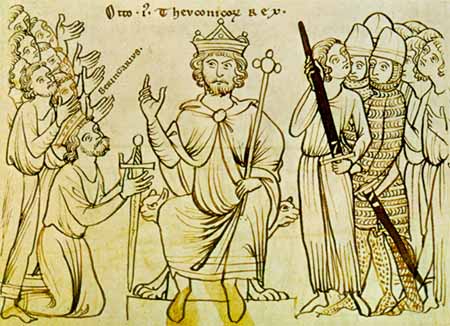
Compare for example this from 1885: https://upload.wikimedia.org/wikipedia/commons/thumb/1/17/Wernerprokla.jpg/1280px-Wernerprokla.jpg
To this from about 1200: https://upload.wikimedia.org/wikipedia/commons/1/11/Otto_I_Manuscriptum_Mediolanense_c_1200.jpg
And there are many more such examples from different time frames.
1 Answers 2019-11-18
1 Answers 2019-11-18
I want to learn more about Russia in the civil war.
1 Answers 2019-11-18
I know POWs had to go through re-education camps and some went to the gulags that were deemed extremists but how was readjusting to life in a country that was devastated for a POW? What kind of challenges might they face?
1 Answers 2019-11-18
1 Answers 2019-11-18
Good afternoon! Jean Mendoza and I are here for an AMA about our adaptation of An Indigenous Peoples' History of the US for Young People!
We're new to the platform; we apologize in advance for our inevitable stumbles (like starting late).
Here's the book's description:
Spanning more than 400 years, this classic bottom-up history examines the legacy of Indigenous peoples’ resistance, resilience, and steadfast fight against imperialism.
Going beyond the story of America as a country “discovered” by a few brave men in the “New World,” Indigenous human rights advocate Roxanne Dunbar-Ortiz reveals the roles that settler colonialism and policies of American Indian genocide played in forming our national identity.
The original academic text is fully adapted by renowned curriculum experts Debbie Reese and Jean Mendoza, for middle-grade and young adult readers to include discussion topics, archival images, original maps, recommendations for further reading, and other materials to encourage students, teachers, and general readers to think critically about their own place in history.
17 Answers 2019-11-18
1 Answers 2019-11-18
On a comedy history podcast I've been listening to, the two hosts went through the story of Matthew Hopkins, a 17th century witch hunter who seems to have inspired a lot of other witch hunters.
The hosts noted that the majority of witches were women and of THOSE quite a few were elderly, and depended on town charity to get by and they suggested towns (who would invite witch hunters to rid the towns of witches) use these witch hunts as a way to kill people who were essentially too expensive to care for (I forget the number they used, but apparently elderly indigent women did actually eat up some portion of the town's budget).
Any truth to this?
Thanks!
1 Answers 2019-11-18
1 Answers 2019-11-18
1 Answers 2019-11-18
1 Answers 2019-11-18
Recently I got to thinking how crazy fast technology has progressed in the past few decades. With the first iPhone just coming out just 12 years ago, and it was amazing, and now practically everyone has a magic computer phone in their pocket, and we even have cars that can literally drive themselves.
But with only a couple decades of personal experience, I'm curious what it was like during the early 20th century, and earlier. We only learn about the big major discoveries in school, so it seems like in the past technology progressed randomly in big bursts, and then long periods of not much going on. But I'm sure that's not quite accurate.
Obviously this is a pretty vague and open ended question, so hopefully you can understand what I'm getting at. I guess another way of phrasing it, is has humanity always progressed at a speed that made people think "wow technology improves so fast" no matter what time period we were in?
1 Answers 2019-11-18
1 Answers 2019-11-18
So in their day, the Nazis were allied to Japan, a non-white empire. Hitler commended Jessie Owens, while it was white Americans who snubbed him. And of course, the people the Nazis hated the most were just other white people like Jews and Russians.
At the same time, white supremacists in the US terrorized blacks and ran Jim Crow oppression across the south.
However, today we view these groups as one and the same.
How did this happen?
1 Answers 2019-11-18
Dear members,
A new podcast on Arabic Medieval History and Historiography has just been launched by Ghent University in Belgium. It mostly concerns ongoing research, so it might be a bit specialized, you tell me.
There are very few podcasts dealing with the Medieval Arab World, so here is my broad question : what do you think of this podcast ?
Any thought ?
1 Answers 2019-11-18
Without getting into any theological debate, does Egyptian history have any room for the story of Moses. For example, would Moses have been circumcised, and thus easily identified as a Hebrew? Did the Egyptians keep records of their court and royal family members? Is there any reference to the edict to kill the 1st born of any slave population?
1 Answers 2019-11-18
I’m fascinated by all the aspects of daily life that are not discussed by most historians and would love to find some books that provide this information. Any books on hygiene, details on diet, how clothes were cleaned, are welcome.
1 Answers 2019-11-18
Did the candidates visit states similar to today?
1 Answers 2019-11-18