I’ve read plenty of books on the subject and came to my own conclusions and it’s certainly something we argue frequently about. He said he’s open to reading a book of my own choosing. However I know that any kind of demonization of Turks will make him thing it’s an anti Turkish book. Moreover a book that acknowledges the perils faced by Caucasian and Balkan Muslims would be nice, since this is something he brings up frequently as being overlooked by historians.
I’m thinking Shattering Empires by Reynolds since that really explores the genocide from an international conflict perspective and gives plenty of background on various population deportations but also why the ottomans deportation differed and turned into a genocide.
9 Answers 2019-11-02
Curious if the colonies competed for settlers against each other. I know Canada had land grants for settlers. That’s how my family crossed from Scotland but it wasn’t long before they abandoned the grant and came to the US.
1 Answers 2019-11-02
I know that "what-if" questions are almost non-historical, but then again, there seems to be a rock-solid consensus that Germany was doomed to lose WWII independent of strategy. Yet according to my (admittedly limited) understanding Germany fell really short of reaching Moscow and were a couple teactical moves away from knocking the USSR out of the war. Was Germany actually a final push away from entering Moscow, or is there a reason why Germany would have lost the Western front even if completely focused on it?
2 Answers 2019-11-02
[deleted]
1 Answers 2019-11-02
Today:
AskHistorians is filled with questions seeking an answer. Saturday Spotlight is for answers seeking a question! It’s a place to post your original and in-depth investigation of a focused historical topic.
Posts here will be held to the same high standard as regular answers, and should mention sources or recommended reading. If you’d like to share shorter findings or discuss work in progress, Thursday Reading & Research or Friday Free-for-All are great places to do that.
So if you’re tired of waiting for someone to ask about how imperialism led to “Surfin’ Safari;” if you’ve given up hope of getting to share your complete history of the Bichon Frise in art and drama; this is your chance to shine!
2 Answers 2019-11-02
And did it change much from rule under the Yuan and post-Yuan eras?
1 Answers 2019-11-02
I heard that it's true purpose was to be free to own guns to prevent slaves from revolting.
Republicans say that it means that the government isn't supposed to regulate guns in any way hence any form of gun control is unconstitutional.
What's its true purpose really?
1 Answers 2019-11-02
Upon watching the Agincourt scene in The King on Netflix (which I would recommend, if with a few faults), it made me wonder, how would a medieval soldier be able to tell who their enemies are and who their comrades are, especially in large skirmishes, like the one we see in the film.
1 Answers 2019-11-02
1 Answers 2019-11-02
When I read about history, it seems clear that hills are not very good for farming compared to flat land. Especially in Europe, hills and mountains seem to be reserved for tribes or poor populations who were not wealthy or powerful enough to occupy better farmable land for themselves.
I tried searching on Google about what exactly makes uneven land so bad for farming, but all I found were articles about modern hill farming and terrace farms, none of which really answers what I want to know.
So in short, what physical characteristics of hills makes them bad for farming crops? Does this apply to all crops, or just the most profitable types? Does it have to do with uneven sunlight, bad soil, rocks, water flow...?
1 Answers 2019-11-02
Just finished watching The King on Netflix. Great movie. My question is, during the Battle of Agincourt, if the movie was accurate, how the hell did heavy Infantry tell friend from foe while all wearing heavy plate??
1 Answers 2019-11-02
1 Answers 2019-11-02
1 Answers 2019-11-02
1 Answers 2019-11-02
1 Answers 2019-11-02
Hello everyone,
I think a lot of this sub and admire its stringent rules on good questions and good answers. I hope this question follows those rules.
My question is prompted by my grandfather (served in the British army for a time in the late 1960's and early 1970's, but I'm not sure on exactly when). He is no longer around but we have lots of pictures of him sitting in the desert holding a rifle. I remember stories from him stating that he was in "Saudi Arabia". I remember stories of eating "rancid goat meat" and of guarding what he described as a "rubbish dump", but little else.
From the little that I know, it seems more likely that he was stationed somewhere like Oman. Where were British soldiers stationed at that time? Where might he have been and why might he have been there?
For context, if it helps, he was born in 1943 and was also posted to Germany and Northern Ireland at some point. He claimed to have been in Germany when the British actor Leslie Grantham shot a German taxi driver, which was in 1966 - but I'm not sure on the truth of that story.
Apologies if this is not the appropriate sub, I appreciate your contributions regardless.
1 Answers 2019-11-02
Hey guys- I do 18th century cooking classes and prepare many different recipes. I have been told by other colonial foodies that the colonists required, on average, 5000-6000 calories a day to do all of the manual labor required.
I know that the food prep was a lot of work but I don't believe they can get this amount of calories from their daily food intake. A stew and bread is not going to cut it especially shared by several people. Even if other dishes are added this doesn't seem possible. Even a lb of butter is only 3000 calories - and I doubt the average colonists were eating pounds of butter per day.
Anybody have any info on this?
1 Answers 2019-11-02
1 Answers 2019-11-01
1 Answers 2019-11-01
[deleted]
1 Answers 2019-11-01
If you found an ancient text with a detailed claim that Athens was in what is now Spain, what would you do with it? What historical merit do clearly false claims have?
Edit: grammar
1 Answers 2019-11-01
1 Answers 2019-11-01
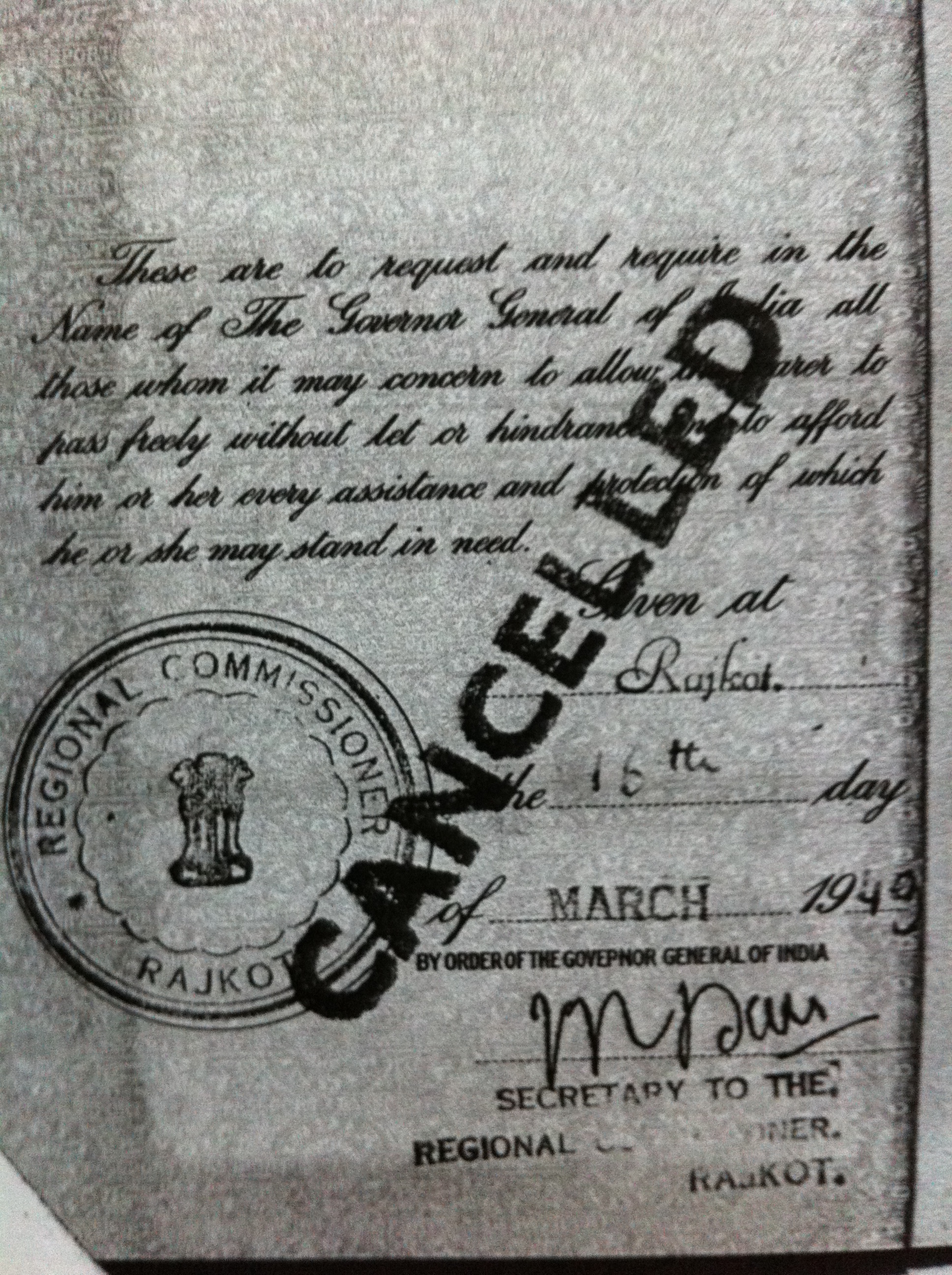
For example, here is the text for american passports, and here for old Indian passports
The current Indian passport reads:
These are to request and require in the Name of the President of the Republic of India all those whom it may concern to allow the bearer to pass freely without let or hindrance, and to afford him or her, every assistance and protection of which he or she may stand in need.
What is the history of this message? Was there some event that triggered this message to be written? Do all passports have this?
1 Answers 2019-11-01
Hi, I'm undergraduating history student that is trying to start researching, I've choosen the subject of the "history of the anarchist movement in the state of Sao Paulo in the early 20th century". I'm reading a lot of anarchist periodicals, however I lack historiography and some context of the anarchist movement in other countries and the works that I've found are not written by historians and often has too much political bias.
My hypothesis is that the anarchist movement of the early 20 the century in Brazil didn't had the same concept of contemporary anarchism and it was not common in the early socialists movements in the same time period.
I'm here for recommendations (in English, Portuguese or Italian) and some advices in my research, also I'm not sure If here is the best place to ask for such a thing in this subbredddit, and If my English wasn't very understandable I can rephrase what I wrote, because my native language is Portuguese not English.
2 Answers 2019-11-01