1 Answers 2017-01-09
Since I learned about the existence of Unit 731 I was intrigued. Living in Czech Republic which was occupied by the Nazi forces during World War II, I was not surprised we focused more on atrocities committed by Josef Mengele in Auschwitz. But when I learned Unit 731 is just not as commonly known I was wondering why. I never came to a conclusive answer.
Is there any way to compare Auschwitz and Unit 731? Which one did more to make their prisoners suffer? And why do a lot of people forgot or never learn about Unit 731?
2 Answers 2017-01-09
I can't imagine that there weren't any innovations before gunpowder weapons, but what kind of variations occurred over time? Was boarding and subduing enemy ships by force the primary tactic all this time? How did ship construction evolve over this time with seemingly little advancement of tactics?
1 Answers 2017-01-09
[deleted]
1 Answers 2017-01-09
Why was beer generally served cold in NZ and Australia and generally much warmer in Britain? (Past tense as the craft beer scene is expanding in the antipodes.) Time period - I guess most of the 20th century.
1 Answers 2017-01-09
1 Answers 2017-01-09
I vaguely recall hearing once that Pre-European Maori were the only people in the world without any mind-altering substances (no alcohol, no tobacco, no cannabis, no caffine, no kava, etc).
At school I learnt a bit about what they ate, but I can't recall hearing anything about they drank. Presumably water, but did they have anything else?
1 Answers 2017-01-09
I am an undergrad interested in history.
Usually when I am reading history books I find having a map along side the reading helps me alot in understanding the context and ramification of the historical events happened.
I have found a couple of sites that provide historical maps, but most are ballparks and not very detailed. This make it hard to study periods for which territory ownership change frequently.
Furthermore sometimes I don't even know if the site is trustworthy or not. And doing my own validation really defeat the purpose of using the site in the first place.
Can someone recommend some online historical map resources?
Side question: is Thomas Lesserman's website a good resource?
1 Answers 2017-01-09
1 Answers 2017-01-09
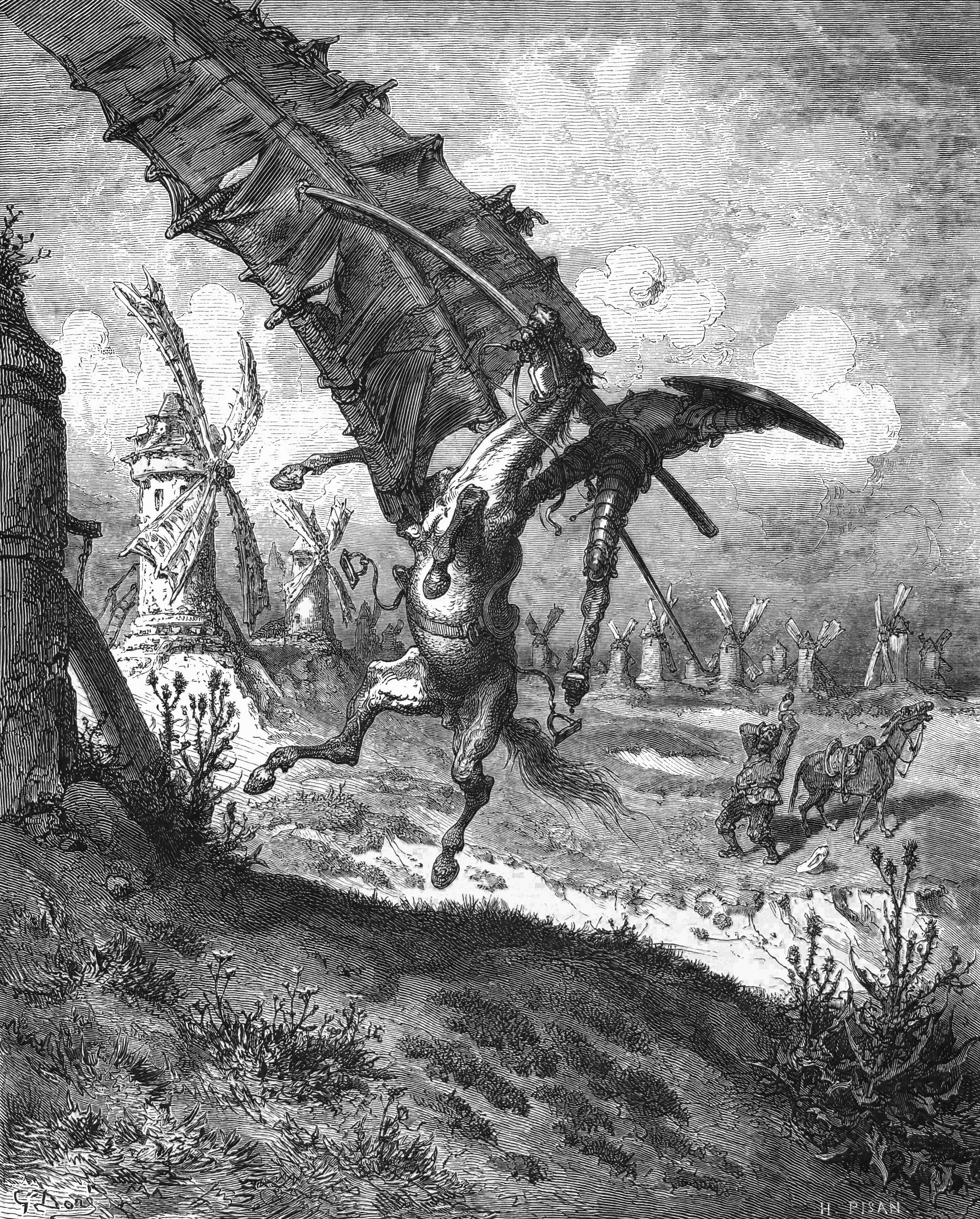
"At this point they caught sight of thirty or forty windmills which were standing on the plain..."
That's a lot of windmills. If that number is true-to-life, how big of a workforce did they require? Was the windmill an icon of the La Mancha region at the time? How much so in comparison to the rest of Europe?
1 Answers 2017-01-09
Egypt under Muhammad Ali became independent from the Ottoman Empire and started demanding Ottoman Syria become part of Egypt, which Egypt then achieved through war, plus taking areas deep in Anatolia like Konya and Adana: https://en.wikipedia.org/wiki/Egyptian%E2%80%93Ottoman_War_(1831%E2%80%9333)
Egypt even wanted to take over Constantinople.
A few years later the Ottomans went to war again to reclaim land lost to Egypt, but lost and left themselves on the verge of collapsing: https://en.wikipedia.org/wiki/Egyptian%E2%80%93Ottoman_War_(1839%E2%80%9341)
The internet briefly mentions the west didn't want the collapse of the Ottoman Empire to leave a power vacuum for Russia to fill, so therefore supported the Ottomans from being taken over by Egypt. But at the same time, it also says the Ottomans signed a military pact with Russia to help one another in war, and that Russia was arming the Ottomans to defend themselves from Egypt.
This took place roughly at the time when Greeks were achieving independence from the Ottoman Empire as well.
Just generally speaking, what exactly happened? Shouldn't the west and Russia have preferred for the Ottomans to have collapsed rather than survive, given they were enemies? Why did western powers and Russia all support the Ottomans against Egypt, and get Egypt to leave Syria?
1 Answers 2017-01-09
I've read that Iceland used to have up to 40% of its landmass forested, but over the years of habitation it dwindled to near nothing. I imagine that an economy so thoroughly dependent on fishing and ships in general would be hamstrung without a supply of lumber to build and maintain their boats.
2 Answers 2017-01-09
[deleted]
1 Answers 2017-01-09
So im reading a book about alchemy and it keeps referencing him and his Hermeticum. I want to hear more about him.
1 Answers 2017-01-09
Inspired by an image on r/funny, I became curious, as he is a major part of our education for literature, just what would Shakespeare's educational studies look like? Would he be reading classic Greek and Latin texts such as Antoninus Liberalis's Metamorphoses or something more English like Chaucer's Canterbury Tales?
1 Answers 2017-01-09
Another interpretation could be how did sport seasons become standardized? Some winter sports make sense (skiing, ice hockey, indoor sports), but American Football seems to be strangely placed being that's it's outside which comes with its difficulties like snow, etc.
1 Answers 2017-01-09
From English writers in the 1800's to Tolkien, and even still on the internet, I see a lot of writers romanticize the Anglo-Saxons, lamenting for the English culture or enjoying tales of Normans getting dicked over by the native Anglo-Saxons. Whether it be Hereward or Ivanhoe.
This has always confused me, since modern English culture is an amalgamation of Anglo-Saxon culture and Norman. The people lamenting the lost English culture are a product of the current one, and there's plenty of heroic stories the Normans can be attributed to. It seems odd people seem to love the Anglo-Saxons so much more when really they're an entirely different people.
2 Answers 2017-01-08
2 Answers 2017-01-08
I'm reading about medieval education and am not familiar with some of the terms being used. Specifically, what it means for someone to 'incept' or referring to their 'inception', and also what it means for someone to 'determine'. I'm not sure if these are strictly historical terms or are still in use in European institutions.
Here's a footnote from one paper using these terms that makes little sense to me currently:
"According to this statute (Stat. Ant, p. 33), which Gibson tentatively dated "before 1350", it was customary that no one who determined for himself should incept in arts until the end of three years after determination, while one who determined for another could incept at the end of two years after his own determination (cf. ibid., p. xciii). Unless the bachelor determined both for himself and for another in the same Lent, the course for both bachelors would be seven years before inception—unless, of course, the one -who determined for another was dispensed from the required years or books because of his ability."
Thanks in advance for your assistance.
1 Answers 2017-01-08
1 Answers 2017-01-08
1 Answers 2017-01-08
I was looking through old photos of US Army tanks and noticed the white star roundel that was so prominent on US Army vehicles in WW2 and Korea, seemed to disappear sometime in the 1980s. I just wondered why this was and when it happened. I can't really fathom why such a universal symbol for the American military just disappeared without replacement. If I was wrong on my guess of when it was dropped and this happened within twenty years of today, my apologies.
4 Answers 2017-01-08