I've recently started working with two Chinese colleagues and we were discussing some early Chinese history. My two colleagues know a lot more about the ancient Mediterranean than I know about ancient China!
Anyway, we were talking about east-west trade in the Ancient world which led me to wonder what did the ancient Romans know about China? With the Persians in the way it seems like there wouldn't have been much (any) traffic between Rome and China but it strikes me that they might have at least heard of one another.
Are there any accounts in Roman literature of the Chinese? Do they know much about what is beyond the Persian Empire? I'm moderately familiar with the sweep of Roman history, but I don't recall anything about this being mentioned my impression is the Romans were generally a bit more preoccupied with what lay outside the Empire to the North.
Edit: To clarify as I've seen some answers deleted. I've read the wiki page on sino-roman relations which largely covers contact between Rome and China. What I'm really asking is what the Roman's believed about such remote people? Who did they think they were? They understood that, say, silk came from some other empire so they likely formed some impression of such far away people. What did they get right, what was myth?
2 Answers 2016-03-09
1 Answers 2016-03-09
This weekly feature is a place to discuss new developments in fields of history and archaeology. This can be newly discovered documents and archaeological sites, recent publications, documents that have just become publicly available through digitization or the opening of archives, and new theories and interpretations.
3 Answers 2016-03-09
When Alexander attacked Tyre in 333 BC, would his soldiers have been able to swim? And relatedly, when did swimming become common knowledge among humans?
1 Answers 2016-03-09
To what extent (If any) was Mongolian used in the Yuan, the Ilkhanate and the Golden Horde? Did native elites learn these languages? Did Mongolian influence leave any trace on the languages of those conquered by the Mongols?
1 Answers 2016-03-09
Why, in modern warfare (WW2 era onwards), is/was rock-throwing from high ground a tactic used? I can imagine so many issues with this (moving out of cover, fatigue, injuries, etc) from practising this for little reward. Was this practised mainly due to neccessity from lack of sufficient munitions, or a ruse to lure enemy forces into thinking supplies were diminished?
1 Answers 2016-03-09
Just in case: Sergey Lavrov is Russian Minister of Foreign Affairs.
Here's the article in question.
There are interesting parts about Mongols saving Russia from Europe but at least he quotes some arguably actual historian Gumilev. The part I ask about:
We remember that Emperor Alexander I took an active role in the drafting of decisions of the 1815 Vienna Congress that ensured the development of Europe without serious armed clashes during the subsequent 40 years.
[...]
By the same token, the Vienna system was destroyed in the wake of the desire to marginalise Russia in European affairs. Paris was obsessed with this idea during the reign of Emperor Napoleon III. In his attempt to forge an anti-Russian alliance, the French monarch was willing, as a hapless chess grandmaster, to sacrifice all the other figures. How did it play out? Indeed, Russia was defeated in the Crimean War of 1853-1856, the consequences of which it managed to overcome soon due to a consistent and far-sighted policy pursued by Chancellor Alexander Gorchakov. As for Napoleon III, he ended his rule in German captivity, and the nightmare of the Franco-German confrontation loomed over Western Europe for decades.
[...] In general, the imbalance of pan-European mechanisms triggered a chain of events that led to the First World War.
4 Answers 2016-03-09
[deleted]
1 Answers 2016-03-09
I'm interested to note if there are similar sentiments held for anyone who was being expansionist like Napoleon, for instance. Was there a popular scapegoat dictator of sorts?
2 Answers 2016-03-09
I just left a joke comment affirming "There is no Cabal" on r/AskHistorians (a joke because there totally is, all hail our Mod overlords!). Now, I'm vaguely aware that the phrase was used by Usenet administrators in the 80's to deny the existence of a separate admin network, but I've never stopped to think how Usenet worked and why it was a "separate" part of the Internet.
So, um, what precisely was Usenet? (Was it a system of chat rooms?)
How did Usenet develop, and why was it necessary to both develop and deny the existence of an Inter-Admin network?
5 Answers 2016-03-09
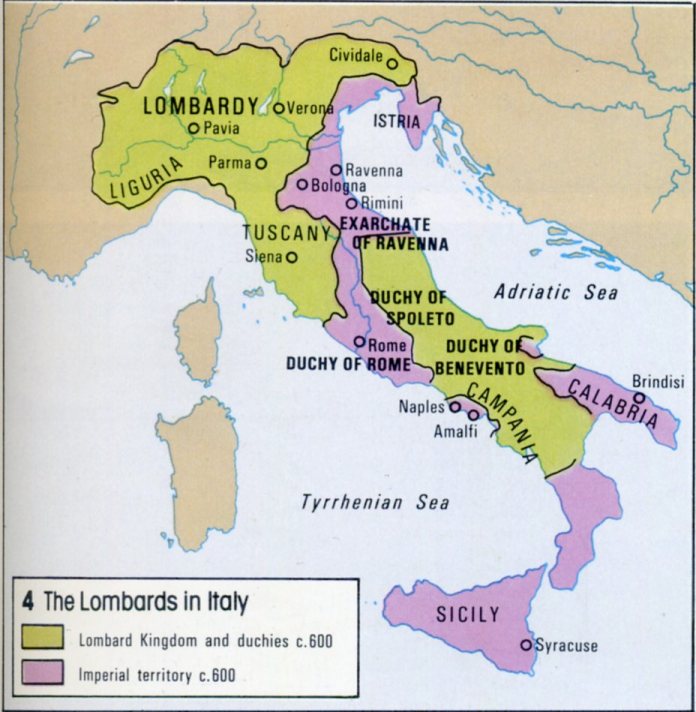
Did the Lombards keep their southern provinces supplied by sea or was the Byzantine "march" more porous than I'm picturing it?
1 Answers 2016-03-09
In this photo of the sinking of the Bourrasque during the evacuation of Dunkirk there is a large clock face painted on the front of the bridge.
The same clock face can be seen on one of the Bourrasque's sister ships.
Does anyone know what function this clock performed?
1 Answers 2016-03-09
[deleted]
2 Answers 2016-03-09
1 Answers 2016-03-09
So, I just watched the 2014 film Noah (with Russell Crowe and Hermione Granger), and I found it a fascinating film that I might actually use in an environmental history class (it would work well paired with some of Carolyn Merchant's work).
Clearly, the narrative presented varies considerably from the Deluge story most familiar in the contemporary West, that found in the Old Testament. It got me wondering, though, about the history of the Noah story across the Abrahamic religions. Are there different versions, perhaps some not canon? Do we know the inspiration for the story, or when it become part of the textual tradition? Do Jews, Christians, and Muslims see or interpret the story differently?
I'm less interested in "deluges around the world" than I am in the Abrahamic versions, but if other stories from different religious traditions are illuminating in comparison, then I'm all ears.
2 Answers 2016-03-09
For background info and a picture of the map: https://en.wikipedia.org/wiki/Da_Ming_Hun_Yi_Tu
2 Answers 2016-03-09
1 Answers 2016-03-09
I was recently reading about the life of Aaron Burr and came across an interesting fact about his illegitimate children. His two illegitimate children, John Pierre Burr and Louisa Charlotte Burr, were born to a servant of Burr's from India (Wikipedia says perhaps Calcutta). It appears that both of his children later identified as black, including marrying African Americans and becoming involved in black culture, including the abolitionist movement. Of course, our modern cultural perceptions of race make a significant distinction between Indians or other non-African people with dark skin and blacks. Were Indians and other people with dark complexions (such as aboriginal people in Australia or Fijians) commonly viewed as blacks in the past? Are there other cases of Indians or other ethnic groups identifying as black in colonial or post-colonial America? Could someone in one of these groups choose how they identified or was that decided for them by their appearance/skin color? For that matter, how many Indians were there in the Americas at the time?
1 Answers 2016-03-09
I doubt that monogamy has been around for most of civilized history. Is there a correlation between the Christian church coming into power and monogamy? How did accepted sexual behaviors change as major powers changed? My guess is this could be related to the witch hunt period of history, am I correct here? *edit: I'd love to hear from different experts on different times of history. I realize this is a broad question and any direction you'd like to take your answer is welcome.
2 Answers 2016-03-09
If so, what were they? Were they as effective at changing national culture as the efforts in Germany were?
1 Answers 2016-03-09
I'd like to read about military leaders and the battles or general strategies they implemented that made them famous.
1 Answers 2016-03-09
I've heard this before and I don't believe it, but can somebody fill me in?
2 Answers 2016-03-09