If none of Claudius' works survived, including his autobiography, from what sources did Graves get all his personal material (such as Claudius' hatred/love for certain people and other important conversations) from? I do understand that the book is historical fiction and I do know that Claudius' writing is seen in other contemporary historians but is it seen to such a strong degree that Graves can use it to constitute Claudius' character and persona with?
A simpler version of what I am asking would be "how historically accurate is Graves in depicting Claudius' personal traits/tastes as well as conversations (Augustus to Claudius,etc) in the book?".
1 Answers 2014-05-27
This is the source I got this info from.
Edit: Also, why did non-traditionally big cities like Atlanta, Charlotte, and Memphis become big while the traditional SE big cities lagged behind?
3 Answers 2014-05-27
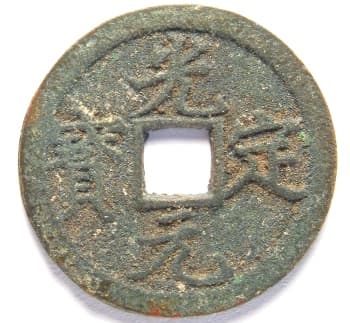
Has any culture not used round coins?
Edit: a couple of clarifications - I'm wondering particularly about ancient cultures, as they also minted round coins and I'm wondering if there was a specific reason why. Additionally, a couple of people have suggested the British 50p piece as a non-round coin, and while yes, that coin isn't circular, it's still essentially round, and modern to boot. I'm wondering about coins minted in unusual shapes like triangles or rectangles.
3 Answers 2014-05-27
1 Answers 2014-05-27
I tried searching this but could not find an answer. I typed everything for the site of mass grave in google but nothing came up. I am either not searching right or not clicking the right sites. Forgive me if someone has asked this. I feel silly asking this... because I am sure I have missed a site with the answer.
Okay so I am watching Anne Frank on netflix and as I am, I started doing research. I never read her dairy... though I always wanted to. Anyway I keep reading she died of sickness a few days after her sister died from shock after she fell from her bunk. But, they say she and her sister were buried in an unmarked mass grave. The location is unknown.
How on Earth is this possible? There had to of been so many bodies... how does no one know where it is? Do they still not know where it is? If so... why haven't they been dug up? I don't know if people can get sick from digging up the bodies now... but they could wear protective gear. But, has this mass grave been found? If not how the hell hasn't it? It could not be far from the camp right?
"After liberation, the camp was burned in an effort to prevent further spread of disease, and Anne and Margot were buried in a mass grave at an unknown location."
It says this. I am guessing the bodies were burned too... but who ever buried those people knew... they had to of told someone also. I mean those people had families... why would no one tell anyone of this site? I understand the sickness and all but still... will they never dig up these graves and bodies for a real burial if they find them or have found them? I know they probably could not identify the bones and such... but still. I cannot find a real answer for this expect that her body was buried in a mass grave. But, where? and have they found it? and if so have they dug the it all up ?
Thank you
2 Answers 2014-05-27
1 Answers 2014-05-27
I am really interested in learning more about the Sumerians, Babylonians, Canaanites and Egyptians. If any of you know any good books on these subjects/people, that would be great! Thank you!
1 Answers 2014-05-27
Did (or do?) humans ever breed at certain times of the year to produce offspring in a timely manner to survive harsher elements? Or, rather, is there any way to prove that our ancestors had a mating season?
The more I think about this question the more dumb it sounds to me. And it may just be a product of my northern climate where everything has its time and place. The birds, deer and fish all mate in the early spring to have babies tough enough for winter. Is it our adaption through technology that has allowed us to produce offspring willy nilly?
1 Answers 2014-05-26
In terms of bathroom facilities, food, sleeping arrangement, chores, entertainment, laundry, friendships, social hierarchy.
How does it differ from a regular sailor on a merchant ship and/or a military vessel?
1 Answers 2014-05-26
1 Answers 2014-05-26
Hey, can someone explain Germany's mistakes in Russia and the ways it affected the outcome of the war? I know they underestimated Russia's power, and weren't ready for the cold climate, any others? Could you give links (just so i can go ahead and read more by myself). Thanks in advance! Cheers!
2 Answers 2014-05-26
It was a new idea for its time; what led the authors of the Constitution to create it instead of a monarch or pure parliament/congress? Why put so much power in one person's hands if you want a republic, and why limit them so much if you want an autocracy?
1 Answers 2014-05-26
After the fall of Tokugawa Japanese modernization seems to have been relatively smooth, especially compared to the Chinese attempts following the Opium War. I recognize that China was struggling against foreign imperialism but I was wondering what other reasons there were. :)
1 Answers 2014-05-26
In WWI, the victor Entente nations seemed to go through an economic boom after the war all the way through the Great Depression. Meanwhile, the economic boom after WWII reconstruction seemed to last decades and both the Allied and Axis nations benefited greatly (Baby Boomers, the Japanese Miracle, Wirtschaftswunder); not only just pulling themselves out of the Great Recessions but reshaping global economics/trade. What was different about WWI and WWII that allowed the sustained economic for growth in so many nations for so long?
Thanks
1 Answers 2014-05-26
I was curious, but can't find anywhere, if churches made their own wine in the 1800's-1900's, or if they just bought it. To be more precise, churches in London, England.
2 Answers 2014-05-26
A central idea in the study of Chinese history is it's isolation from the world. The Himalayas to the west, the Pacific Ocean to the east and southeast, and The Great Wall and the relatively unpopulated steppes to the North. Most sources I have encountered point to the Yumen Pass, steppe Nomads, and seafarers as China's three major contacts with the rest of the world. However, if you look at [a map] (http://media.web.britannica.com/eb-media/88/89888-004-57AD3D2F.gif) of the Himalayas and China, you can see that there is a large swath of land to the south, including but not limited to present day Bangladesh, Burma, and Thailand, that is not part of the mountain range. Regarding the contact between China and India, most notably the spread of Buddhism, everything I read claims that trade, physical or intellectual, between the two went from India into modern Pakistan and Afghanistan, up to Samarkand and Bukhara, through the Tarim Basin cities, and out the Jade Gate into China proper (or the other way around). Why is it that China had so little contact with the outside world from it's south/southwestern border?
2 Answers 2014-05-26
1 Answers 2014-05-26
I've tried to search for this answer and the topic has become overran by the Armenian Advocacy Groups.The closest thing I've found to it has been from a short snippet of a 60 minute segment.
Thank You
1 Answers 2014-05-26
1 Answers 2014-05-26
I'm interested in the aspect of politics where the political agenda is set and how certain ideas become mainstream and take hold.
Are there any works on this worth looking up?
2 Answers 2014-05-26
For example, Sydney has a population of almost 5 million while Darwin only has a population of 140,000, despite the cities existing in similar climates.
2 Answers 2014-05-26