Or would I be even fighting in the same tournament.
2 Answers 2014-05-07
If there is a thread more suitable, please direct me towards it. I asked my professor for help, but he says I have to figure it out on my own.
I was given the topic "Battle of Cunaxa" for a research paper in my class on Xenophon. I know about modern European history, but have zero experience in classics.
I don't know what my thematic focus for such a paper would be. My main source is Xenophon, so I don't want to just rephrase his account. I don't know how to put analysis in this.
I do apologize if there is a better place for this question, but I know this thread is generally pretty alive.
Thank you.
1 Answers 2014-05-07
In civilizations such as ancient Rome in which money was only in coin form, how were vast amounts of wealth stored and spent? Were there huge vaults? When making a large purchase, say, a new villa, how would the money be transferred?
6 Answers 2014-05-07
In my opinion there were many other bigger confrontations and crises before the assasination that could've spiraled into a world war, what makes the assasination stand out?
Excuse my poor english as it is not my native language.
3 Answers 2014-05-07
I am studying the 19th century in the american west as part of my history course and I have noticed that the description of battles features "25 soldiers were killed by Indians and 150 Indians were killed by the US soldiers at the battle of Wounded Knee ." Why are these battles so small scale compared to, lets say the US civil war?
1 Answers 2014-05-07
I'm doing a bit of research on deforestation for another question I have, and I'm reading on wikipedia about Roman deforestation. In it is a quote from G. T. Wrench's book "Reconstruction by Way of the Soil"
The spread of the degradation of the soil was centrifugal from Latium itself outwards. Varro noted abandoned fields in Latium, and two centuries later Columella, about A.D. 60, referred to all Latium as a country where the people would have died of starvation, but for their share of Rome's imported corn. The Roman armies moved outwards from Latium demanding land; victory gave more land to the farmers; excessive demands again brought exhaustion of fertility; again the armies moved outwards.
'Province after province was turned by Rome into a desert,' wrote Simkhovitch, 'for Rome's exactions naturally compelled greater exploitation of the conquered soil and its more rapid exhaustion. Province after province was conquered by Rome to feed the growing proletariat with its corn and to enrich the prosperous with its loot. The devastation of war abroad and at home helped the process along. The only exception to the rule of spoliation and exhaustion was Egypt, because of the overflow of the Nile. For this reason Egypt played a unique role in the empire. It was the emperor's personal possession, and neither senators nor knights could visit it without special permission, for even a small force, as Tacitus stated, might "block up the plentiful corn country and reduce all Italy to submission".'
Latium, Campania, Sardinia, Sicily, Spain, Northern Africa, as Roman granaries, were successively reduced to exhaustion. Abandoned land in Latium and Campania turned into swamps, in Northern Africa into desert. The forest-clad hills were denuded. 'The decline of the Roman Empire is a story of deforestation, soil exhaustion and erosion,' wrote Mr. G. V. Jacks in The Rape of the Earth. 'From Spain to Palestine there are no forests left on the Mediterranean littoral, the region is pronouncedly arid instead of having the mild humid character of forest-clad land, and most of its former bounteously rich top-soil is lying at the bottom of the sea.'
Was Roman agriculture really this destructive? Or is this a revisionist projection of our own concerns and self criticisms onto the past? What does the historical evidence point to? Thanks in advance.
(Tell me if another subreddit would be more appropriate for this question, maybe /r/askscience)
1 Answers 2014-05-07
I know some last names like Smith and Baker were from a profession, but how did we get names like Adams, Johnson, and Owens or other more obscure names? I was wondering about how people marry in and out of various family names, but we haven't all turned into one of a select few large names.
2 Answers 2014-05-07
My point is, that state and local borders should be formed for political reasons or geographic reasons. Much of the borders of the modern United States were formed through land grabs by powerful landowners or through piece-by-piece acquisition and structuring.
Obviously, if you erased all the borders and asked economists and politicians to start from scratch, it would be completely different.
So has this conversation come up in Congress before, or would it be career suicide to even bring it up? Also, obviously it seems too arduous to attempt.
Have any prominent professors/researchers proposed appropriate state boundaries? How many would there be? More or less than 50?
2 Answers 2014-05-07
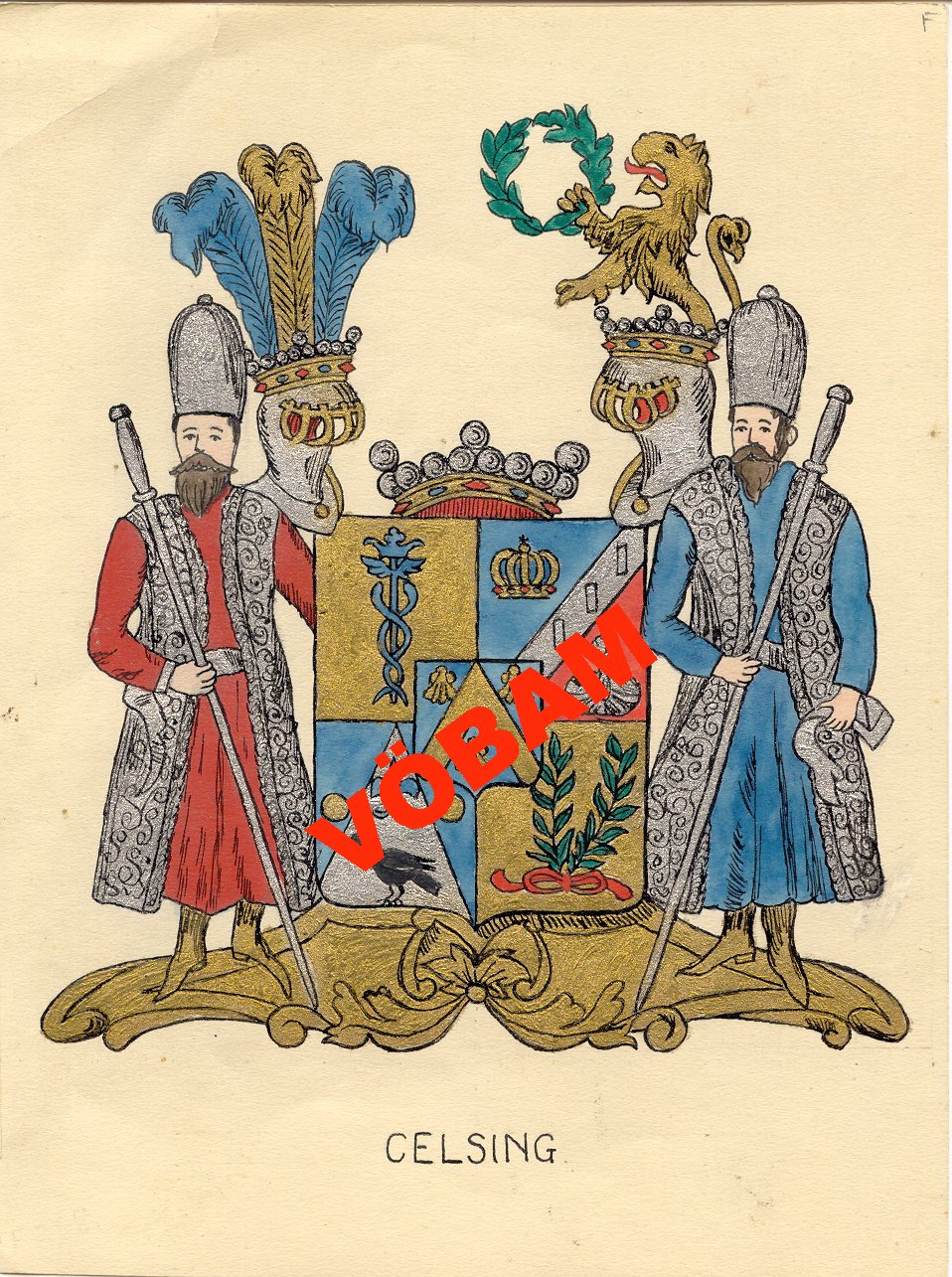
Hi, I am not sure if this is really the correct subreddit but I hope that you can help me regardless, (even if only guiding me to the right sub). :)
I come from a line of swedish nobility called "von Celsing", and I was wondering what the symbols on the coat of arms are and what they signify. It would be interesting to hear what the choices of symbols might be able to say about the my family.
Thanks in advance for any helpful reply!
1 Answers 2014-05-07
I understand it was an expansion of Presidential power, but to what extent? Also, what power did it give to the President?
1 Answers 2014-05-07
With all the huge power struggles in Europe over the ages how did such a tiny state manage to stay unconquered? Surely there must be some reason for this?
1 Answers 2014-05-07
Did the concept of chivalry extend to commoners or anyone who wasn't considered nobility? If not, did knights generally avoid commoners? I apologize if I'm being too vague.
2 Answers 2014-05-07
This question can be directed toward any war where aerial combat was common, but more specifically the Second World War that arguably saw the fiercest and most widespread fighting in the air.
Was there specific insignia placed on an ace's fighter? If so, were they even identifiable during flight?
Were there specific mid-flight maneuvers attributed to certain pilots that made them identifiable?
Would pilots have been briefed prior to a mission that there was an enemy ace(s) operation in their given theatre?
1 Answers 2014-05-07
1 Answers 2014-05-07
I hear some people say that red paint was the cheapest color since all barns were painted red. Others say it was the most expensive color hence why Ford painted the all model T's black.
1 Answers 2014-05-07
I am interested in knowing how a nation devastated by the calamities of the great war stood up on it's feet financially and started another war in a period of 20 years. How much national nationalism help? What was Hitler's role in it?
1 Answers 2014-05-07
1 Answers 2014-05-07
I'm sure you have all heard the general story, just wondering if it is true, or a story made up for philosophical/ethical debate
1 Answers 2014-05-07
1 Answers 2014-05-07
1 Answers 2014-05-07
I am writing an essay on the vikings and their impact on the United Kingdom for my English class in Norway. So far I have mentioned:
Does anyone know of anything else? I would be very grateful if anyone could help me. :)
2 Answers 2014-05-07
They seem to always be lumped together. Were they equal? Was Wilbur the genius and Orville deadweight? Was one the engineer and one the businessman/marketer?
(Bonus question, do you believe they were first, or was Gustave Whitehead or Alberto S Dumont?)
2 Answers 2014-05-07
I'm primarily asking this question due to an ongoing conflict as to how members of certain cultures should be portrayed in the video game Crusader Kinda 2.
That being said, would Cumans, Pecheneg, Avars, Alans, and other European steppe nomads have looked like the modern inhabitants of the places these cultures ruled? Or would these Turkic and Iranic people have looked visually noticeably different from modern Ukrainians, Hungarians, and Georgians?
1 Answers 2014-05-07