I was reading that Alexander I didn’t punish the men who killed his father. Two were Generals in the military. What would’ve been the reason to let them go? Was his throne dependent upon their support?
1 Answers 2018-08-02
The New York Times, in a recent article made this claim (in the first paragraph). I, too, have heard this anecdote elsewhere. However, Mosaic, a Jewish journal disputes the claim. Which is true?
1 Answers 2018-08-02
It seems to me that philosophical traditions have proven to be among the strongest threads that hold a "civilization" together (here meaning some identifiable & consciously adhered to social, political, & cultural pattern within kingdoms, empires, & countries through the ages, i.e. "western civilization" or "bronze age civilization").
I've been able to discover and learn about such traditions like Western philosophy which originated in ancient Greece, Eastern philosophy originating in ancient China, Vedic philosophy originating in ancient India, Abrahamic tradition out of the Middle East, & so on...
But I haven't been able to find such an enduring pattern anywhere in Sub-Saharan Africa. Does such a thing exist?
1 Answers 2018-08-02
I’m curious to see how much of an impact (if any) each continent had on the other and what that contact might have looked like and what could have been exchanged.
1 Answers 2018-08-02
1 Answers 2018-08-02
2 Answers 2018-08-02
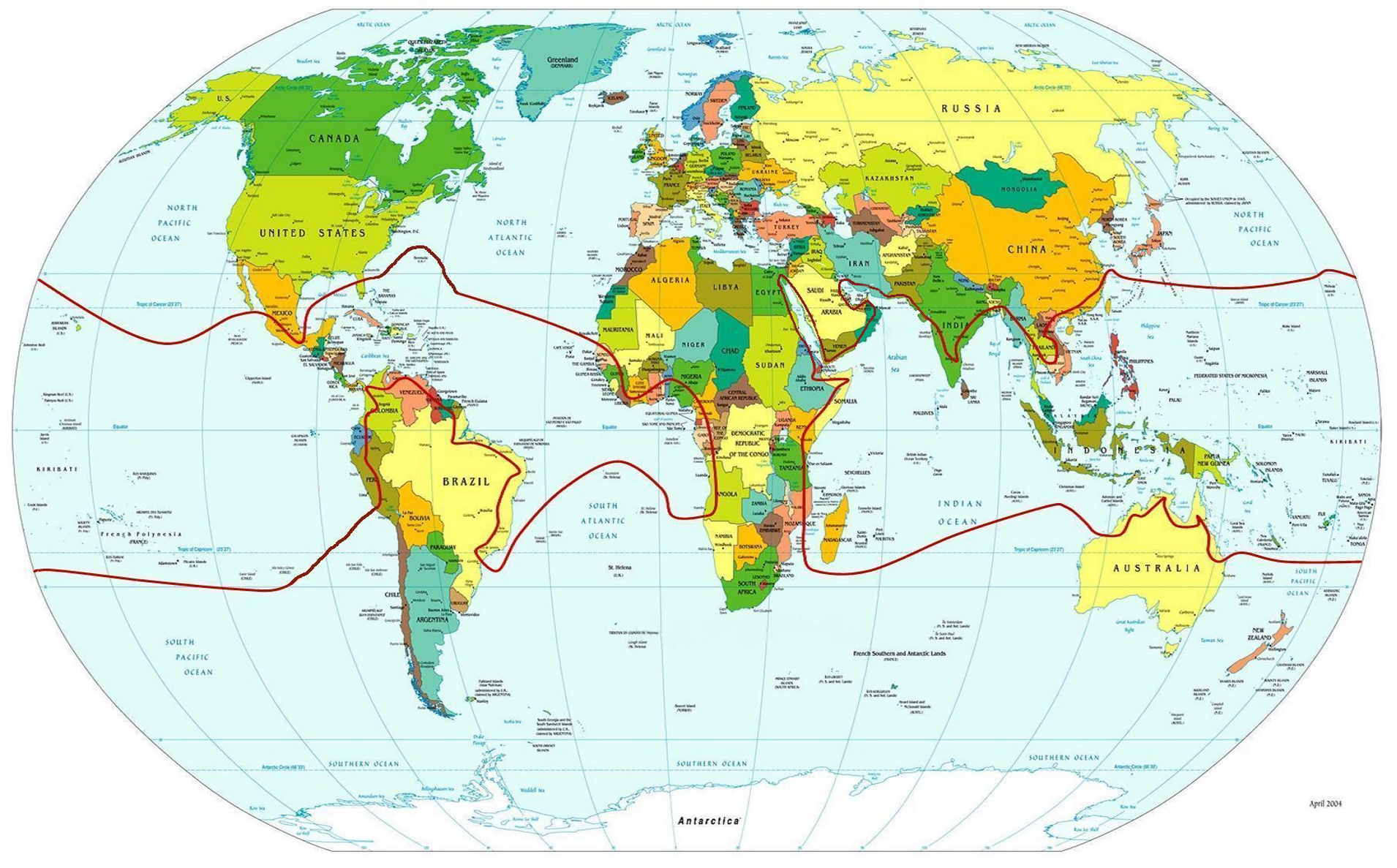
The natural habitat of the coconut palm, for the curious. There is some overlap with the natural habitat of the West African Swallow, but between the Swallow's small size and lack of migration, I think we can consider the possibility of one dropping a coconut over England negligible. The Silk Road, on the other hand, could have brought coconuts to England. But did it? If not, what age of intercontinental trade first made coconuts available to the English royal family?
2 Answers 2018-08-01
1 Answers 2018-08-01
[deleted]
1 Answers 2018-08-01
1 Answers 2018-08-01
In/and. I think property rights is the best prism to view American history through, and am curious to read erudite works
1 Answers 2018-08-01
>implied to be possibly be a trans woman
I know that'd make her not a gay if Gallienus really was a woman
1 Answers 2018-08-01
I read that an embassy from the king of Khotan in 717 presented the emperor of China with "horses, a camel, and an animal of the na species" 1. The translator didn't explain what sort of animal the "na" was, but he included a footnote with the Chinese spelling of that word (豽) and a remark that "the Kangxi dictionary gives this animal the most preposterous definitions".
Another source says about the same embassy that it brought "two horses for the ball game (i.e. polo), a wild camel with feet fleet as the wind, and a leopard" 2. This is by the same translator as the previous one, and this time he doesn't mention the word "na" or complain about preposterous definitions. (To be honest, I don't even know if this second source used the same word 豽 as the first one - perhaps this second source used some other word and this is why the translator felt confident in translating it as "leopard"...)
I also found another mention of the embassy, in a novel, which describes it in terms very similar to the second one above, but instead of a leopard it mentions "a na or fox" 3.
So now I'm wondering, what sort of animal is the 豽 really? Is it actually a leopard? Or a fox, or something else? (And isn't a fox a somewhat unimpressive present if you're sending an embassy to the emperor of China?) What sort of preposterous things do the dictionaries say about the 豽? (I tried googling a bit but found it only in some Chinese dictionaries, which wasn't terribly useful as I don't understand any Chinese and Google Translate mostly made a mess of it.) Thanks in advance for any help.
1 Answers 2018-08-01
I've posted questions to this effect before to no avail, but I don't want to stop until I have some direction to walk away with. Anyhow: I've recently been inspired by this subReddit to discover more about Palestinian history, yet it's been extremely difficult for me to find anything more than a few passages here and there prior to the 18th-19th century.
I feel as though whenever it is mentioned, it's through the lens of religious texts or other conquering nations (I.E. The Greeks, Egyptians, mentions in the Torah/Bible) - and even then, the details are rather shallow & brief. And I've been hard pressed to find mention of any historical Arab figure coming out of what is now known as Israel/Palestine.
Were there any Arab paragons of Combat? Mathematics? Literature? Activism? Philosophy? Art?
1 Answers 2018-08-01
1 Answers 2018-08-01
Hello friends! I'm working on a very extreme adaptation of many Greek works as a dramaturgy assistant. The playwright found a "transliteration" of the Sphinx's riddle from Oedipus and the Sphinx but I can't find where this text came from, or any specifics about it. Any Greek speakers or grecophiles have any footholds? Many thanks in advance!
"annerfit kee bose"
In the playwright's words:
Somewhere, when I was doing research on Oedipus and the Sphinx, I think I found a transliteration of Greek connected to that story, and I think that’s what these words represent. But that research is lost, and I haven’t been able to find it again.
(Possibly: ανηρφιτ κ βος
ανερφιτ κ βος
ανηρφιτ κ βως
ανερφιτ κ βως)
1 Answers 2018-08-01
Did they just have to dig where there were minerals very close to the surface? Or just dig randomly and hope to strike lucky?
1 Answers 2018-08-01
I am looking for a chronological order of topics to read and learn about, involving world powers, learning about how one empire rose and another fell.
All the way from the Persian Empire upto the start of the first world war if possible.
1 Answers 2018-08-01
1 Answers 2018-08-01
Ok so the holocaust was terrible and concentration camps were even worse, and I understand the immediate purpose of concentration camps for Nazis, but I don't understand why this method was used. Everything I've read about the logistical nightmares of Germany fighting a multi-front war would make me think that they would want to be as efficient as possible in this endeavor. So why would they dedicate resources such as soldiers, trains, buildings, and supplies to keep these camps running instead of just using an immediate execution for their "undesirables"? Seems really out of character for an army known for speed and efficiency.
1 Answers 2018-08-01
He makes many bold claims and contradicts to many statements I have been told numerous times. His sources seem solid, though, but I'm no historian. What do you all think?
1 Answers 2018-08-01
In the Pearl Harbor speech FDR lists different places where the Japanese attacked. He also mentions ships being torpedoed between San Francisco and Honolulu. What were these ships and why they get a special mention in the speech?
1 Answers 2018-08-01